How can IT strategy better support business growth goals?

A useful IT strategy connects growth targets to system capacity, security, staffing, vendor decisions, and recovery planning so expansion does not create hidden fragility, rising support costs, or avoidable downtime when the business adds people, locations, and software.
During a multi-state sales expansion, Ashlee G. watched orders stop syncing from the CRM into the ERP because an overlooked integration certificate had expired and nobody owned the renewal. Sales staff spent two days re-entering transactions by hand, shipments slipped, and the disruption, cleanup, and lost billing time added up to $75,300.
The following scenario reflects a redacted real-world incident pattern encountered in business IT environments. Identifying details have been changed for privacy, while the operational failure and financial impact remain representative.

About the Author: Scott Morris
Scott Morris is an experienced IT and cybersecurity professional with 16 years of hands-on experience in managed technology services. He specializes in How can IT strategy better support business growth goals? and has spent his career building practical recovery, security, and operational continuity processes for businesses across Nevada.
This is general technical information; specific network environments and compliance obligations change strategy. Growth plans, software dependencies, contractual requirements, and internal staffing should all be reviewed before changing infrastructure, security controls, or budgeting assumptions.
An IT strategy supports growth when it translates business goals into technical ownership and operating rules: which systems can scale, which integrations are single points of failure, which roles need controlled access, what downtime the business can tolerate, and when hardware, software, or vendors must be reviewed. That is why many leadership teams use a vCIO function to connect growth targets to budget, lifecycle planning, and decision cadence instead of relying on urgent purchases and informal workarounds.
- Capacity planning: Growth increases users, data volume, cloud spend, support demand, and dependence on key applications.
- Control planning: New hires, remote access, vendors, and locations require access rules, documentation, and review cycles.
- Continuity planning: Expansion only works if critical systems can be restored, supported, and maintained without relying on one employee or one undocumented process.
Growth usually strains execution before it strains vision. A company can approve a new location, software rollout, or hiring plan, but if onboarding, patching, licensing, vendor ownership, and escalation are still informal, complexity rises faster than control. This is where disciplined managed IT services and leadership planning need to connect; in practice, the issue is rarely the tool alone, it is the process around it.
What does an IT strategy that supports growth actually include?
It should include a current asset inventory, application map, vendor register, security baseline, lifecycle schedule, support model, and recovery objectives tied to business priorities. In mature environments, leadership also knows which systems are revenue-critical, which departments depend on them, who approves changes, and what technical debt is being carried forward. Without that structure, growth decisions are made against assumptions rather than documented operating reality.
Why does reactive technology planning slow business growth?
Which risks does aligned IT strategy reduce as a company grows?
Aligned strategy reduces recurring growth risks such as identity sprawl, unsupported infrastructure, undocumented vendor dependencies, weak change control, and recovery gaps. As more users, contractors, and cloud platforms are added, guidance from NIST SP 800-207 Zero Trust Architecture becomes practical because it replaces blanket network trust with continuous verification by role, device, and context. In business terms, that means a compromised account or misconfigured endpoint is less likely to move laterally into finance, operations, or customer data and turn a contained issue into a broader outage, data exposure event, or expensive cleanup project.
How does this work in practice inside a mature environment?
In practice, growth planning is translated into recurring workflows: standard device builds, role-based access templates, procurement approval, patch windows, application ownership, monitoring thresholds, and review meetings that track exceptions. One of the first things experienced IT teams check is whether a new site, new department, or new cloud tool was onboarded through the same process as the rest of the environment. During a routine review, a monitoring alert may show that several laptops at a recently added office are missing security policy updates; investigation often reveals they were enrolled manually outside the standard build process, so encryption keys, endpoint protection, and software deployment were never attached. That is why accountable managed IT operations rely on documented workflows, not memory, and why growth readiness is visible in ticket history, system baselines, and change records rather than in optimistic assumptions.

How can leadership verify that the strategy is being executed competently?
- Asset and ownership evidence: There should be a current inventory of devices, cloud services, software licenses, integration owners, and support contacts, not a spreadsheet last updated during renewal season.
- Patch and change evidence: Mature teams produce patch compliance reports, change records, and exception logs showing which systems were updated, which were deferred, and who accepted the risk.
- Access evidence: Access review logs should show that privileged accounts, shared mailboxes, vendor access, and terminated-user access are reviewed on a fixed cadence and corrected when exceptions are found.
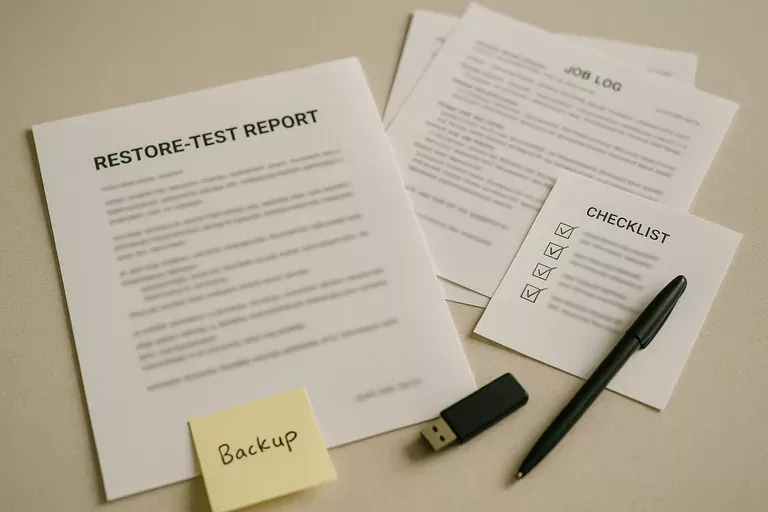
- Recovery evidence: Restore test records should show whether critical applications, file shares, and cloud data can actually be recovered within the business’s required timeline.
What warning signs show that weak implementation is becoming dangerous?
A common failure point is controls that exist on paper but are not enforced in daily operations. This tends to break down when endpoint protection generates alerts but nobody owns triage, multifactor authentication is enabled for some users but not all privileged access paths, or a critical SaaS renewal notice is still tied to one departed employee’s mailbox. In environments that have not been reviewed recently, access rights accumulate, branch offices bypass standard builds, recurring tickets are dismissed as user error, and leadership receives no operational evidence showing whether security, uptime, or recovery controls are actually working. That is when growth stops being scalable and starts becoming brittle.
What should leadership do next if growth and IT are out of sync?
Leadership should start by ranking the next 12 to 24 months of growth initiatives, identifying which systems and vendors each one depends on, and assigning owners for lifecycle planning, access governance, recovery objectives, and exception approval. A competent provider should be able to explain which upgrades are needed now, which risks can be accepted temporarily, and what documentation will prove progress at each review point. Many companies formalize that through a vCIO role so technology planning is tied to hiring, expansion, compliance, and budgeting rather than being revisited only after an outage or failed rollout.