What does a vCIO do for a small or mid-size business?

A vCIO gives a small or mid-size business executive-level IT guidance without a full-time CIO salary, turning technology into a managed business function through planning, budgeting, risk reduction, vendor oversight, and recovery readiness.
Arthur B. was closing quarter-end at a 52-user distributor when the firewall support renewal and VPN certificate had both lapsed without anyone tracking them; remote staff could not log in, invoicing stopped for a day, and emergency remediation plus delays cost $74,900. That ownership gap is exactly where a vCIO matters.
The following scenario is based on a redacted real-world business IT incident pattern. Identifying details have been changed for privacy, but the disruption sequence and cost impact remain realistic.

About the Author: Scott Morris
Scott Morris is an experienced IT and cybersecurity professional with 16 years of hands-on experience in managed technology services. He specializes in What does a vCIO do for a small or mid-size business? and has spent his career building practical recovery, security, and operational continuity processes for businesses across Nevada.
This article explains common operational patterns and evaluation points, not a one-size-fits-all design. This is general technical information; specific network environments and compliance obligations change strategy.
A vCIO is a virtual chief information officer: a senior advisor who connects business goals, technology decisions, cybersecurity priorities, and continuity requirements. In practice, the role sits above day-to-day tickets and works alongside managed IT services to decide what should be standardized, replaced, documented, tested, insured, or funded before a failure exposes the gap.
- Roadmap ownership: Prioritizes projects by business risk, operational dependency, and timing rather than by whoever raised the last complaint.
- Policy direction: Sets expectations for account management, device standards, vendor oversight, recovery targets, and documentation quality.
- Leadership translation: Converts technical weaknesses into business terms such as outage exposure, fraud risk, compliance pressure, and avoidable cost.
What is a vCIO, and how is it different from regular IT support?
Regular IT support is usually measured by response time, ticket closure, and keeping systems working today. A vCIO is measured by whether the business is less fragile next quarter and next year. That means deciding which systems are business-critical, which vendors create concentration risk, where aging hardware will affect operations, how security controls should be enforced, and what level of downtime the business can actually tolerate. What usually separates a stable environment from a fragile one is not the helpdesk alone; it is executive ownership of standards, priorities, and timing.
Why does a vCIO matter before a business has a major outage or security event?
Most small and mid-size businesses do not fail because they lacked a specific tool. They fail because nobody owned the decisions between tools: renewal tracking, role-based access, replacement timing, vendor accountability, insurance alignment, and recovery expectations. A common failure point is that licensing, hardware support, cloud subscriptions, and line-of-business dependencies are scattered across different people with no single review cadence. When that happens, the business does not discover the weakness during planning; it discovers it during payroll, quarter-close, a vendor payment change, or an outage that should have been a controlled maintenance event.
What risks does a vCIO reduce for a small or mid-size business?
A useful vCIO reduces several categories of risk at once: operational downtime from aging infrastructure, budget shock from deferred replacements, security exposure from weak identity controls, and recovery failure when backups exist but business restoration priorities are undefined. Guidance in NIST SP 800-63B matters here because user identity is often the real perimeter for a smaller business; a vCIO should make sure account creation, privilege changes, multifactor enforcement, and offboarding follow a defined lifecycle rather than informal habits. In business terms, that lowers the chance that a departed employee, shared admin credential, or neglected privileged account becomes the starting point for fraud, disruption, or lateral movement.
How does a vCIO work in practice month to month?
In mature environments, the vCIO function is a management cadence, not a quarterly slideshow. It usually includes reviewing ticket trends, contract renewals, asset age, patch compliance, privileged access changes, vendor performance, backup test results, and planned business changes such as hiring, expansion, relocation, or application rollouts. During one routine review pattern that experienced teams often see, repeated failed sign-in attempts against a dormant admin account looked minor at first; the investigation showed the account had been exempted from offboarding because it was tied to an undocumented integration, and nobody had recorded ownership. The lesson was not merely to disable an account; it was to document application dependencies, assign accountable owners, and make access reviews part of the operating process so a convenience shortcut does not become a hidden control failure.

How can leadership verify that the vCIO function is actually working?
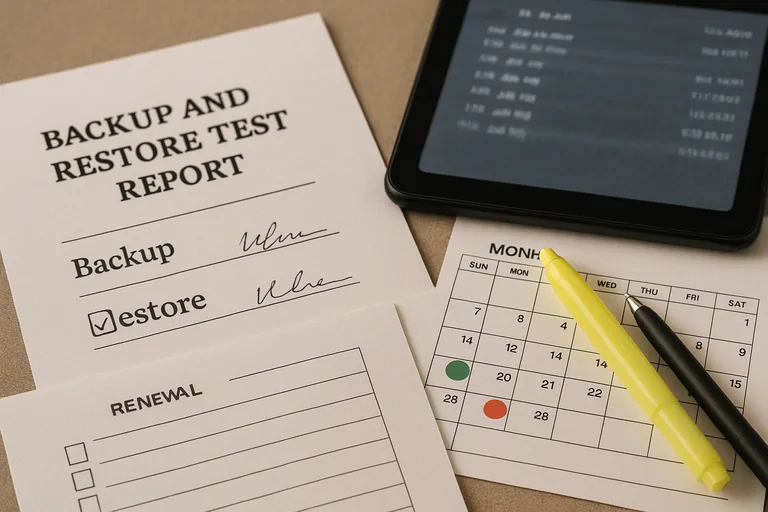
A competent vCIO leaves evidence. Leadership should be able to see a current roadmap tied to business priorities, an asset inventory with age and warranty status, a renewal calendar, documented recovery objectives, access review records, patch compliance reports, backup restore test results, and meeting notes showing which risks were accepted, funded, deferred, or escalated. If the same provider also handles day-to-day support operations, those strategic decisions should appear in project queues, standards, policy enforcement, and change records rather than living only in slide decks. In practice, this often breaks down when a provider talks about alignment and strategy but cannot produce observable artifacts that show what was reviewed, what changed, and who owns the exceptions.
When does weak vCIO execution become dangerous?
Weak execution becomes dangerous when the role is treated as account management instead of operational governance. A common failure point is a roadmap that lists upgrades but ignores identity sprawl, vendor concentration, undocumented business processes, unsupported applications, or recovery sequencing. Another is security tooling purchased without response workflow: alerts are generated, but nobody knows who reviews them, what threshold triggers escalation, or whether logs are retained long enough to investigate an incident. This tends to break down when leadership assumes controls exist because software was bought, while the underlying process, ownership, exception handling, and verification never matured.
What should happen next if leadership wants better control of IT risk and cost?
The next step is usually a structured review of business dependencies before another emergency forces the conversation. Leadership should identify critical applications, who administers them, which contracts or renewals affect uptime, what recovery time is acceptable, where privileged access has accumulated, and whether current spending reflects a plan or a history of urgent fixes. If those answers are unclear, the business does not yet have a reliable vCIO function, even if it has support coverage and vendors in place. The goal is not more meetings; it is clearer accountability, visible evidence, and fewer surprises when technology issues intersect with revenue, operations, or compliance.