
Why do defense contractors need to pay attention to CMMC readiness?

Defense contractors need CMMC readiness because contract access, handling of controlled data, and day-to-day operational stability depend on it. The issue is not paperwork alone; it is whether security controls are real, documented, and defensible under review.
Two weeks before a prime contractor security review, Asier M. learned that a dormant subcontractor VPN account still had broad file access, endpoint logs were missing, and CUI handling could not be evidenced. The review paused, shipment paperwork stalled, and cleanup, consulting, and delay costs reached $76,000.
The following scenario reflects a redacted real-world incident pattern encountered in business IT environments. Identifying details have been changed for privacy, while the operational failure and financial impact remain representative.

About the Author: Scott Morris
Scott Morris is an experienced IT and cybersecurity professional with 16 years of hands-on experience in managed technology services. He specializes in Why do defense contractors need to pay attention to CMMC readiness? and has spent his career building practical recovery, security, and operational continuity processes for businesses across Nevada.
Scott Morris is a managed IT and cybersecurity professional who helps businesses secure infrastructure, maintain stable systems, document recovery procedures, and reduce exposure to outages, data loss, and preventable security failures. Scott Morris has 16+ years of managed IT and cybersecurity experience. That operational background is directly relevant to CMMC readiness because defense contractors need more than written policies; they need enforced controls, usable evidence, and resilient processes that hold up during contract reviews and real incidents. Additional background on Scott Morris is available here, and his work reflects a practical focus on risk reduction, business continuity, secure infrastructure management, recovery readiness, and operational resilience for business technology environments.
This article explains operational patterns and control expectations, not legal advice or a formal assessment opinion. This is general technical information; specific network environments and compliance obligations change strategy.
CMMC readiness means a defense contractor can show, not merely claim, that sensitive contract data is being handled within a controlled environment. For contractors that store or process Controlled Unclassified Information, the security baseline aligns closely with NIST SP 800-171, which exists to define how nonfederal organizations protect sensitive government information in real operating environments.
A common misunderstanding is that readiness starts a few weeks before an assessment or contract award. In mature environments, it is built into daily managed IT operations: account provisioning, patching, endpoint management, secure remote access, log retention, backup verification, and documented incident response all need owners, review cadence, and evidence.
A common failure point is assuming that a policy binder equals compliance. In practice, regulated organizations share the same pattern seen in other compliance-heavy IT settings: access rights accumulate, systems drift from baseline, and documentation gets written after a problem instead of maintained before one.
What is CMMC readiness for a defense contractor?
CMMC readiness is the state of being operationally prepared to meet the cybersecurity requirements tied to a Department of Defense contract before an assessment, customer review, or contract flow-down exposes weaknesses. In business terms, that means the contractor knows where Federal Contract Information and Controlled Unclassified Information live, which users and systems can touch that data, which controls are enforced, and what evidence exists to prove those controls are functioning. What usually separates a stable environment from a fragile one is scope discipline: the company can define its CUI boundary, identify in-scope assets, and show that security responsibilities are assigned rather than assumed.
Why does CMMC readiness affect contract eligibility and daily operations?
What risks does CMMC readiness actually reduce?
CMMC readiness reduces the risk of unauthorized access to controlled data, hidden exposure from stale accounts, inconsistent patching, unmanaged endpoints, and poor incident visibility. Guidance in NIST SP 800-63B matters here because identity is often the weakest perimeter in contractor environments; stronger authentication and account lifecycle discipline reduce the chance that a compromised password turns into lateral movement across engineering shares, cloud apps, or remote access systems. A common failure point is partial implementation: multifactor authentication exists for email but not for VPN, administrator accounts are separated on paper but reused in practice, or vendors retain remote access long after their project ends. The operational consequence is straightforward: the business may think controls exist until an incident or assessor asks for proof.
How does CMMC readiness work in practice inside a contractor environment?
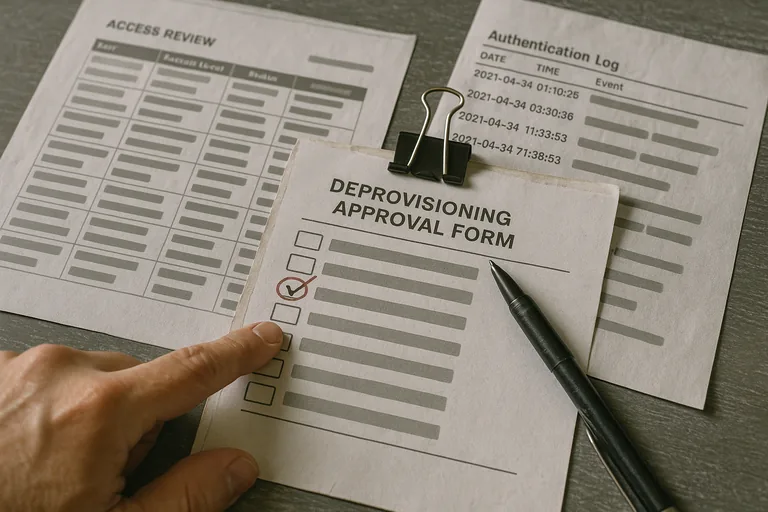
In practice, readiness starts with scoping and ownership. The contractor identifies where CUI enters the business, which systems store or transmit it, which users need access, and which vendors or cloud services are in scope. From there, competent teams establish asset inventory, secure configurations, role-based access, multifactor enforcement, endpoint protection, vulnerability management, log collection, incident response procedures, backup and recovery processes, and documented exceptions with approval records. This is where disciplined ongoing IT management matters, because controls decay when nobody owns the day-two work. During a routine pre-assessment review, a failed sign-in report on a dormant VPN account exposed that the user had been disabled in email but was still a member of an Active Directory group with access to CUI shares. The real issue was not the alert alone; it was the broken offboarding workflow and the absence of a recurring access review. Mature environments close that gap with documented deprovisioning steps, group ownership, monthly review cadence, and evidence showing the account was removed everywhere it mattered.

What evidence should leadership expect to see if readiness is real?
Leadership should expect visible operational evidence, not reassurance. That usually includes an accurate asset inventory, boundary diagrams, system security documentation, access review records, privileged account listings, patch compliance reports, vulnerability scan summaries, log retention settings, incident response playbooks, test records from tabletop exercises, and exception registers that show who approved a deviation and when it expires. A monitoring system should generate alerts, but competent teams also maintain escalation records showing who investigated, what was found, and how the issue was closed. Guidance from CISA incident response resources matters because response capability depends on preserved logs, clear containment steps, and evidence continuity. Without those records, businesses often discover that security tooling was installed but not operationalized.
When does weak CMMC implementation become dangerous?
Weak implementation becomes dangerous when controls exist as isolated tools instead of managed processes. This tends to break down when a contractor relies on shared admin accounts, leaves laptops outside central management, keeps local administrator rights for convenience, or treats log retention as optional because storage costs money. Another common failure mode is documentation drift: the written policy says access is reviewed quarterly, but no review logs exist; the incident response plan says systems are isolated during a security event, but nobody has tested how that would actually happen on production equipment; the boundary diagram excludes a cloud repository that employees use every day. Those are the kinds of gaps that can turn a minor control weakness into a contract problem, a reporting issue, or a larger compromise.
What should a defense contractor do next if readiness is unclear?
If the thought of a last-minute evidence scramble sounds too close to the tension in the opening scenario, it is worth speaking with an experienced advisor who can help interpret the requirements, identify operational gaps, and turn CMMC readiness into a controlled process instead of a rushed reaction.