
Truckee Financial Crash
When a business is dealing with a network crash, the failure usually started earlier. Surprise spending, delayed upgrades, and aging infrastructure can weaken risk assessments and security readiness over time and leave financial offices in The Truckee Meadows exposed when pressure hits. Addressing the problem means planning upgrades deliberately and aligning IT decisions to business risk.
This case study reflects real breakdown patterns documented across 300+ regional IT incidents. Names and identifying details have been modified for confidentiality, while technical and financial data remain accurate to the original events.
Why Network Crashes in Financial Offices Usually Start as Budgeting Failures

A network crash in a financial office is rarely just a hardware event. In most cases, the technical failure is the last visible symptom of a longer planning problem. The Financial Roadmap matters because it turns IT from a surprise expense into a managed operating function. Without that discipline, switches stay in service too long, firewall subscriptions lapse, storage fills up, and line-of-business systems get layered onto infrastructure that was never sized for current demand.
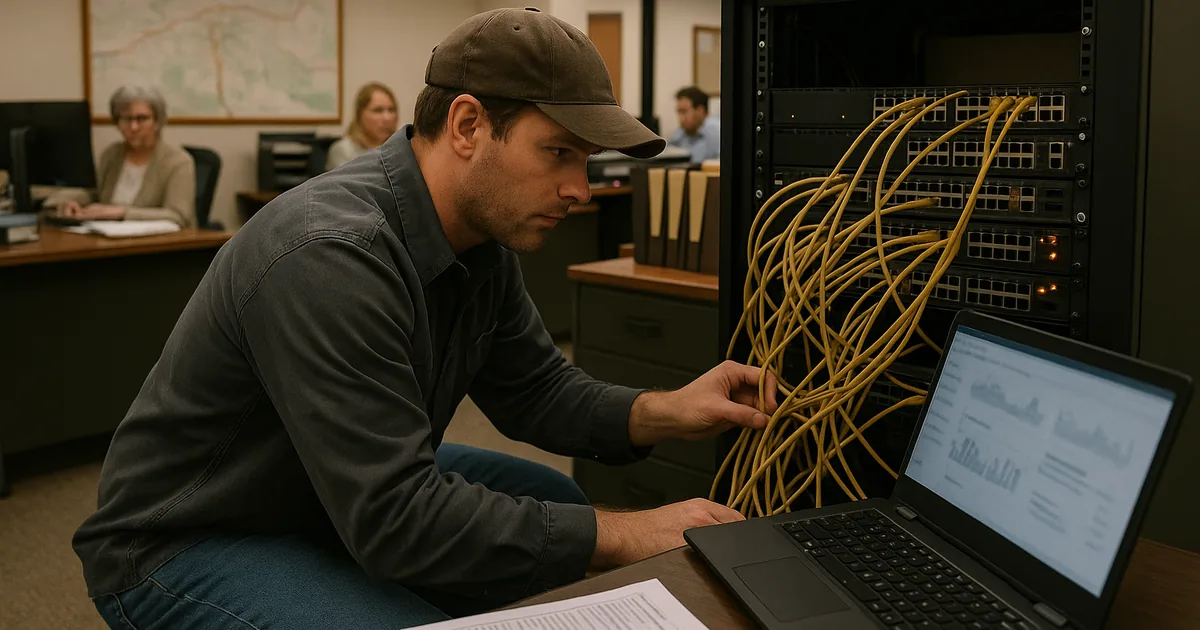
We see this pattern across The Truckee Meadows in firms that handle payroll, lending, accounting, wealth management, or regulated records. Leadership often believes they are controlling cost by delaying upgrades, but the result is usually the opposite: emergency replacement, unplanned downtime, and weak visibility into business risk. Strong risk assessments and security readiness in Northern Nevada help identify where aging infrastructure, unsupported software, and single points of failure are already undermining operations. In incidents like the one Skylar faced, the immediate outage is only part of the damage; reporting deadlines, reconciliation work, and client communication all start slipping at the same time.
- Aging core infrastructure: Older switches, firewalls, and storage platforms often stay in production after support windows close, increasing the chance of failure during peak transaction periods.
- Unbudgeted growth: Additional users, cloud apps, scanners, VoIP traffic, and compliance tools are added over time without re-evaluating bandwidth, switching capacity, or server performance.
- Weak lifecycle planning: When refresh decisions are delayed until something breaks, financial offices lose the ability to schedule downtime, negotiate pricing, or stage replacements cleanly.
- Limited risk visibility: If no one is reviewing dependencies between network equipment, backups, authentication, and business applications, one outage can quickly become a billing and reporting disruption.
How to Stabilize the Environment and Build a Real Financial Roadmap
The immediate fix after a crash is to restore connectivity, isolate failed components, confirm application integrity, and verify that no data corruption occurred during the outage. The longer-term fix is more important: build a roadmap that ties infrastructure decisions to business risk, compliance obligations, and operational timing. For financial offices, that means identifying which systems must stay available for billing, document access, reconciliation, and secure communications, then assigning replacement timelines before those systems become liabilities.
Practically, this usually includes hardware lifecycle tracking, switch and firewall redundancy where justified, documented vendor support status, and tested recovery procedures. Offices that depend on continuous access to shared files and accounting platforms should also maintain backup and recovery programs for business continuity so a network event does not become a data-loss event. For a useful external baseline, the CISA Cybersecurity Performance Goals provide a practical framework for resilience, access control, recovery, and asset management.
- Lifecycle budgeting: Replace critical network gear on a planned schedule instead of waiting for failure under load.
- Configuration review: Audit switch stacks, uplinks, VLANs, spanning tree settings, and firewall throughput against current business use.
- Backup validation: Confirm that backups are not only running, but restorable within the office’s required recovery time.
- Failover planning: Define what happens if the primary switch, ISP circuit, or authentication service fails during business hours.
- Alerting improvements: Use monitoring that flags rising error counts, interface saturation, storage pressure, and hardware health before users feel the outage.
Field Evidence: From Deferred Upgrades to Predictable Operations
In one Northern Nevada financial environment, the office had grown from a small administrative footprint into a multi-user operation with heavier document imaging, cloud sync, and remote access demands. The network had not been redesigned to match that growth. Before remediation, staff experienced intermittent disconnects, slow file access, and recurring switch instability during month-end processing. The office was also operating with limited documentation, making after-hours troubleshooting slower than it should have been.
After a structured review, the organization replaced aging core hardware, documented dependencies, validated recovery procedures, and improved network and server management for multi-site operations . In a region like Reno and Sparks, where offices may depend on mixed carrier availability and older building cabling, those details matter. The result was a more stable environment, fewer support escalations, and a clearer annual budget tied to operational risk instead of emergency spending.
- Result: Unplanned network interruptions dropped from repeated monthly incidents to zero major outages over the following two quarters, while month-end processing completed on schedule.
Financial Office Network Risk Reference
Scott Morris is an experienced IT and cybersecurity professional with 16 years of hands-on experience in managed technology services. He specializes in Risk Assessments And Security Readiness and has spent his career building practical recovery, security, and operational continuity processes for businesses across The Truckee Meadows and Northern Nevada.


About the Author: Scott Morris
Local Support in The Truckee Meadows
Reno Computer Services supports organizations across Reno, Sparks, and the surrounding Truckee Meadows where financial, medical, and administrative offices often depend on aging mixed-vendor infrastructure and tight reporting timelines. For sites near south Reno, including the Sierra Medical Center corridor, response planning is not just about distance. It is about having documentation, replacement strategy, and recovery priorities already in place before a network failure interrupts billing, records access, or daily operations.
What Financial Offices Should Take Away
If a financial office in The Truckee Meadows suffers a network crash, the right question is not only what failed today. The more useful question is what planning decision allowed that failure to mature unnoticed. Deferred upgrades, unclear ownership, and reactive spending create technical debt that eventually shows up as downtime, delayed billing, and unnecessary operational risk.
A practical financial roadmap gives leadership a way to budget infrastructure deliberately, reduce emergency spending, and align IT decisions with business continuity. That is how organizations move from unstable systems and recurring surprises to predictable operations with clearer risk visibility.