Sparks Logistics Hub
The outage or lockout is usually the last symptom to appear, not the first. Surprise spending, delayed upgrades, and aging infrastructure create weak points that can disrupt compliance advisory programs and put budget control, resilience, and uptime at risk. Reducing that risk starts with planning upgrades deliberately and aligning IT decisions to business risk.
This case study reflects real breakdown patterns documented across 300+ regional IT incidents. Names and identifying details have been modified for confidentiality, while technical and financial data remain accurate to the original events.

Why the Financial Roadmap Fails Before Operations Stop
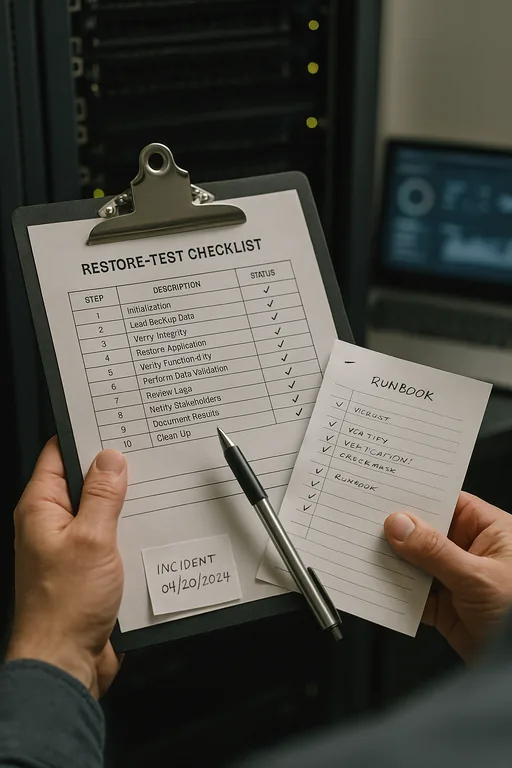
When a Sparks logistics hub suddenly loses access to core systems, the immediate assumption is usually that a single device failed or a provider had a short outage. In practice, we usually find a longer pattern: hardware replacement was postponed, licensing renewals were handled reactively, storage growth was not forecasted, and network dependencies were allowed to accumulate without a clear business-risk review. That is the financial roadmap gap. IT becomes a surprise expense instead of a planned operating function.
This matters even more for compliance advisory programs because controls are not just policy documents. They depend on working backups, supported operating systems, reliable authentication, and documented recovery priorities. Businesses trying to stabilize risk often benefit from structured compliance advisory programs in Northern Nevada that connect spending decisions to uptime, audit readiness, and operational continuity. In a warehouse, dispatch office, or multi-shift logistics environment around Sparks and Reno, deferred infrastructure decisions can quietly undermine all three. That is why the outage is usually the last symptom, not the first, and why Tricia’s incident was operationally predictable even if it felt sudden.
- Budget drift: Small deferrals across storage, switching, firewall lifecycle, and backup testing compound until one failure interrupts multiple workflows at once.
- Unsupported dependencies: Aging servers and line-of-business applications often remain in place because replacement was never mapped to a realistic capital or operating plan.
- Compliance exposure: If access control, retention, or recovery controls depend on unstable infrastructure, advisory efforts lose credibility during an audit or incident review.
- Operational concentration: Logistics teams often centralize dispatch, inventory visibility, and billing on a few systems, so one weak point can stop receiving, routing, and invoicing together.
How to Correct the Gap Before It Becomes Downtime
The fix is not simply buying newer equipment. The practical correction is to build a staged financial roadmap that ranks systems by business impact, compliance dependency, and recovery importance. We typically start by identifying which assets support dispatch, inventory movement, billing, remote access, and document retention. From there, replacement timing, licensing, backup validation, and failover priorities can be budgeted deliberately instead of handled under pressure.
That work usually includes better visibility into switching, firewall health, WAN dependencies, and site-to-site traffic. For logistics environments with multiple offices, yards, or warehouse segments, stronger network infrastructure management for Sparks operations helps reduce single points of failure and gives leadership a clearer view of what should be refreshed first. A useful external benchmark is CISA’s guidance on resilience, backup, and recovery planning , which aligns well with practical business continuity controls.
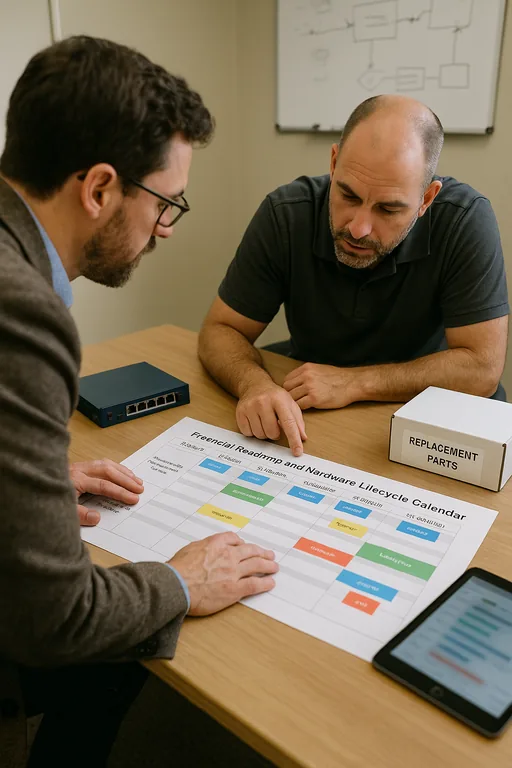
- Lifecycle planning: Assign replacement windows for servers, firewalls, switches, and storage before support expiration creates emergency spending.
- Backup validation: Test restore points against actual line-of-business systems, not just backup job success messages.
- MFA and access hardening: Reduce lockout and credential risk by standardizing identity controls across cloud and on-premise systems.
- Capacity forecasting: Track storage growth, bandwidth use, and application load so expansion is planned rather than rushed.
- Failover design: Use documented recovery priorities and, where needed, server and hybrid infrastructure oversight to keep critical workloads available during maintenance or hardware failure.
Field Evidence: From Surprise Expense to Planned Uptime
We worked through a similar pattern for a Northern Nevada operation supporting timed deliveries between Sparks industrial corridors and Reno administrative staff. Before remediation, the business had uneven switch performance, aging virtual host hardware, and backup jobs that had not been restore-tested against the systems used for scheduling and invoice processing. Leadership knew spending was coming, but there was no sequence, no risk ranking, and no clear tie between infrastructure age and business interruption.
After documenting dependencies and building a 12-to-24-month roadmap, the company replaced the most exposed hardware first, validated recovery for its core applications, and aligned support contracts with actual operational priorities. The result was fewer emergency tickets, cleaner budgeting discussions, and a measurable reduction in downtime risk during peak shipping periods and winter weather disruptions that often affect regional travel and site access.
- Result: Unplanned infrastructure incidents dropped by 43 percent over the following two quarters, and recovery testing for critical systems moved from informal to documented and repeatable.
Financial Roadmap Controls for Logistics IT
Scott Morris is an experienced IT and cybersecurity professional with 16 years of hands-on experience in managed technology services. He specializes in Compliance Advisory Programs and has spent his career building practical recovery, security, and operational continuity processes for businesses across Reno, Sparks, Carson City, Lake Tahoe, and Northern Nevada and Northern Nevada.

About the Author: Scott Morris
Local Support in Reno, Sparks, Carson City, Lake Tahoe, and Northern Nevada
We support businesses across the Reno-Sparks corridor where logistics, compliance, and uptime often intersect. From our Reno office, the route to the Huffaker area is typically straightforward, and that local proximity matters when a planning issue turns into an operational interruption. Just as important, it gives us the ability to assess infrastructure, budgeting priorities, and recovery readiness before a deferred upgrade becomes a business stoppage.
What the Roadmap Should Accomplish
The core issue is not that logistics businesses in Sparks and Reno use complex technology. It is that critical systems are often allowed to age without a budgeted sequence for refresh, recovery, and risk reduction. Once that happens, compliance advisory work becomes harder to sustain because the underlying infrastructure is unstable, spending becomes reactive, and leadership loses visibility into what should be fixed first.
A sound financial roadmap turns IT from an emergency line item into an operational plan. It gives the business a way to prioritize upgrades, validate recovery, and protect uptime without guessing. That is the practical difference between absorbing repeated interruptions and managing infrastructure with intent.