Sparks Data Breach
The outage or lockout is usually the last symptom to appear, not the first. Phishing clicks, password reuse, and weak account hygiene create weak points that can disrupt managed IT services and put account security, access stability, and business continuity at risk. Reducing that risk starts with tightening identity controls and building safer day-to-day habits.
This case study reflects real breakdown patterns documented across 300+ regional IT incidents. Names and identifying details have been modified for confidentiality, while technical and financial data remain accurate to the original events.

How the Human Element Turns Into a Breach
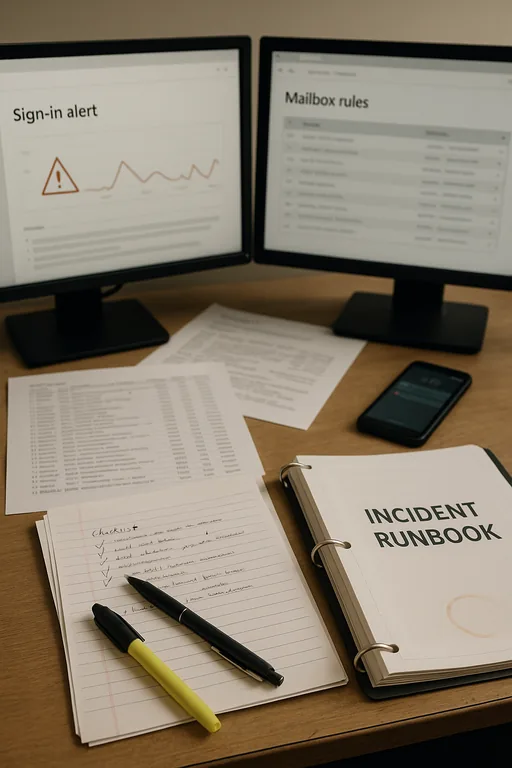
The main question here is straightforward: how does a construction firm in Sparks end up with a data breach when no major software failure appears first? In most cases, the breach starts with a person, not a platform. A fake credential prompt, a reused password from an older account, or a rushed approval from someone juggling field calls and office work gives an attacker a valid foothold. Once that happens, the technical environment often behaves normally just long enough to hide the problem.
We see this pattern often in Northern Nevada operations where office staff, estimators, project managers, and field supervisors all rely on shared systems under time pressure. Email, cloud file access, accounting platforms, and mobile devices stay tightly connected, so one compromised identity can affect scheduling, billing, and vendor communication quickly. Businesses trying to stabilize these risks usually benefit from structured managed IT support in Reno that focuses on identity controls, monitoring, and response discipline before the visible outage begins. In incidents like the one involving Harper, the lockout was only the final symptom; the real failure started earlier with trust placed in a convincing but fraudulent message.
- Credential abuse: A stolen or reused password allows attackers to sign in as a legitimate user, bypassing many assumptions staff make about whether an email or login event is safe.
- Email workflow manipulation: Attackers commonly create forwarding rules, hide messages, or impersonate internal staff to redirect approvals, invoices, or payment conversations.
- Construction operations pressure: Fast-moving job schedules, vendor coordination, and mobile access from trailers or field devices reduce the time employees spend validating unusual requests.
- Delayed detection: The first obvious sign may be a lockout, missing files, or failed access, even though the account was compromised hours or days earlier.
Practical Remediation for Identity Risk and Account Stability
Fixing this issue requires more than resetting one password. The right response starts with account containment, session revocation, mailbox rule review, MFA enforcement, and log analysis to determine what the compromised identity touched. From there, the business needs to reduce the chance of the same behavior causing a second incident. That means separating administrative access, tightening conditional access policies, reviewing shared credentials, and validating that backups and recovery paths are not dependent on the same compromised accounts.
For firms handling contracts, payroll records, employee data, or regulated project documentation, this work should align with broader compliance-focused IT management so security controls support both operations and reporting obligations. A useful baseline for this kind of user-focused defense is CISA guidance on phishing-resistant practices and account protection at cisa.gov . We also recommend periodic tabletop reviews and targeted user testing so staff can recognize fake reset prompts, invoice changes, and unusual sign-in requests before they become an incident.
- MFA hardening: Require strong multifactor authentication for email, cloud apps, VPN access, and any remote administrative workflow.
- Mailbox and sign-in review: Audit forwarding rules, impossible-travel logins, legacy authentication, and unauthorized device sessions after every suspected compromise.
- Password hygiene controls: Eliminate shared credentials, block reused passwords where possible, and enforce unique access for office, field, and vendor-facing systems.
- Security awareness tied to workflow: Train staff on the exact messages they are likely to see, including fake password resets, bid document requests, and payment update emails.
Field Evidence: Account Compromise in a Multi-Site Construction Workflow
Before remediation, a regional construction office supporting Sparks and Reno job activity had inconsistent MFA enrollment, several long-lived email sessions, and no routine review of mailbox forwarding rules. Staff were spending time each week sorting out suspicious messages, but the issue was treated as user error rather than a control gap. After one compromised account disrupted invoice communication and delayed internal approvals, the business moved to stronger identity enforcement, sign-in alerting, and role-based access cleanup.
After those changes, suspicious login attempts were identified earlier, unauthorized forwarding behavior was blocked, and account recovery became faster and more predictable. In one case, a flagged sign-in from outside the normal Northern Nevada work pattern was contained before project correspondence was altered. That kind of improvement is why many firms also schedule periodic security readiness reviews for business systems instead of waiting for another visible outage.
- Result: Reduced account recovery time from most of a business day to under 90 minutes, with fewer billing delays and clearer incident documentation.
Human Element Risk Controls for Construction Firms
Scott Morris is an experienced IT and cybersecurity professional with 16 years of hands-on experience in managed technology services. He specializes in Managed It Services and has spent his career building practical recovery, security, and operational continuity processes for businesses across Sparks, Reno, and Northern Nevada and Northern Nevada.


About the Author: Scott Morris
Local Support in Sparks, Reno, and Northern Nevada
We support businesses across the Reno-Sparks corridor where construction, property management, and field-service operations depend on stable identity controls and fast response. From our Reno office, the route to the Reno Experience District area is short, which helps when an account issue affects scheduling, billing, or access and needs local hands-on coordination.
Why Human Behavior Has to Be Part of the Security Plan
A construction firm in Sparks does not need a dramatic system failure to suffer a real breach. One convincing email, one reused password, or one rushed approval can interrupt communication, expose project data, and delay billing before anyone realizes the issue is active. That is why the human element has to be audited with the same seriousness as firewalls, backups, and endpoint tools.
The practical takeaway is simple: strengthen identity controls, reduce trust in email-based prompts, and review how employees actually work across office and field environments. When those controls are in place, the business is less likely to discover a security problem only after access has already been disrupted.