Reno’s Hidden Threat
Seeing a data breach is often the visible symptom of hidden threats, not the root problem itself. In construction firms across Reno, issues like stolen credentials, MFA gaps, and weak monitoring can quietly undermine IT support and help desk until work stops or risk spikes. The fix usually starts with hardening identity, watching for abnormal behavior, and closing blind spots across users and devices.
This case study reflects real breakdown patterns documented across 300+ regional IT incidents. Names and identifying details have been modified for confidentiality, while technical and financial data remain accurate to the original events.

Why the Invisible Threat Gap Hits Construction Firms First
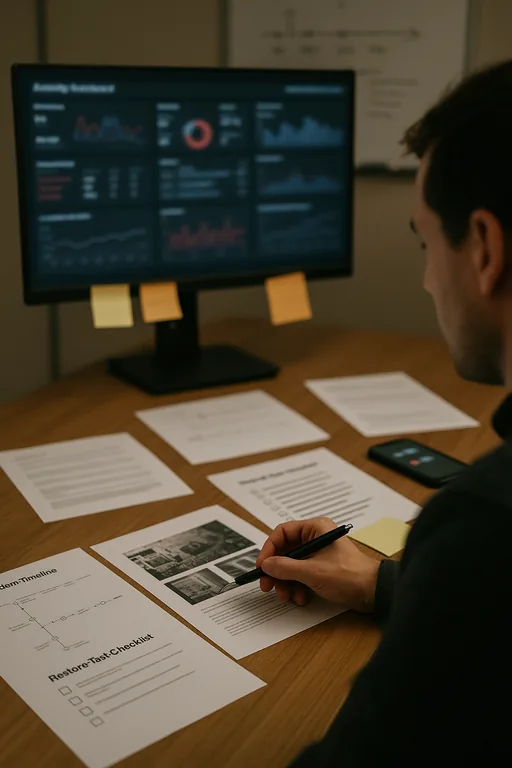
The main issue is straightforward: many construction firms do not get breached because someone smashed through a firewall. They get breached because an attacker signs in with a real username and password, then moves through email, cloud storage, and line-of-business systems as if they belong there. That is the invisible threat gap. The breach is what leadership notices, but the root cause is usually weak identity protection, inconsistent MFA enforcement, stale accounts, and limited visibility into user behavior.
We see this often in Reno construction environments where field supervisors, estimators, accounting staff, and subcontractor coordinators all need fast access from job trailers, mobile devices, and office workstations. That mix creates pressure for convenience, and convenience often outruns control. When that happens, even solid IT support and help desk in Reno can get pulled into reactive lockouts, mailbox recovery, and emergency access cleanup instead of preventing the incident in the first place. In cases like Randy’s, the first sign is often a billing delay, a missing vendor thread, or a project folder that suddenly cannot be trusted.
- Stolen credentials: Password reuse, phishing, and exposed credentials from prior third-party breaches let attackers log in without triggering traditional perimeter defenses.
- MFA gaps: Partial MFA rollout, weak SMS-only methods, or exceptions for legacy users leave high-value accounts exposed.
- Weak monitoring: Without sign-in anomaly alerts, impossible-travel detection, and mailbox rule review, suspicious activity can sit unnoticed for hours or days.
- Construction workflow sprawl: Shared devices, temporary users, and cloud file access across office and field locations increase the number of blind spots.
Practical Remediation That Closes the Blind Spots
The fix is not one product. It is a control stack. Start by locking down identity: require MFA for every user, remove legacy authentication, review conditional access, and disable dormant accounts. Then validate endpoint visibility so laptops in the office, at home, and on job sites all report into the same monitoring platform. Construction firms that want to secure business systems from ransomware and credential misuse need endpoint telemetry tied directly to user identity, not just antivirus running in the background.
From there, tighten the operational process. Review mailbox forwarding rules, audit privileged accounts, confirm backup coverage for Microsoft 365 data, and test incident response steps before the next event. The most useful guidance for this work is practical and well established; the CISA guidance on using MFA is a good baseline because it addresses the exact kind of account abuse that modern attackers rely on.
- Identity hardening: Enforce phishing-resistant or app-based MFA, remove unused accounts, and block risky sign-ins by geography and device state.
- Endpoint control: Deploy EDR across office and field devices so suspicious processes, token theft, and lateral movement attempts are visible.
- Alerting improvements: Trigger notifications for impossible travel, mass file downloads, mailbox rule creation, and repeated failed sign-ins.
- Backup validation: Confirm cloud and endpoint backups are recoverable, not just scheduled, with periodic restore testing.
Field Evidence: Credential Abuse Hidden Behind Normal Activity
In one Northern Nevada construction workflow review, the initial complaint sounded minor: intermittent email confusion, delayed vendor responses, and a supervisor who kept getting prompted to reauthenticate from a Washoe County job site. Before remediation, the environment had inconsistent MFA enrollment, no review of mailbox rules, and limited endpoint visibility on laptops moving between the office and active project locations. The activity blended in with normal business traffic, which is why it stayed hidden.
After the environment was cleaned up, the firm standardized sign-in controls, added endpoint visibility, and improved user-facing protections through identity and email security for construction operations . The result was fewer account lockouts, faster incident triage, and a measurable drop in suspicious sign-in events reaching staff inboxes. In practical terms, project communication became more reliable and accounting no longer had to pause billing reviews to verify whether messages and attachments were legitimate.
- Result: Suspicious sign-in response time dropped from several hours to under 20 minutes, and recurring email-access disruptions were reduced over the next quarter.
Reference Points for Reducing Breach Exposure
Scott Morris is an experienced IT and cybersecurity professional with 16 years of hands-on experience in managed technology services. He specializes in It Support And Help Desk and has spent his career building practical recovery, security, and operational continuity processes for businesses across Reno and Northern Nevada.


About the Author: Scott Morris
Local Support in Reno
Construction firms in Reno often operate between office staff, field supervisors, and active job sites spread across South Reno, Sparks, and nearby industrial corridors. That makes fast response important, but visibility matters more. From our office, the route to Longley Professional Park is a routine local service trip, and that proximity helps when an identity issue, endpoint alert, or access failure needs to be verified quickly and corrected without slowing the rest of the business.
Closing the Gap Before the Breach Becomes the Story
For Reno construction firms, a visible data breach is usually the end result of a quieter control failure. Stolen credentials, weak MFA enforcement, poor endpoint visibility, and missing sign-in alerts create the conditions for disruption long before anyone calls it a security incident. If email, file access, and project communication are central to operations, identity protection has to be treated as part of business continuity, not just cybersecurity.
The practical takeaway is to reduce blind spots before they interrupt payroll, billing, scheduling, or vendor coordination. When identity, endpoint monitoring, and response procedures are aligned, the help desk stops chasing symptoms and starts preventing repeat incidents.