Reno/Sparks Ransomware
The outage or lockout is usually the last symptom to appear, not the first. Unclear ownership, overlapping tools, and fragmented support create weak points that can disrupt compliance advisory programs and put response time, accountability, and outage recovery at risk. Reducing that risk starts with clarifying ownership and enforcing cleaner escalation paths.
This case study reflects real breakdown patterns documented across 300+ regional IT incidents. Names and identifying details have been modified for confidentiality, while technical and financial data remain accurate to the original events.

Why Vendor Chaos Turns File Encryption Into a Plant-Wide Operations Problem

When files are encrypted inside a manufacturing environment in Sparks, the technical event is only part of the problem. The larger failure is usually operational: too many vendors, no single owner, overlapping tools, and no agreed escalation path when systems stop behaving normally. We see this often when office managers are left coordinating internet, phones, software, hardware, backups, and security vendors without clear authority. That structure works until it does not.
In practice, encrypted files often expose weaknesses that were already present. Endpoint protection may be managed by one provider, backups by another, Microsoft 365 by a third, and line-of-business software by a fourth. If nobody owns the full response chain, recovery slows down immediately. That is why compliance advisory programs in Northern Nevada matter in manufacturing settings: they establish accountability, define who responds first, and tie technical controls back to audit, retention, and recovery requirements. In Sparks and the broader Reno industrial corridor, that clarity matters because downtime affects production schedules, receiving, shipping, and customer commitments at the same time.
- Technical factor: Fragmented vendor ownership leaves gaps in endpoint monitoring, backup validation, access control, and incident escalation, so a single encryption event can spread before anyone confirms who is responsible for containment.
- Operational factor: Manufacturing teams depend on shared folders for work orders, quality documentation, inventory movement, and shipping records, so file loss quickly becomes a production and compliance issue.
- Local factor: Multi-vendor support across Sparks, Reno, and nearby industrial sites often adds delay when providers are remote, dispatch windows are unclear, or each vendor waits for another to take the first step.
How to Stabilize Recovery and Prevent the Next Encryption Event
The fix is not just restoring files. The fix is assigning ownership across the entire stack and reducing the number of blind spots. We typically start by identifying who owns identity, endpoint security, backup success, network segmentation, firewall policy, and vendor escalation. Then we document the exact response order for encryption, lockout, or outage scenarios. Plants that rely on mixed vendors benefit from tighter oversight such as proactive device and endpoint management so suspicious behavior is isolated before shared storage and mapped drives are affected.
From a technical standpoint, practical remediation usually includes EDR tuning, MFA hardening for administrative access, backup immutability where available, restore testing, and segmentation between production systems and general office endpoints. It also helps to align controls with recognized guidance from CISA ransomware preparedness resources , especially for incident response, privileged access, and backup recovery validation. In manufacturing, the goal is not theoretical security maturity. The goal is keeping production records, shipping workflows, and compliance evidence available when one device or one vendor relationship fails.
- Control step: Establish a single incident owner with written escalation paths, validated backups, segmented file access, and monitored endpoints so containment and restoration begin immediately instead of after multiple vendor handoffs.
- Control step: Remove overlapping tools where possible and require every vendor to document scope, after-hours response expectations, and handoff responsibilities.
- Control step: Test restores against real plant data sets, not just backup job success messages, to confirm that encrypted files can actually be recovered within the required recovery window.
Field Evidence: Restoring Order After a Multi-Vendor File Encryption Incident
In one Northern Nevada industrial setting, the initial condition looked familiar: shared folders were unavailable, backup status reports were green but unverified, and three separate vendors were debating whether the issue started with permissions, malware, or storage corruption. The site had no single response lead, and the office team was trying to coordinate technical decisions while production supervisors waited for updated paperwork.
After consolidating ownership, isolating affected endpoints, and validating the most recent clean restore point, the business moved from reactive calls to a documented recovery sequence. We also put in place IT systems for multi-location operations so vendor communication, escalation timing, and recovery accountability were no longer spread across email threads and personal notes. That kind of structure is what keeps a file event from becoming a week-long operational problem. In this case, Melinda’s callback is straightforward: once ownership was clear, the plant restored critical shared data the same day and resumed normal document flow before the next full production cycle.
- Result: Recovery time dropped from an open-ended multi-vendor dispute to a controlled same-day restore, with verified backup integrity, defined escalation ownership, and reduced exposure to repeat downtime.
Reference Table: Common Manufacturing File Encryption Control Points
Scott Morris is an experienced IT and cybersecurity professional with 16 years of hands-on experience in managed technology services. He specializes in Compliance Advisory Programs and has spent his career building practical recovery, security, and operational continuity processes for businesses across Reno, Sparks, Carson City, Lake Tahoe, and Northern Nevada and Northern Nevada.
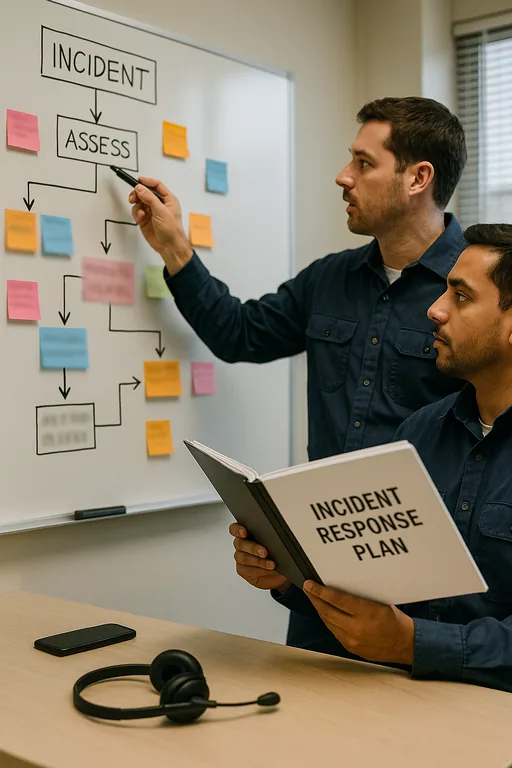

About the Author: Scott Morris
Local Support in Reno, Sparks, and Northern Nevada
Manufacturing and industrial businesses in Sparks often need support that can bridge office systems, plant-floor documentation, vendor coordination, and recovery planning without losing time in handoffs. From our Reno location, the North Valleys Commerce Center area is typically about 21 minutes away, which matters when a file encryption event is affecting production records, shipping paperwork, or compliance documentation and the response needs to be organized quickly.
Clear Ownership Is What Shortens Recovery
When a manufacturing plant in Sparks loses access to files because of encryption, the immediate question is how to restore operations safely. The longer-term question is why the environment allowed vendor confusion to slow containment and recovery in the first place. In most cases, the answer is not one bad tool. It is weak ownership across security, backups, identity, and escalation.
Reducing that risk means assigning responsibility before the next incident, validating recovery paths, and making sure compliance requirements are tied to actual operating procedures. Plants that do this well recover faster, document better, and spend less time arguing with vendors while production is waiting.