Reno/Sparks Plant Risk
The outage or lockout is usually the last symptom to appear, not the first. Slow devices, ticket backlogs, and repeated workarounds create weak points that can disrupt backup and recovery programs and put productivity, response times, and team focus at risk. Reducing that risk starts with stabilizing daily support, reducing repeat issues, and standardizing how IT is handled.
This case study reflects real breakdown patterns documented across 300+ regional IT incidents. Names and identifying details have been modified for confidentiality, while technical and financial data remain accurate to the original events.

Why Operational Drain Leads to Encrypted Files
When a Sparks manufacturing plant ends up with encrypted files, the encryption itself is often the final visible failure. The real problem usually starts earlier with daily friction: aging endpoints that take too long to boot, unresolved permissions issues, overloaded file shares, inconsistent patching, and a helpdesk queue that never fully catches up. Those conditions create the operational drain that quietly weakens recovery readiness. Staff begin saving files locally, bypassing approved storage, delaying updates, and relying on informal fixes just to keep production moving.
We see this pattern across Northern Nevada operations where production, shipping, purchasing, and front-office teams all depend on the same systems but do not always receive the same level of support discipline. In manufacturing environments around Sparks, even a small delay in ERP access, shared drawings, or label printing can ripple into scheduling and fulfillment. Businesses trying to reduce that exposure typically need stronger backup and recovery programs in Northern Nevada so encrypted files do not become a full operational stoppage. The issue is not only whether backups exist. It is whether they are current, isolated, tested, and aligned with how people actually work.
- Ticket backlog pressure: Repeated low-level issues consume support time, delay root-cause work, and leave patching, backup validation, and access reviews incomplete.
- Workaround behavior: Staff move files to desktops, USB devices, or personal cloud folders when shared systems feel unreliable, which breaks retention and recovery consistency.
- Flat access design: If file shares, user permissions, and production systems are not segmented properly, one compromised account can affect a much wider set of data.
- Recovery blind spots: Backups may appear healthy in reports while restore points are outdated, incomplete, or too slow to support plant operations during an incident.
How to Reduce Encryption Risk Before It Becomes Plant Downtime
The practical fix is to treat operational drain as a security and continuity issue, not just a support annoyance. Start by stabilizing the daily environment: reduce recurring tickets, standardize endpoint health, tighten privilege levels, and make sure file storage follows one controlled path. For plants with on-premise servers, hybrid workloads, and line-of-business applications, that usually means better visibility into server performance, storage thresholds, failed jobs, and authentication anomalies. Structured server and hybrid infrastructure management helps close the gap between routine support and actual resilience.
From there, remediation should include tested restore procedures, MFA hardening, endpoint detection and response, and backup copies that cannot be easily altered by the same credentials used in daily operations. Cloud-connected environments also need policy review so Microsoft 365, SharePoint, and OneDrive data are governed consistently with on-premise file systems. The CISA ransomware guidance remains a practical reference because it focuses on segmentation, offline recovery, and incident preparation rather than theory.
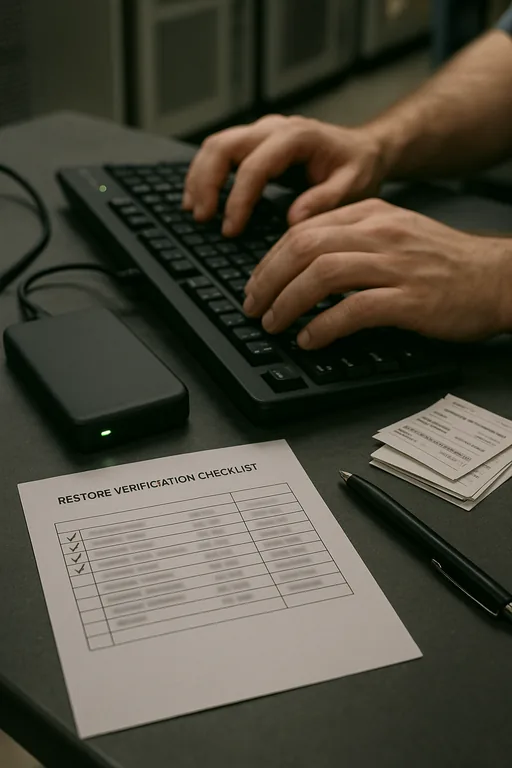
- Backup validation: Run scheduled restore tests against critical production folders, finance data, and shared operational documents instead of relying on job-success alerts alone.
- Access hardening: Remove unnecessary admin rights, enforce MFA, and separate user access from backup administration credentials.
- Endpoint control: Deploy EDR with alerting tuned for abnormal encryption behavior, script abuse, and lateral movement.
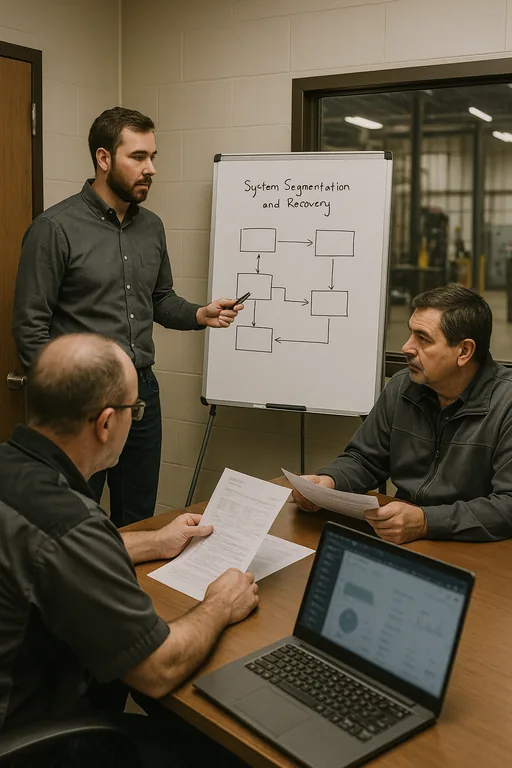
- Segmentation: Isolate production systems, file servers, and office networks so one compromised device does not affect the full plant.
- Queue reduction: Track repeat incidents by device class, user group, and application so chronic support issues are eliminated instead of recycled.
Field Evidence: From Repeated Friction to Controlled Recovery
In one Northern Nevada operation serving customers between Sparks and the Reno industrial corridor, the environment had a familiar pattern before remediation: slow workstation logins at shift change, intermittent file-share disconnects, backup alerts that were acknowledged but not investigated, and too many users storing active files outside approved locations. After a review of endpoint health, permissions, backup jobs, and server load, the business standardized storage paths, corrected failed backup chains, and tightened access around shared operational data.
The after-state was not dramatic, but it was effective. Restore testing became routine, recurring support tickets dropped, and cloud file handling was brought under the same governance model through cloud and Microsoft environment management for multi-location operations . That matters in local environments where warehouse, office, and remote users often touch the same records from different locations and on different schedules. In a follow-up event involving suspicious file activity, Abril’s counterpart at that site was able to isolate the affected account quickly and restore current files without a prolonged shutdown.
- Result: Repeat support tickets fell by 38 percent over one quarter, backup restore verification moved to a documented monthly process, and the business reduced file recovery time from most of a day to under 90 minutes.
Operational Controls That Reduce Encryption Exposure
Scott Morris is an experienced IT and cybersecurity professional with 16 years of hands-on experience in managed technology services. He specializes in Backup And Recovery Programs and has spent his career building practical recovery, security, and operational continuity processes for businesses across Reno, Sparks, Carson City, Lake Tahoe, and Northern Nevada and Northern Nevada.

About the Author: Scott Morris
Local Support in Reno and Northern Nevada
Reno Computer Services supports businesses across Reno, Sparks, and surrounding Northern Nevada corridors where production, office, and hybrid environments often depend on the same infrastructure. From our Ryland Street office, local response into west Reno and Caughlin Ranch is typically straightforward, and that proximity helps when a file access issue, backup failure, or encryption event needs both remote triage and on-site coordination.
Operational Stability Is Part of Recovery Readiness
Encrypted files in a Sparks manufacturing environment are rarely caused by one isolated mistake. More often, they follow a period of operational drag: slow systems, recurring tickets, inconsistent storage habits, and support processes that stay reactive for too long. That combination weakens backup integrity and makes recovery slower when the business can least afford it.
The practical takeaway is straightforward. If daily IT friction is increasing, recovery risk is increasing with it. Stabilizing endpoints, reducing repeat issues, validating restores, and tightening access controls will do more to protect production continuity than waiting for a major incident to expose the gaps.