
Reno/Sparks Plant Drain Fix
When a business is dealing with encrypted files, the failure usually started earlier. Slow devices, ticket backlogs, and repeated workarounds can weaken managed cybersecurity services over time and leave manufacturing plants in The Truckee Meadows exposed when pressure hits. Addressing the problem means stabilizing daily support, reducing repeat issues, and standardizing how IT is handled.
This case study reflects real breakdown patterns documented across 300+ regional IT incidents. Names and identifying details have been modified for confidentiality, while technical and financial data remain accurate to the original events.
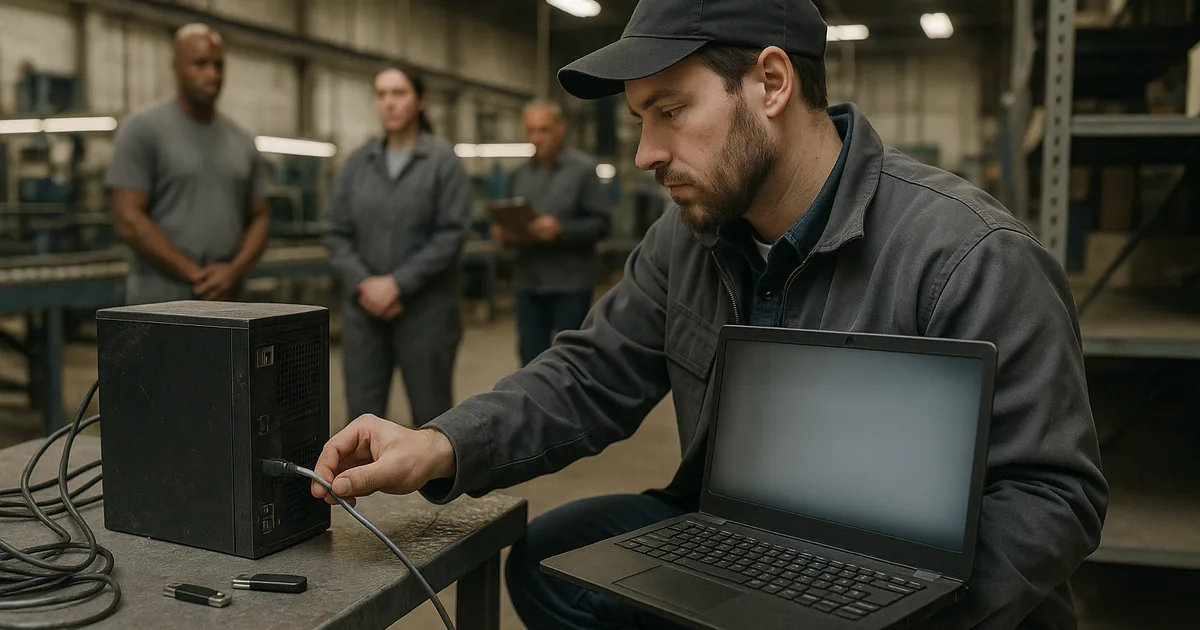
Why Encrypted Files Usually Follow an Operational Drain

When files are encrypted in a Truckee Meadows manufacturing environment, the immediate issue is obvious, but the root cause usually is not. In most cases, we find a long buildup of small failures: aging endpoints that stay slow for months, ticket queues that never fully clear, shared credentials, inconsistent patching, and staff creating workarounds because production cannot wait. That is the operational drain. It does not look dramatic day to day, but it steadily reduces visibility and weakens response discipline until one bad email, one exposed credential, or one unmanaged device turns into a real incident.
Manufacturing plants in Reno, Sparks, and the surrounding industrial corridors are especially vulnerable because uptime pressure changes user behavior. If label printing is lagging, if a workstation on the floor keeps freezing, or if a file share is unreliable, employees will find another way to move work. Over time, those shortcuts break the consistency that managed cybersecurity services in Northern Nevada are supposed to enforce. That is why the first answer is not just “restore the files.” The real answer is to correct the support backlog, remove repeat friction, and rebuild control over endpoints, identities, and shared data paths. In situations like Kerri’s, the encryption event was simply the moment the hidden backlog became impossible to ignore.
- Technical factor: Repeated workstation slowdowns, inconsistent patching, and informal file-sharing methods create blind spots that allow malware or unauthorized encryption activity to spread before anyone recognizes the pattern.
- Operational factor: Production teams under deadline pressure often bypass broken processes, which increases exposure when access controls, endpoint health, and ticket response are already slipping.
- Business consequence: Encrypted files interrupt scheduling, purchasing, inventory updates, quality records, and shipping coordination at the same time, which makes even a short outage expensive.
Practical Remediation for Manufacturing Environments Under Strain
The fix has to start with containment and then move quickly into standardization. We typically isolate affected endpoints, verify whether the encryption is limited to local devices or has reached shared storage, review account activity, and validate backup integrity before any broad recovery begins. From there, the work shifts to reducing the conditions that allowed the incident to happen: clearing ticket backlog, replacing unstable devices, enforcing MFA, tightening admin rights, and segmenting production-adjacent systems from general office traffic where appropriate.
For plants that have been operating in a constant state of workaround, structured security monitoring and response becomes critical because it shortens detection time and gives operations a defined escalation path. We also recommend aligning controls with practical guidance from CISA’s ransomware prevention resources , especially around offline backups, phishing resistance, and privileged account control. The goal is not to add complexity for its own sake. The goal is to make the environment predictable enough that daily support issues do not quietly undermine security.
- Containment: Remove affected systems from the network, preserve logs, and verify whether mapped drives, cloud sync folders, or shared production repositories were touched.
- Backup validation: Test restore points before declaring recovery viable, including file-level restores for ERP exports, CAD files, and production documents.
- MFA hardening: Enforce multifactor authentication on email, remote access, and admin accounts to reduce the chance of reused credentials driving the next incident.
- Endpoint control: Deploy EDR, standardize patching, and retire unstable devices that generate recurring tickets and user workarounds.
- Network separation: Use VLAN segmentation and access rules so office-side compromise does not move freely into systems supporting plant operations.
Field Evidence: From Daily Friction to Controlled Recovery
We have seen this pattern in light industrial and fabrication settings across the Reno-Sparks area, especially where office staff, shipping, and production planning all depend on the same shared file structure. Before remediation, the environment usually shows the same warning signs: recurring slowness on older PCs, unresolved printer and file-share issues, inconsistent user permissions, and no clear ownership of security alerts. After cleanup, the difference is measurable because the business is no longer operating through exceptions.
In one Truckee Meadows case, a plant with repeated workstation complaints and unreliable shared folders moved to a more structured baseline that included endpoint visibility, tested backups, and a documented escalation process. Within the following quarter, repeat support tickets dropped, file access became more consistent during shift changes, and leadership had a clearer operating model through compliance-focused IT management rather than ad hoc fixes. That kind of change matters in Northern Nevada, where multi-building layouts, older industrial spaces, and mixed office-floor workflows can magnify small IT failures quickly.
- Result: Recovery time for file-related incidents dropped from most of a workday to under 90 minutes, and recurring endpoint tickets were reduced by 38 percent over the next 60 days.
Reference Table: Common Controls for Encrypted File Incidents
Scott Morris is an experienced IT and cybersecurity professional with 16 years of hands-on experience in managed technology services. He specializes in Managed Cybersecurity Services and has spent his career building practical recovery, security, and operational continuity processes for businesses across The Truckee Meadows and Northern Nevada.

About the Author: Scott Morris
Local Support in The Truckee Meadows
Our office is positioned to support Reno, Sparks, and nearby industrial corridors where manufacturing and distribution teams depend on stable file access, predictable support response, and practical recovery planning. For businesses working around Wells Avenue, Midtown, and the broader Truckee Meadows, short travel time helps, but the larger value comes from having systems standardized before a file encryption event disrupts operations.
Operationally, the Real Fix Starts Before the Next Encryption Event
Encrypted files in a manufacturing setting are rarely just a security problem. They are usually the result of unresolved daily friction that has been tolerated too long. Slow devices, recurring tickets, inconsistent permissions, and informal workarounds all reduce the effectiveness of cybersecurity controls. Once that pattern is in place, a single bad event can interrupt production support, shipping coordination, documentation, and billing at the same time.
The practical takeaway for Truckee Meadows businesses is straightforward: stabilize support operations, standardize endpoint and identity controls, and test recovery before the next incident forces the issue. When IT is handled consistently, the business is less dependent on workarounds and far better prepared to absorb a real disruption without losing the day.