
Reno Sparks Network Crash
What looks like a one-off issue is often tied to growth outpacing IT capacity. In financial office environments, endpoint sprawl, underplanned infrastructure, and inconsistent standards can turn into performance, reliability, and future growth long before anyone notices the warning signs. Closing those gaps early makes backup and disaster recovery far more resilient.
This case study reflects real breakdown patterns documented across 300+ regional IT incidents. Names and identifying details have been modified for confidentiality, while technical and financial data remain accurate to the original events.
Why a Network Crash Usually Means You Hit the Scalability Ceiling First

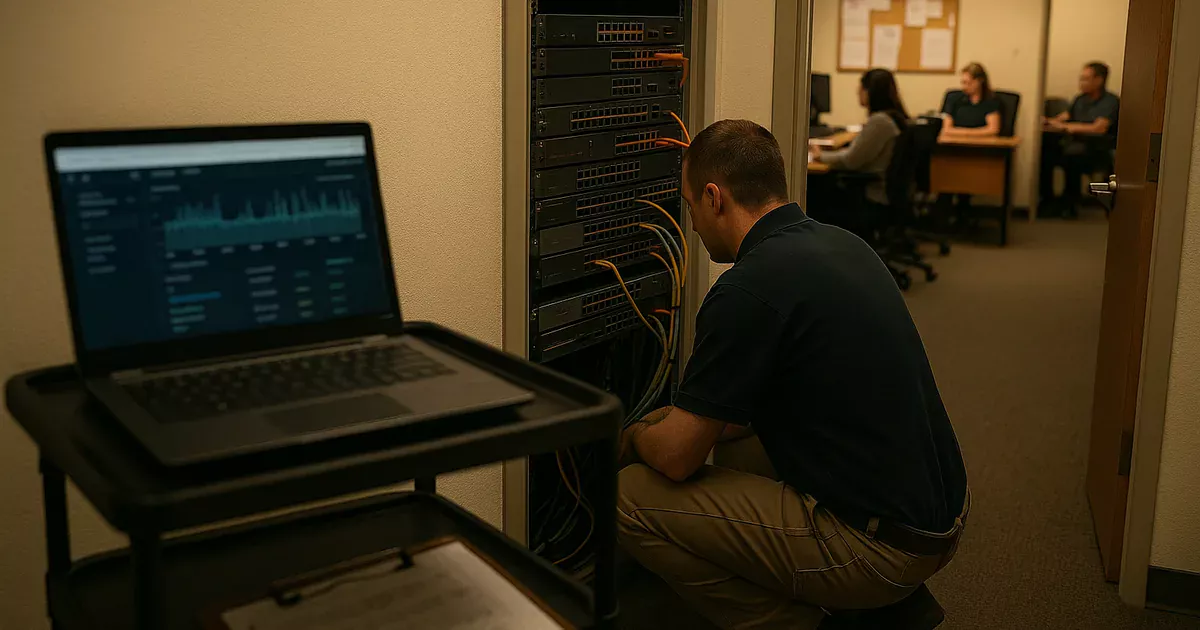
A network crash in a financial office is rarely just a bad switch or a random outage. More often, it is the point where growth finally exposes weak standards. New hires arrive, more devices are added, printers multiply, cloud sync expands, and line-of-business applications start competing for bandwidth and authentication resources. In Washoe County offices, we often find that the visible outage is only the symptom. The actual issue is that the environment was never designed to support the next 10 people, the next software rollout, or the next location change.
That is the core of the scalability ceiling. A firm may function acceptably at 12 users and then become unstable at 20 because IP ranges are poorly managed, wireless coverage is uneven, aging firewalls are undersized, and backup jobs are running against systems that are already overloaded. For financial teams handling client records, reporting deadlines, and document retention requirements, that instability directly affects continuity. This is why firms evaluating backup and disaster recovery in Northern Nevada need to look beyond the backup appliance itself and address the infrastructure feeding it. In incidents like the one affecting Dave, the outage often starts with growth but ends by exposing recovery gaps as well.
- Infrastructure saturation: Switch capacity, DHCP allocation, firewall throughput, and shared storage performance can all degrade at once when user count and endpoint count rise without a matching redesign.
- Inconsistent onboarding: When new users and devices are added without standard naming, policy assignment, and access templates, troubleshooting slows and misconfigurations multiply.
- Backup fragility: Backups may still report as completed, but restore windows, replication timing, and recovery point objectives often become unrealistic once the environment grows beyond its original design.
- Financial workflow sensitivity: Tax platforms, document management systems, and secure file exchange tools are less tolerant of latency, dropped sessions, and profile corruption than many general office workloads.
How to Stabilize the Environment and Keep the Problem from Returning
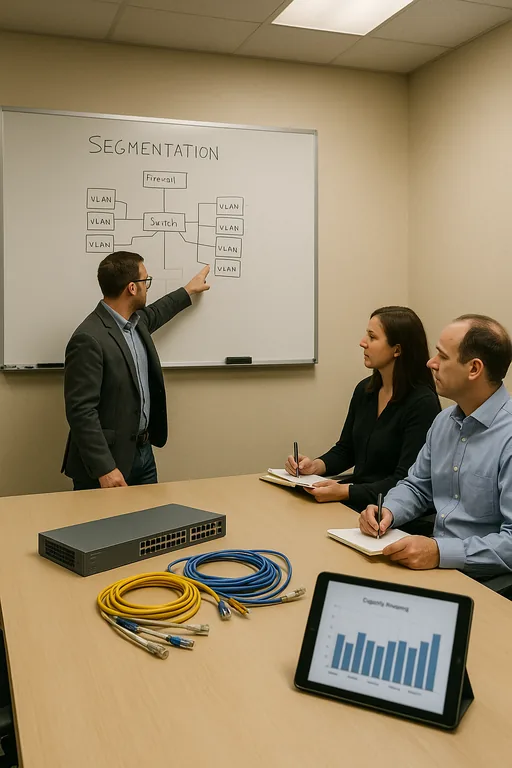
The fix is not just replacing one failed device. The practical response is to standardize the environment, measure actual load, and rebuild the office around predictable growth. We typically start by documenting every endpoint, validating switch and firewall utilization, reviewing wireless channel overlap, checking DHCP and DNS health, and confirming whether backup jobs are completing within a realistic recovery window. From there, the office can be segmented and right-sized so that user growth does not create another single point of failure.
For financial offices, remediation also needs an operational support layer. Structured IT support and help desk coverage for Reno-area offices helps enforce onboarding standards, patching discipline, and escalation paths before small issues become outages. Controls such as MFA hardening, tested restores, endpoint baselines, and alerting thresholds align well with guidance from CISA , especially when business continuity and ransomware resilience overlap.
- Capacity review: Measure current and projected user, device, storage, and bandwidth demand before the next hiring wave.
- Network segmentation: Use VLANs to separate staff devices, printers, guest access, and sensitive systems so one overloaded segment does not affect the whole office.
- Endpoint standardization: Apply consistent build policies, patch schedules, naming conventions, and security controls across all workstations and laptops.
- Backup validation: Test restores against real recovery objectives, not just job completion logs, and confirm that growth has not extended recovery time beyond acceptable limits.
- Alerting improvements: Set thresholds for switch errors, storage latency, failed backups, and endpoint health so the team sees degradation before users feel it.
Field Evidence: Growth Pressure Across a Reno Finance Corridor
We have seen this pattern in offices stretching from central Reno to the airport business corridor: a firm adds advisors, support staff, and remote-capable laptops over a 12- to 18-month period, but the network core, wireless design, and endpoint controls stay largely unchanged. Before remediation, users report intermittent slowness, dropped sessions in document systems, and backup jobs that run longer each week. After remediation, the office typically moves to a cleaner device inventory, segmented traffic, and documented recovery priorities.
One of the biggest improvements comes from tightening proactive endpoint management for growing business operations . Once devices are consistently patched, monitored, and assigned to standard policies, support becomes faster and the network becomes more predictable. In Northern Nevada, where offices may coordinate between Reno, Sparks, and Carson City, that consistency matters because even a short outage can disrupt approvals, client communications, and end-of-day processing across multiple teams.
- Result: After standardizing endpoints, reworking network segmentation, and validating backup performance, the office reduced recurring outage events, restored normal login and file access speeds, and cut backup window overruns by more than 60 percent.
Scalability Risk Controls for Financial Office Networks
Scott Morris is an experienced IT and cybersecurity professional with 16 years of hands-on experience in managed technology services. He specializes in Backup And Disaster Recovery and has spent his career building practical recovery, security, and operational continuity processes for businesses across Washoe County and Northern Nevada.

About the Author: Scott Morris
Local Support in Washoe County
We regularly support businesses across Reno, Sparks, and the surrounding Washoe County area where growth can strain networks faster than internal teams expect. From downtown offices to the airport corridor, response planning matters because even short disruptions can affect billing, document access, and client service. The route below reflects the local service relationship between our Reno office and the Aircenter area discussed in this incident.
Growth Has to Be Planned Into the Network Before the Outage Happens
The practical takeaway is straightforward: if a financial office is adding people, devices, software, and remote access without revisiting network design and recovery assumptions, the environment will eventually show strain. The crash is only the visible event. The deeper issue is unmanaged growth, inconsistent standards, and backup planning that no longer matches the real workload.
For Washoe County firms, the right response is to review capacity before expansion, standardize endpoint onboarding, validate restore times, and treat network stability as part of business continuity. That approach reduces downtime, protects reporting and client service, and keeps future hiring from creating the next avoidable outage.