Reno/Sparks Network Crash
What looks like a one-off issue is often tied to untested backups. In financial office environments, failed restore tests, missing dependencies, and an unclear recovery order can turn into recovery time, data availability, and business continuity long before anyone notices the warning signs. Closing those gaps early makes identity email and user security far more resilient.
This case study reflects real breakdown patterns documented across 300+ regional IT incidents. Names and identifying details have been modified for confidentiality, while technical and financial data remain accurate to the original events.
Why a Network Crash Often Exposes a Resilience Test Failure

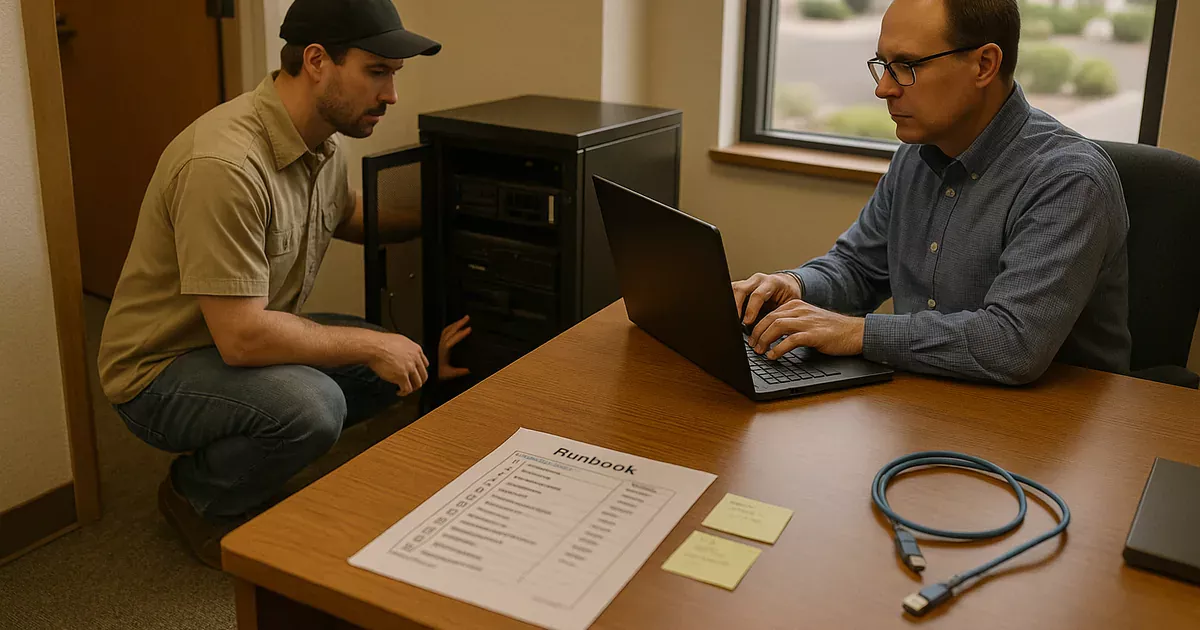
In a Washoe County financial office, a network crash is rarely just a switch, firewall, or ISP event. More often, it exposes whether the business can actually restore operations in a controlled sequence. That is the difference between having a backup and having continuity. A backup is only a copy. Business continuity is the ability to keep working, or recover in a predictable order, while core systems are unavailable.
We typically find three hidden gaps. First, backups are present but restores have not been tested against current systems. Second, the office does not have a clear dependency map showing what must come back first: identity services, file shares, email access, line-of-business applications, printers, and secure remote access. Third, user access controls are tied so tightly to a failed server or broken authentication path that even clean data cannot be used quickly. That is why identity email and user security in Northern Nevada belongs in the same conversation as backup validation. When Bob’s office lost access, the real delay came from authentication and permissions, not just from the original outage.
- Untested restore chain: A successful backup job does not confirm that Active Directory, mapped shares, application databases, and user permissions will restore in the order required for a financial office to resume work.
- Missing dependency awareness: Tax, bookkeeping, advisory, and document management platforms often rely on DNS, domain authentication, licensing servers, and local network paths that are not documented well enough for fast recovery.
- False sense of redundancy: Many offices assume cloud email or synced folders equal continuity, but they do not replace a tested recovery plan for local permissions, shared data, and business workflows.
- Local operational pressure: In Reno, Sparks, and broader Washoe County, multi-office coordination, carrier handoffs, and older building infrastructure can make a simple outage look random when the real weakness is recovery readiness.
Practical Remediation for Backup Validation and Recovery Order
The fix is not just to buy more storage or add another backup job. The fix is to prove recovery. For financial offices, that means documenting system dependencies, defining recovery time objectives by workflow, and running scheduled restore tests that include user logins, file access, application launch, and email continuity. We also recommend separating critical identity functions from single points of failure so a server issue does not immediately become a user access issue.
A sound remediation plan usually includes immutable or isolated backup copies, quarterly restore testing, and written runbooks for who restores what first. Businesses that need stronger resilience often benefit from managed backup solutions for financial operations that include verification, alerting, and retention review rather than simple job completion reports. For control guidance, the CISA ransomware and recovery guidance is useful because it emphasizes tested backups, restoration procedures, and operational recovery rather than just prevention.
- Restore testing: Validate backups against real recovery scenarios, including domain authentication, file permissions, and line-of-business application startup.
- Recovery sequencing: Build a documented order for identity, DNS, file services, email access, and financial applications so staff are not waiting on hidden dependencies.
- MFA and identity hardening: Protect administrative accounts and remote access paths so emergency recovery does not create new security exposure.
- Backup isolation: Maintain protected copies that cannot be altered by the same credentials used in daily operations.
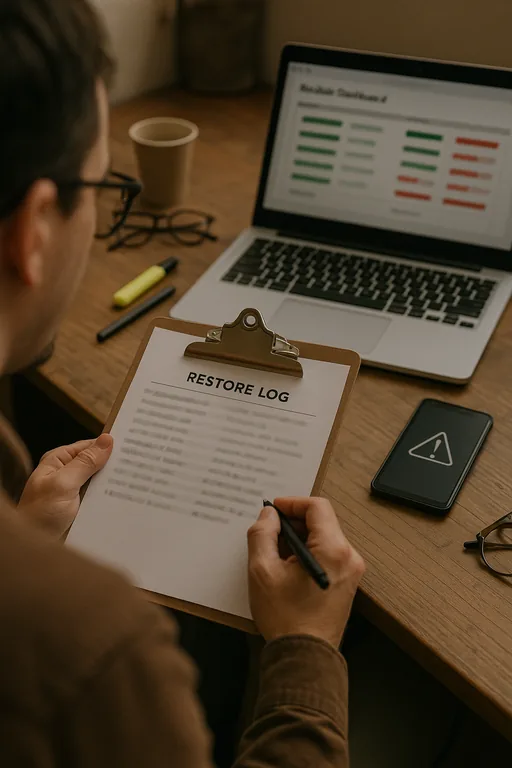
- Alerting improvements: Review failed jobs, partial backups, storage thresholds, and restore errors instead of relying on green dashboard summaries alone.
Field Evidence: The Resilience Test in a Washoe County Financial Workflow
We worked through a similar pattern for a professional office corridor environment where staff depended on a central file share, Microsoft 365, and a specialized accounting platform. Before remediation, the office had backups completing nightly but no verified restore sequence. A server interruption created confusion over whether the issue was network, storage, or authentication. After mapping dependencies and running a full recovery exercise, the office knew exactly how to bring identity, shared files, and application access back online in order.
That change matters in Northern Nevada because weather events, power irregularities, and carrier issues can create the same symptoms as equipment failure. Once the office paired tested restores with disaster recovery planning for multi-system outages , response time became structured instead of improvised.
- Result: Recovery validation reduced estimated file-and-access restoration time from most of a business day to under 90 minutes for the primary workflow, with documented ownership for each recovery step.
Reference Points for Financial Office Resilience
Scott Morris is an experienced IT and cybersecurity professional with 16 years of hands-on experience in managed technology services. He specializes in Identity Email And User Security and has spent his career building practical recovery, security, and operational continuity processes for businesses across Washoe County and Northern Nevada.

About the Author: Scott Morris
Local Support in Washoe County
Reno Computer Services supports businesses across Reno, Sparks, and the broader Washoe County area. For offices in south Reno and the Fieldcreek area, response planning is not just about getting onsite quickly. It is about understanding how local financial offices actually operate, what systems must come back first, and how to reduce downtime when a network event exposes a larger continuity gap.
What Financial Offices Should Take Away
A network crash in a financial office often reveals a continuity problem that has been sitting quietly in the background. If restore testing has not been performed, if dependencies are undocumented, or if identity services are too tightly tied to one failure point, recovery will take longer than expected even when backups technically exist.
The practical answer is to test recovery before the next outage, define the order of restoration, and make sure users can regain secure access without guesswork. That approach reduces downtime, protects data availability, and gives Washoe County offices a more reliable operating position when the unexpected happens.