Reno/Sparks Hub Closed
When a business is dealing with operations stopping, the failure usually started earlier. Surprise spending, delayed upgrades, and aging infrastructure can weaken managed IT services over time and leave logistics hubs in The Truckee Meadows exposed when pressure hits. Addressing the problem means planning upgrades deliberately and aligning IT decisions to business risk.
This case study reflects real breakdown patterns documented across 300+ regional IT incidents. Names and identifying details have been modified for confidentiality, while technical and financial data remain accurate to the original events.

Why Operations Stop When IT Becomes a Surprise Expense

For most logistics businesses in The Truckee Meadows, operations do not stop because of one isolated technical event. They stop because core systems were allowed to age without a plan. We typically see the same pattern: a switch gets replaced only after failure, a line-of-business server stays in service past warranty, backup storage is expanded in pieces, and internet resiliency is discussed but never budgeted. Over time, that turns IT from an operating discipline into a series of emergency purchases.
The financial roadmap matters because logistics environments depend on timing, visibility, and repeatable workflows. If dispatch, inventory lookups, shipping labels, email approvals, or shared documents slow down, the business impact is immediate. That is why many organizations stabilize these risks through managed IT support in Reno that ties asset lifecycle, support history, and business priorities into one operating plan instead of treating every issue as a separate ticket. In Laura’s case, the outage was only the visible symptom of years of delayed decisions.
- Lifecycle planning failure: Critical infrastructure remained in production after its practical replacement window, increasing the chance of storage faults, performance bottlenecks, and unsupported firmware.
- Budget fragmentation: IT spending happened reactively, which made it harder to reserve funds for planned upgrades, redundancy, and testing.
- Operational dependency concentration: Dispatch, file access, and print workflows were tied too closely to a small number of aging systems with limited failover options.
- Visibility gap: Without vCIO-level review, leadership could see invoices but not the business risk accumulating behind them.
How to Build a Financial Roadmap That Prevents Repeat Downtime
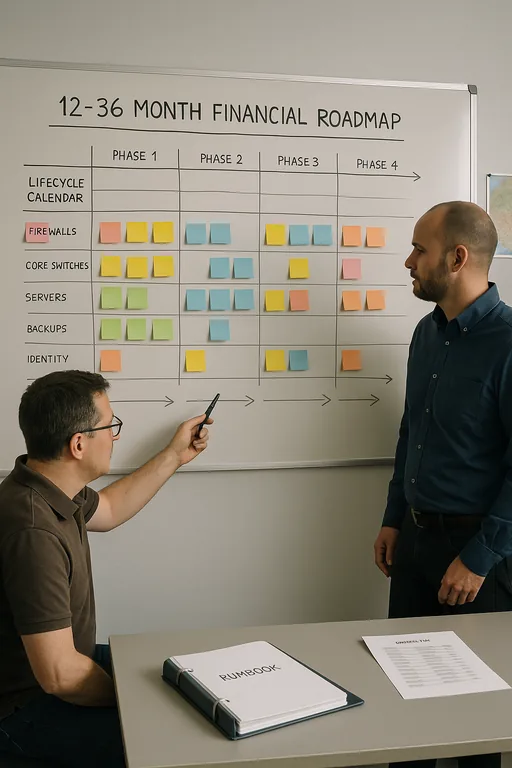
The fix is not just replacing one failed device. The practical correction is to create a 12 to 36 month roadmap that ranks systems by business impact, supportability, and replacement urgency. For a logistics hub, that usually starts with internet continuity, core switching, identity controls, backup validation, and any server or cloud platform supporting dispatch and shipping workflows. Once those priorities are visible, spending becomes predictable and downtime risk becomes easier to reduce.
We also recommend tightening user access and communication controls because many operational interruptions begin with compromised credentials, mailbox abuse, or account lockouts that spread into file access and workflow delays. That is where identity and email security controls for business operations become part of the financial roadmap rather than an afterthought. Guidance from CISA is useful here because it reinforces practical controls such as MFA, strong authentication, and verified recovery planning.
- Asset lifecycle schedule: Assign replacement windows to firewalls, switches, servers, wireless gear, and backup platforms before failure forces the decision.
- Risk-based budgeting: Tie each planned expense to a business function such as dispatch continuity, billing flow, or warehouse connectivity.
- Identity hardening: Require MFA, review privileged accounts, and reduce shared credentials that create hidden operational risk.
- Backup validation: Test restore times for shipping data, file shares, and line-of-business systems instead of assuming backups are usable.
- Alerting and escalation: Improve monitoring so storage degradation, failed jobs, and authentication anomalies are addressed before they interrupt production.
Field Evidence: From Deferred Upgrades to Predictable Operations
We worked with a Northern Nevada distribution environment serving routes between Reno, Sparks, and Carson-area customers where recurring slowdowns had been treated as isolated incidents for more than a year. The business had aging switching hardware, inconsistent backup reporting, and no agreed replacement calendar for systems supporting order processing and warehouse communications. During peak periods, even minor faults created a chain reaction of delayed picks, reprinted labels, and stalled confirmations.
After documenting dependencies, assigning replacement dates, and adding security monitoring that supports operational continuity , the environment shifted from reactive support to scheduled maintenance and measurable risk reduction. The local detail that mattered most was not geography alone, but the need to keep multi-stop delivery and receiving windows moving even when weather, carrier timing, or staffing changed across the Truckee Meadows.
- Result: Unplanned infrastructure incidents dropped over the next two quarters, backup verification moved to a documented schedule, and order-processing interruptions were reduced from multiple monthly events to isolated, shorter-duration issues.
Financial Roadmap Controls for Logistics IT
Scott Morris is an experienced IT and cybersecurity professional with 16 years of hands-on experience in managed technology services. He specializes in Managed It Services and has spent his career building practical recovery, security, and operational continuity processes for businesses across The Truckee Meadows and Northern Nevada.

About the Author: Scott Morris
Local Support in The Truckee Meadows
Reno Computer Services supports businesses across Reno, Sparks, and surrounding logistics corridors where timing, connectivity, and system reliability directly affect daily throughput. For organizations operating near Spanish Springs and the broader Pyramid Way corridor, local response matters, but strong planning matters more. The goal is to reduce the number of issues that ever become urgent in the first place.
Operational Takeaway
When operations stop, the technical fault is often only the final event in a longer financial planning problem. Deferred upgrades, fragmented spending, and unclear ownership of business risk make logistics environments more fragile than they appear on the surface.
A practical roadmap changes that. It gives leadership a way to prioritize replacement cycles, security controls, and recovery readiness before dispatch, billing, and warehouse workflows are interrupted. For Truckee Meadows businesses, that is how IT becomes a managed operating function instead of a recurring surprise.