Reno Logistics Hub
Seeing operations stopping is often the visible symptom of growth outpacing IT capacity, not the root problem itself. In logistics hubs across Reno, issues like endpoint sprawl, underplanned infrastructure, and inconsistent standards can quietly undermine compliance and risk management until work stops or risk spikes. The fix usually starts with standardizing how new users, devices, and systems are brought online.
This case study reflects real breakdown patterns documented across 300+ regional IT incidents. Names and identifying details have been modified for confidentiality, while technical and financial data remain accurate to the original events.
Why the Scalability Ceiling Stops Operations

When a Reno logistics operation suddenly stalls, the visible failure is usually a login issue, a file share outage, a line-of-business application slowdown, or a device that cannot connect. The underlying problem is often the scalability ceiling: the point where the business has added enough people, endpoints, vendors, and workflow dependencies that informal IT habits no longer hold. If your network, identity controls, endpoint standards, and documentation were built for 15 users, adding the next 10 people can expose every weak assumption at once.
We see this most often in fast-moving warehouse, dispatch, and distribution environments where leadership is focused on throughput and hiring, not on whether switch capacity, wireless coverage, licensing, access control, and asset tracking were designed to scale. That is why compliance and risk management in Reno has to be treated as an operational function, not a paperwork exercise. Once device sprawl starts, one missing standard can affect billing, shipment visibility, audit readiness, and incident response. In cases like Riley’s, the stoppage is not caused by one bad laptop. It is caused by growth without a controlled process for bringing users, devices, and systems online.
- Endpoint sprawl: New laptops, tablets, scanners, and personal devices get added faster than they are documented, patched, encrypted, and tied to role-based access.
- Underplanned infrastructure: Core switches, Wi-Fi coverage, VPN capacity, and shared storage often remain sized for yesterday’s headcount, not next quarter’s staffing plan.
- Inconsistent standards: Different departments adopt different login practices, software versions, and local workarounds, which makes support slower and increases audit gaps.
- Compliance drift: As systems expand, required controls around retention, access logging, MFA, and device management fall out of sync with actual operations.
How to Remove the Ceiling Before the Next Hiring Wave
The practical fix is to standardize expansion before expansion happens. That means defining what a new user, a new device, a new site, and a new workflow require from day one: approved hardware profiles, identity provisioning, MFA, endpoint protection, patching, backup coverage, network segmentation, and documented ownership. Businesses preparing for growth usually benefit from IT planning and budgeting in Northern Nevada so infrastructure upgrades happen ahead of staffing, not after operations fail.
For logistics and operations-heavy environments, we typically recommend a staged remediation plan. First, inventory every active endpoint and account. Second, align access with job role instead of convenience. Third, validate whether network capacity, wireless design, and cloud licensing can absorb the next hiring cycle. Fourth, test recovery and backup assumptions instead of trusting them. The CISA guidance on securing business systems is useful because it reinforces the same fundamentals: strong authentication, patch discipline, protected endpoints, and verified recovery processes.
- Standard onboarding: Build one checklist for every new employee, device, and application so access, security controls, and documentation are consistent.
- Identity hardening: Require MFA, remove shared credentials, and review group memberships before each staffing increase.
- Capacity review: Check switch ports, Wi-Fi density, internet failover, storage growth, and SaaS licensing against the next 6 to 12 months of hiring.
- Endpoint control: Use centralized device management, EDR, encryption, and patch enforcement so new systems do not create unmanaged risk.
- Backup validation: Confirm that critical file shares, cloud data, and operational systems are actually recoverable within acceptable downtime windows.
Field Evidence: Growth Broke the Old IT Model
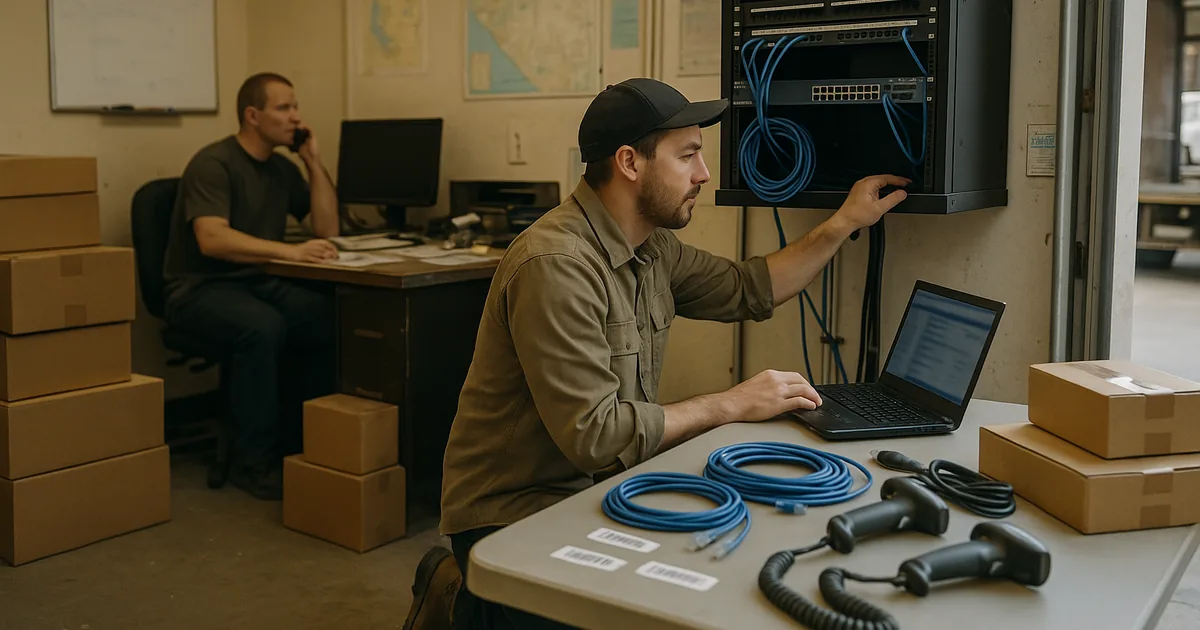
In one Northern Nevada operations environment supporting shipping coordination between Reno and nearby industrial corridors, the business had grown from a small office footprint into a multi-team workflow with dispatch, accounting, and vendor coordination all depending on the same aging network and loosely managed endpoints. Before remediation, new hires were being added with inconsistent permissions, aging wireless coverage was causing intermittent disconnects, and no one had a reliable count of which devices were subject to policy.
After standardizing onboarding, cleaning up identity roles, replacing unsupported network gear, and documenting system dependencies, the business moved from reactive firefighting to predictable operations. Later in the process, a broader technology advisory and assessment for growing operations helped leadership tie future hiring plans to infrastructure thresholds instead of guessing. That changed the conversation from “why did the system stop?” to “what needs to be expanded before the next team comes online?”
- Result: User provisioning time dropped from multiple hours of manual setup to a repeatable 30-minute process, unplanned access issues fell sharply, and the business completed its next staffing increase without operational interruption.
Scalability Risk Control Reference for Reno Logistics Operations
Scott Morris is an experienced IT and cybersecurity professional with 16 years of hands-on experience in managed technology services. He specializes in Compliance And Risk Management and has spent his career building practical recovery, security, and operational continuity processes for businesses across Reno and Northern Nevada.


About the Author: Scott Morris
Local Support in Reno
Reno logistics and operations teams often need support that understands both business continuity and the local realities of multi-site coordination, hiring surges, and mixed office-warehouse environments. From our Ryland Street location, we regularly support businesses across Reno, Sparks, and nearby commercial corridors where a small infrastructure gap can quickly affect scheduling, billing, and compliance posture.
Growth Has to Be Engineered, Not Assumed
When operations stop in a Reno logistics environment, the real issue is often not a single outage but a business that has outgrown its IT operating model. Endpoint sprawl, weak onboarding standards, aging infrastructure, and undocumented access patterns create a ceiling that only becomes visible when work slows or stops.
The practical takeaway is straightforward: expand systems before headcount, standardize every new user and device, and review capacity against the next stage of growth. That approach reduces downtime, supports compliance and risk management, and keeps expansion from turning into an avoidable interruption.