Reno Lockout Drain Fix
This kind of issue rarely appears all at once. For medical practices in Northern Nevada, it usually builds through slow devices, ticket backlogs, and repeated workarounds and then surfaces as a lockout, slower recovery, or higher exposure. A more reliable setup starts with stabilizing daily support, reducing repeat issues, and standardizing how IT is handled.
This case study reflects real breakdown patterns documented across 300+ regional IT incidents. Names and identifying details have been modified for confidentiality, while technical and financial data remain accurate to the original events.

Why Small IT Friction Turns Into Medical Practice Lockouts
For most medical practices in Northern Nevada, lockouts are not isolated events. They are usually the final symptom of an operational drain that has been building for months. We typically see the same pattern: aging endpoints take longer to authenticate, line-of-business applications hang during peak check-in periods, unresolved tickets pile up, and staff begin using workarounds that bypass normal process. Once enough of those weak points stack together, a password sync issue, profile corruption, failed update, or permissions error can stop patient flow.
That is why this problem has to be treated as both an IT issue and an operations issue. In Reno, Sparks, and Carson City, medical offices often run lean staffing models, so even a short interruption at the front desk affects intake, charting, referrals, and billing. Practices dealing with recurring friction usually need more than break-fix response; they need structured oversight through managed cybersecurity programs in Northern Nevada that reduce repeat failures before they become access incidents. In cases like Cindy’s, the lockout was only the visible failure. The real problem was unmanaged daily instability.
- Authentication drift: Password changes, cached credentials, and inconsistent identity controls can leave staff partially signed in to some systems but locked out of others.
- Ticket backlog: When minor issues stay open too long, staff normalize slow devices and repeated login failures until a larger outage occurs.
- Workflow workarounds: Shared logins, handwritten intake notes, and delayed chart entry increase both operational drag and compliance exposure.
- Endpoint inconsistency: Mixed patch levels, aging hardware, and unstable profiles create unpredictable behavior during busy clinic hours.
What Remediation Looks Like in Practice
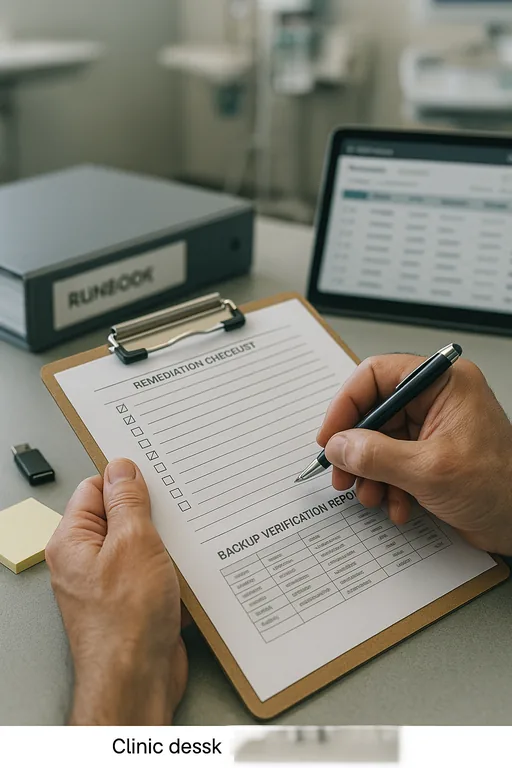
The fix is not a single reset or one-time cleanup. A stable remediation plan starts by identifying where the lockout actually began: identity management, endpoint health, application access, network path, or support process. From there, we standardize device baselines, tighten account controls, document escalation paths, and remove the recurring causes of ticket volume. For medical offices, that usually means reducing variation across workstations, validating backups, confirming EHR access dependencies, and making sure front-desk systems are treated as operationally critical.
A practical first step is a formal review of risk, access, and support gaps through security readiness assessments for medical operations . That gives leadership a usable picture of where downtime risk is coming from. It also aligns well with guidance from CISA on access control, phishing resistance, and basic cyber hygiene. Once the environment is stable, governance matters too. Clear documentation, role-based permissions, and audit-ready procedures supported by compliance-focused IT management help prevent the same issue from returning under a different name.
- Identity hardening: Enforce MFA, review role-based access, remove stale accounts, and correct password synchronization issues across systems.
- Endpoint standardization: Bring workstations to a common patch level, replace unstable devices, and deploy EDR with alerting tied to real escalation.
- Backup validation: Test restore points for critical files and application data instead of assuming backup jobs equal recoverability.
- Support process cleanup: Define response priority for clinical intake, scheduling, and billing systems so recurring issues are not left to age in the queue.
Field Evidence: From Daily Friction to Stable Access
We worked through a similar pattern with a multi-provider office operating between Reno and nearby referral partners. Before remediation, the practice was dealing with repeated morning login delays, intermittent printer mapping failures, and staff losing time re-entering information after partial session drops. The office had accepted those issues as normal because none of them seemed severe on their own. Over time, they created a steady drag on intake and billing.
After standardizing endpoints, correcting identity issues, tightening escalation rules, and documenting who had access to what, the office moved from reactive ticket handling to a more controlled operating model. That mattered in a Northern Nevada environment where weather, travel between sites, and provider scheduling leave little room for avoidable delays. The result was fewer repeated tickets, faster morning startup, and less disruption when staff moved between front-desk and clinical workflows.
- Result: Repeated access-related tickets dropped by 62 percent over the next quarter, and average morning login delays were reduced from 18 minutes to under 5 minutes.
Operational Controls That Reduce Lockout Risk
Scott Morris is an experienced IT and cybersecurity professional with 16 years of hands-on experience in managed technology services. He specializes in Managed Cybersecurity Programs and has spent his career building practical recovery, security, and operational continuity processes for businesses across Northern Nevada and Northern Nevada.


About the Author: Scott Morris
Local Support in Northern Nevada
From our Reno office, we regularly support medical and professional organizations across Reno, Sparks, Carson City, and nearby corridors where small access issues can quickly interrupt scheduling, intake, and billing. The route below reflects the local service reality for a practice near Mira Loma Drive, where on-site response, remote remediation, and documented support process all need to work together.
Stabilize the Daily Environment Before the Next Lockout
Medical practice lockouts in Northern Nevada are usually the result of accumulated operational drag, not a single dramatic failure. Slow devices, unresolved tickets, inconsistent access controls, and undocumented workarounds all increase the odds that a routine morning becomes a scheduling and billing problem. The right response is to reduce repeat friction, standardize support, and treat access reliability as part of clinical operations.
When leadership can see where the drain is coming from, remediation becomes more straightforward. That means fewer recurring tickets, more predictable recovery, and less exposure when systems are under strain. For smaller practices especially, disciplined support and governance are often what separate a manageable issue from a costly interruption.