Reno Law Firm IT Audit
This kind of issue rarely appears all at once. For law firms in Northern Nevada, it usually builds through unclear ownership, overlapping tools, and fragmented support and then surfaces as systems going down, slower recovery, or higher exposure. A more reliable setup starts with clarifying ownership and enforcing cleaner escalation paths.
This case study reflects real breakdown patterns documented across 300+ regional IT incidents. Names and identifying details have been modified for confidentiality, while technical and financial data remain accurate to the original events.
Why Vendor Chaos Brings Law Firm Systems Down
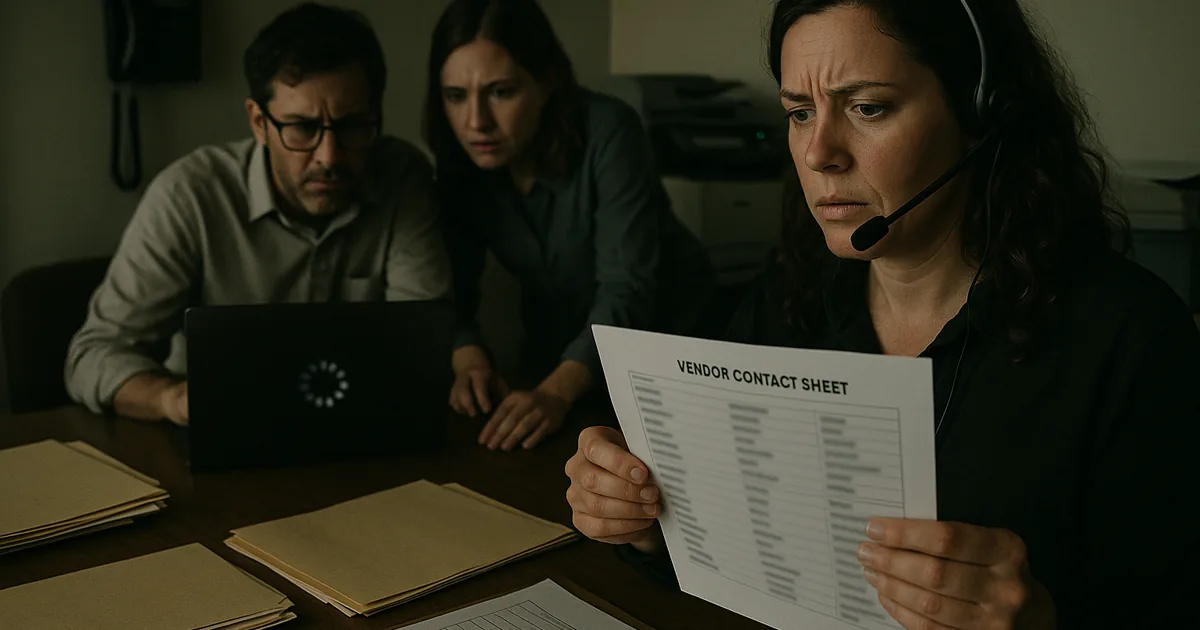
When a Northern Nevada law firm says “the systems are down,” the root problem is often not a single failed device. More often, it is a chain of unclear ownership across internet, phones, line-of-business software, printers, workstations, Microsoft 365, backups, and security tools. Each vendor may only see its own slice. No one is accountable for the full workflow, so recovery slows down while staff try to sort out who should respond first.
We see this regularly in firms that have grown over time without a single operating standard. An office manager ends up coordinating carriers, copier vendors, legal software support, and a part-time IT contact while attorneys and paralegals wait on access to files, calendars, and case notes. That is especially risky when backup responsibility is assumed rather than verified. Firms that depend on Reno managed backup solutions need clear ownership for backup jobs, retention, restore testing, and outage escalation, otherwise a recoverable incident turns into a billing and continuity problem. In cases like this, the issue is not only downtime. It is delayed filings, missed client communication, and slower matter progression.
- Fragmented accountability: Internet, VoIP, legal software, endpoint support, and backup vendors often work in parallel without a documented escalation chain, which creates long handoff delays during outages.
- Overlapping tools: Multiple remote access agents, unmanaged security products, or duplicate backup utilities can interfere with each other and make root-cause analysis harder.
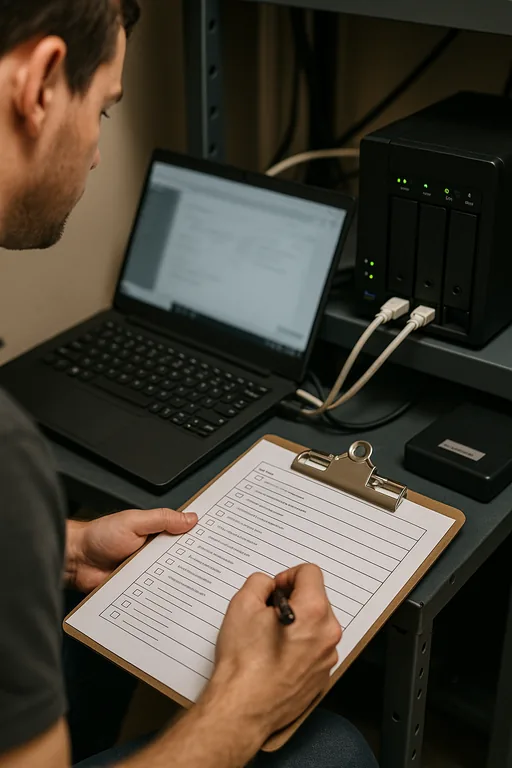
- Unverified recovery assumptions: A backup dashboard may show “successful” jobs while restores fail because credentials changed, storage filled, or application consistency was never tested.
- Operational bottlenecks: In Samantha’s situation, the office lost time not because the outage was technically complex, but because no one had authority to coordinate all vendors against one business priority.
How to Restore Control and Reduce Downtime
The fix is usually operational before it is technical. Start by assigning one accountable party to own the incident process from detection through recovery. That includes maintaining a current vendor matrix, documenting who owns each system, defining escalation thresholds, and confirming what happens after hours. For law firms, this should include internet failover expectations, phone routing dependencies, Microsoft 365 administration, legal application support boundaries, and backup restoration procedures.
From there, standardize the environment. Consolidate overlapping tools, remove unsupported agents, and validate that backups protect the actual business workflow rather than just the server image. Firms that need stronger coordination often benefit from managed IT support in Reno for multi-vendor operations , where monitoring, escalation, and recovery ownership are centralized. For security and continuity controls, the CISA ransomware and resilience guidance is a practical reference because it reinforces tested backups, access control, and incident planning rather than relying on assumptions.
- Vendor ownership map: Create a single document listing every provider, contract scope, admin contact, escalation path, and business dependency.
- Backup validation: Test file-level and system-level restores on a schedule, including legal document repositories and line-of-business databases.
- MFA and admin control: Restrict privileged access, enforce MFA, and remove shared admin credentials that complicate incident response.
- Alerting improvements: Route internet, server, backup, and endpoint alerts to one accountable team so outages are correlated early instead of handled as separate tickets.
Field Evidence: From Multi-Vendor Confusion to One Recovery Process
We worked through a similar pattern with a professional office corridor environment in the Reno area where the internet circuit, hosted phones, document management platform, and workstation support all came from different providers. Before cleanup, every outage triggered a round of finger-pointing. Staff would open separate tickets, wait on callbacks, and lose time trying to explain the same symptoms to multiple companies. Backup jobs were running, but no one had recently confirmed whether a full restore would meet the firm’s recovery window.
After consolidating the escalation process, documenting ownership, and aligning backup testing with business priorities, response became much more predictable. The office had one incident path, one current vendor list, and one recovery checklist tied to actual legal operations. We also added cybersecurity services in Northern Nevada to tighten endpoint visibility and reduce the chance that a security event would be mistaken for a routine outage. In a region where weather, carrier issues, and multi-site coordination can affect response timing, that operational clarity matters.
- Result: Incident triage time dropped from roughly 90 minutes of vendor handoff to under 20 minutes, and quarterly restore validation confirmed that critical matter data could be recovered within the firm’s target window.
Vendor Chaos Audit Reference Points for Law Firms
Scott Morris is an experienced IT and cybersecurity professional with 16 years of hands-on experience in managed technology services. He specializes in Managed Backup Solutions and has spent his career building practical recovery, security, and operational continuity processes for businesses across Northern Nevada and Northern Nevada.

About the Author: Scott Morris
Local Support in Northern Nevada
Law firms in Reno, Sparks, Carson City, and nearby business corridors often operate with a mix of cloud software, local devices, phones, scanners, and outside vendors that all have to work together under time pressure. That is why local response matters. From our Ryland Street office, the Mae Anne Avenue area is typically about 12 minutes away under normal conditions, which helps when a firm needs on-site coordination instead of another round of vendor handoffs.
What Law Firms Should Take Away
When systems go down in a law office, the visible outage is usually only the final symptom. The deeper issue is often vendor chaos: too many providers, unclear ownership, overlapping tools, and no single recovery process. That combination slows response, weakens backup confidence, and leaves office staff managing technical escalation when they should be supporting attorneys and clients.
A practical fix starts with governance. Define ownership, simplify the stack, verify restores, and make sure one accountable team can coordinate the full incident. For Northern Nevada firms, that approach reduces downtime, protects billable work, and makes recovery more predictable when something does break.