
Reno IT Crash
Problems like this tend to stay hidden until something important breaks. For financial offices in South Meadows, that often means a network crash, avoidable delays, or a bigger recovery burden than expected. The best response is standardizing how new users, devices, and systems are brought online.
This case study reflects real breakdown patterns documented across 300+ regional IT incidents. Names and identifying details have been modified for confidentiality, while technical and financial data remain accurate to the original events.
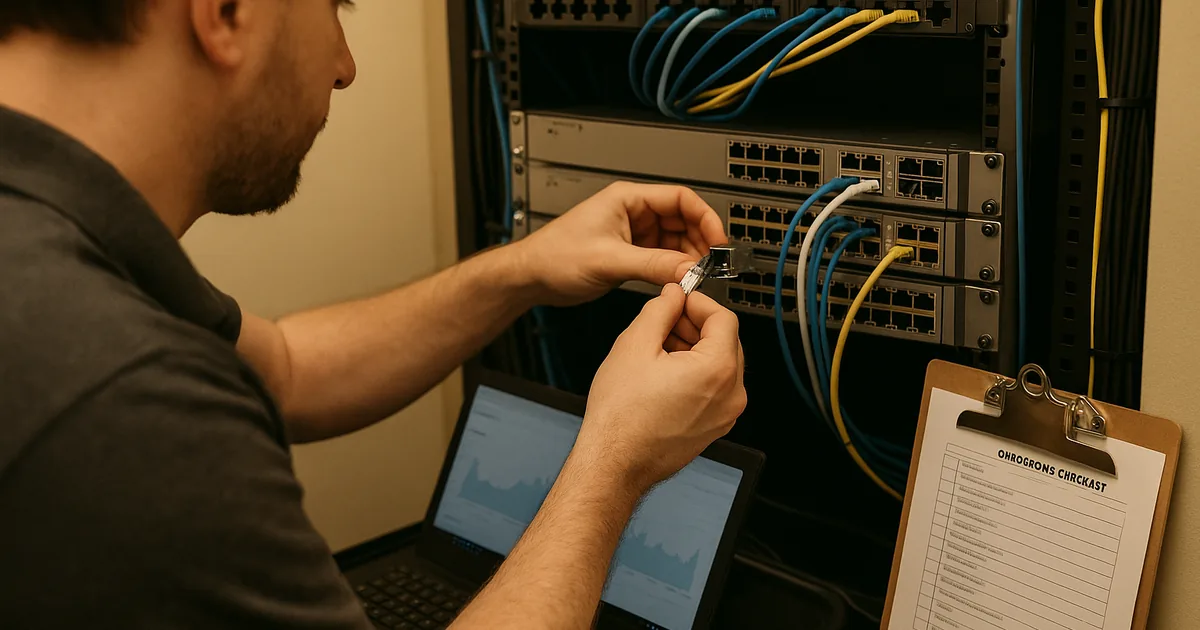
Why Growth Can Trigger a Network Crash Before Anyone Sees It Coming

The core issue in South Meadows financial offices is not usually one dramatic hardware failure. It is growth outpacing design. A network that worked for 12 users often starts failing at 20 when new endpoints, cloud applications, printers, wireless devices, and security tools are layered in without a standard onboarding process. The result is a scalability ceiling: the environment appears stable until one more hire, one more workstation, or one more software rollout pushes it into packet loss, authentication failures, monitoring blind spots, or outright instability.
We see this most often in firms that have grown steadily but kept the same switching layout, internet failover assumptions, and endpoint policies they used years earlier. In a financial office, that creates more than inconvenience. It affects client scheduling, document access, custodial platform connectivity, and response times for compliance-sensitive work. When security tooling is added on top of an already strained environment, alerts may arrive late or not at all. That is why businesses dealing with endpoint sprawl and uneven infrastructure often need security monitoring and response in Northern Nevada that is tied to actual network capacity, not just endpoint counts.
- Capacity mismatch: Switches, wireless coverage, and DHCP ranges may have been sized for an earlier headcount and begin failing under normal expansion.
- Endpoint sprawl: New laptops, mobile devices, scanners, and remote access tools increase traffic and management overhead without consistent standards.
- Monitoring gaps: Security tools can generate noise while still missing the real issue if network segmentation, logging, and alert thresholds were never updated.
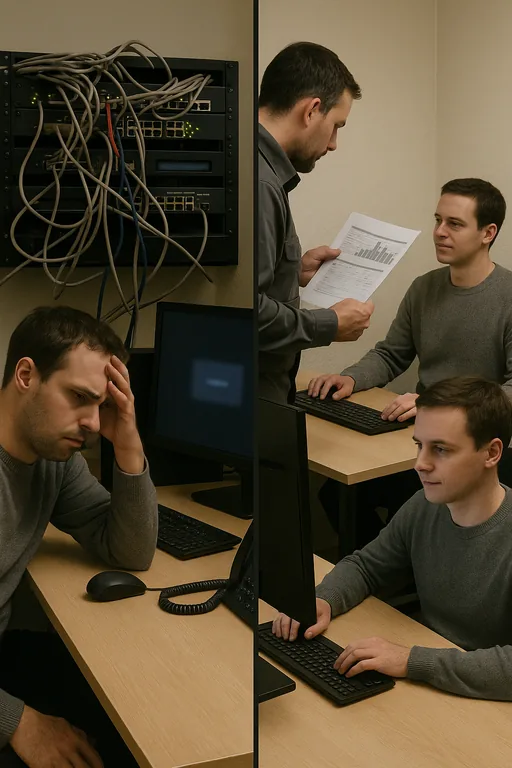
- Operational consequence: As Reese experienced, the visible symptom is often “the network is down,” but the root cause is usually unmanaged growth colliding with old assumptions.
How to Remove the Scalability Ceiling Before the Next Hiring Wave
The fix is not simply replacing a switch and hoping the problem stays gone. The right remediation starts with standardizing how users, devices, and applications are introduced into the environment. That means reviewing addressing plans, switch utilization, wireless density, firewall throughput, identity controls, and the way security agents are deployed. For financial offices in South Meadows, we typically map business processes first, then align infrastructure so growth does not break intake, reporting, or client communications.
In practice, that often includes VLAN segmentation for staff and guest traffic, switch stack or uplink upgrades, DHCP scope cleanup, documented onboarding templates, and alert tuning so security events are not buried under avoidable network noise. It also helps to pair technical changes with IT consulting in Northern Nevada so hiring plans, office moves, and software rollouts are reflected in infrastructure decisions before they become outages. For baseline planning and resilience guidance, the CISA Cybersecurity Performance Goals provide a practical framework for access control, asset management, and recovery readiness.
- Standard onboarding: Build a repeatable process for adding users, endpoints, printers, and cloud apps so every change follows the same technical checklist.
- Segmentation and performance tuning: Separate critical business traffic, review QoS where voice is in use, and confirm switch and firewall capacity against current headcount.
- Monitoring alignment: Validate that EDR, logging, and alerting are scaled to the environment and that response workflows match the office’s real operating hours.
- Backup and recovery validation: Confirm that file access, line-of-business systems, and configuration backups can be restored without extended downtime.
Field Evidence: South Reno Expansion Without a Network Redesign
We worked with a professional office corridor environment in the South Reno area where staff growth had been steady for more than a year. Before remediation, the office had recurring slowdowns every time additional users were onboarded, especially during morning login windows and end-of-month reporting. Wireless roaming was inconsistent, endpoint alerts were noisy, and the team had no clear inventory of what was connected where. The business assumed the internet provider was the problem, but the actual issue was a mix of oversubscribed switching, flat network design, and undocumented device adds.
After redesigning onboarding standards, segmenting traffic, cleaning up addressing, and documenting a growth plan through strategic IT leadership for growing Reno businesses , the office moved from reactive troubleshooting to predictable expansion. That matters in Northern Nevada, where multi-suite offices, leased spaces, and staggered vendor installs can easily leave infrastructure half-updated if no one owns the full plan.
- Result: Morning login delays dropped from repeated 10 to 15 minute disruptions to stable access windows under 2 minutes, and unplanned network incidents were reduced over the following quarter.
Scalability Risk Review for Financial Offices
Scott Morris is an experienced IT and cybersecurity professional with 16 years of hands-on experience in managed technology services. He specializes in Security Monitoring And Response and has spent his career building practical recovery, security, and operational continuity processes for businesses across South Meadows, Reno, Sparks, Carson City, and Northern Nevada and Northern Nevada.

About the Author: Scott Morris
Local Support in South Meadows
South Meadows offices often grow faster than their original network design. From our Reno location, the Longley Lane corridor is typically a short drive, which matters when a financial office is dealing with unstable access, onboarding pressure, or a network issue that is affecting client work. Local support is not just about response time; it is about understanding how Reno-area office buildouts, shared business parks, and phased staffing changes create technical risk if infrastructure planning lags behind growth.
What Financial Offices Should Take From This Incident
A network crash tied to growth is usually a planning failure, not a mystery. When hiring, device expansion, and security tooling move faster than infrastructure standards, financial offices end up with unstable access, inconsistent monitoring, and avoidable downtime. The practical answer is to treat onboarding, segmentation, capacity review, and recovery validation as part of business growth, not as cleanup work after an outage.
For South Meadows firms, the takeaway is straightforward: if your next 10 hires would change how traffic flows, how devices are managed, or how alerts are handled, your IT environment needs to expand before your headcount does. That approach reduces downtime, protects client operations, and keeps growth from turning into a preventable interruption.