Reno Financial IT Risk
Problems like this tend to stay hidden until something important breaks. For financial offices in South Meadows, that often means a network crash, avoidable delays, or a bigger recovery burden than expected. The best response is validating backups regularly and proving recovery before a real outage.
This case study reflects real breakdown patterns documented across 300+ regional IT incidents. Names and identifying details have been modified for confidentiality, while technical and financial data remain accurate to the original events.
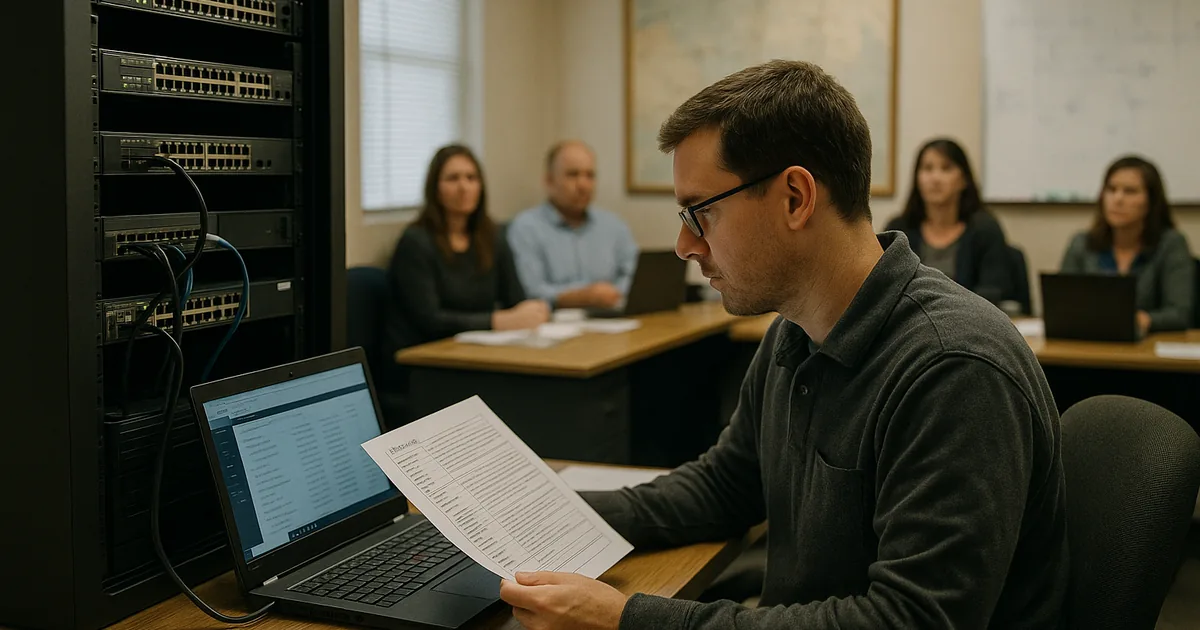
Why Untested Backups Turn Into Network Crashes
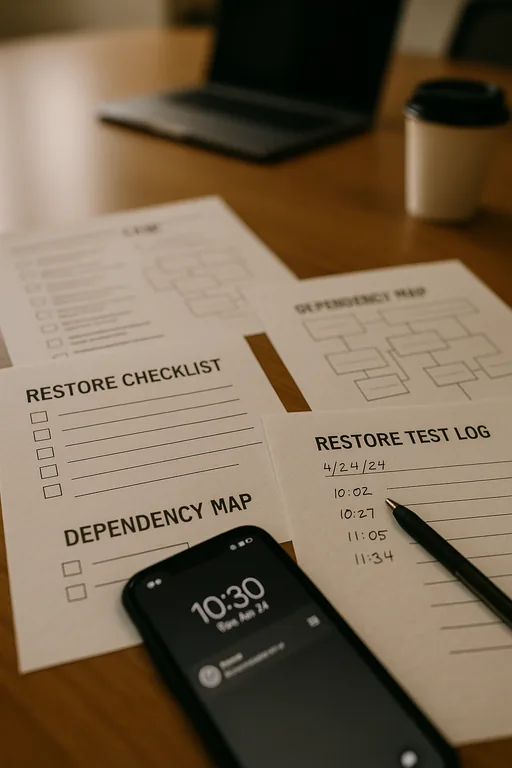
A network crash in a South Meadows financial office is often not just a network problem. In practice, we usually find a recovery problem hiding underneath it. A backup file may be present, but if nobody has tested whether the accounting platform, file shares, authentication services, and mapped permissions come back in the right order, the business still goes down. That is the core issue behind the resilience test risk: a copy of data is not the same as the ability to keep operating.
Financial offices depend on predictable access to client files, custodial documents, reporting systems, and secure communications. When one server, firewall, or virtual host fails, the real question becomes how quickly the office can restore the full workflow. Businesses that want to prevent downtime with managed IT support in Reno usually need more than backup software. They need documented recovery sequencing, restore testing, and validation that the restored environment actually supports daily work. That was the gap in Gavin’s situation, and it is a common one in South Meadows where small offices often run a mix of cloud tools, local storage, and aging line-of-business systems.
- Restore dependency failure: A backup may complete successfully while still omitting application connectors, licensing components, DNS settings, or authentication dependencies required to bring the office back online.
- Unclear recovery order: If staff do not know whether to restore the domain controller, file server, database, or application host first, downtime stretches well beyond the original outage.
- False confidence from backup reports: Green checkmarks in a backup console do not confirm that a financial workflow can be restored and used under pressure.
- Business continuity gap: As the resilience test discussion makes clear, backup is only a copy; continuity is the ability to keep working while the primary system is unavailable.
How to Fix the Recovery Gap Before the Next Outage
The practical fix is to treat backup validation as an operational control, not a checkbox. We start by identifying the systems that actually drive revenue and client service: file storage, portfolio or accounting applications, email, identity services, and secure remote access. Then we test whether those systems can be restored in sequence, under time pressure, with the same permissions and dependencies the office needs to function. For financial firms, this should be tied to a documented recovery objective and reviewed as part of broader cybersecurity services in Washoe County so backup integrity, endpoint security, and incident response are aligned.
It also helps to separate backup from continuity planning. A good backup protects data. A continuity plan defines where staff work, how they authenticate, what systems come up first, and what temporary process keeps client activity moving if the primary environment is down. The Cybersecurity and Infrastructure Security Agency provides useful guidance on resilience and continuity planning at cisa.gov , and those principles apply directly to financial offices with compliance and uptime obligations.
- Restore testing: Run scheduled test restores for servers, databases, and file shares instead of relying on backup job success alone.
- Dependency mapping: Document which systems must come online first, including identity, DNS, application services, and storage paths.
- Backup validation: Verify that restored data is usable by staff, not just technically recoverable by IT.
- MFA and admin hardening: Protect backup consoles and recovery infrastructure so an outage does not become a security event.
- Continuity runbooks: Create a step-by-step fallback process for billing, client intake, and document access during partial outages.
Field Evidence: South Reno Recovery Sequence Cleanup
We worked through a similar pattern for a professional office corridor in South Reno where the environment looked healthy on paper but had never been restored end to end. Before remediation, the office had backup jobs completing nightly, yet no one had confirmed whether the virtual host, file permissions, and application database would recover in the right order after a failure. The result was a long outage window any time a server issue occurred, especially during busy reporting periods.
After documenting the recovery sequence, validating application dependencies, and aligning the process with compliance-focused IT management , the office moved from uncertain recovery to a tested process with clear ownership. That mattered in Northern Nevada conditions where weather events, utility interruptions, and carrier issues can affect multiple systems at once rather than one device in isolation.
- Result: Recovery testing reduced estimated full-environment restoration time from most of a business day to under 90 minutes for critical systems, with documented fallback steps for staff during the remaining recovery window.
Recovery Validation Reference for Financial Offices
Scott Morris is an experienced IT and cybersecurity professional with 16 years of hands-on experience in managed technology services. He specializes in Managed It Services and has spent his career building practical recovery, security, and operational continuity processes for businesses across South Meadows, Reno and Northern Nevada.
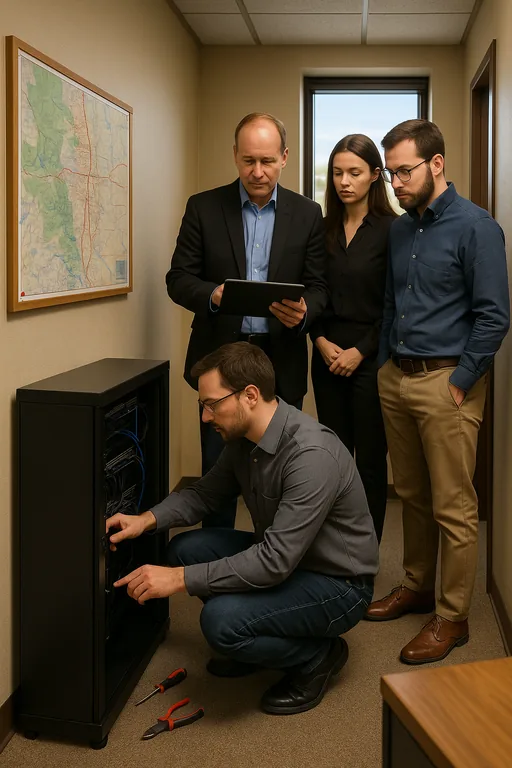

About the Author: Scott Morris
Local Support in South Meadows, Reno
We regularly support businesses across Reno, including South Meadows and the Double R corridor, where financial offices often rely on a mix of cloud applications, local network infrastructure, and strict document access requirements. From our Ryland Street office, the route to the Huffaker area is typically about 16 minutes under normal conditions, which helps when onsite validation, recovery coordination, or post-outage review is needed.
The Real Test Is Whether the Office Can Keep Working
For financial offices in South Meadows, the main risk is not simply whether backups exist. It is whether those backups can restore the systems, permissions, and workflow the office needs under real outage conditions. When restore testing is skipped, a server failure or network crash becomes a longer operational interruption than it should be.
The practical takeaway is straightforward: validate backups, document recovery order, and test continuity around the systems that affect billing, client service, and compliance first. That approach reduces downtime, shortens recovery, and gives leadership a more accurate picture of actual resilience.