Reno Dental Security
Problems like this tend to stay hidden until something important breaks. For dental offices in South Meadows, that often means login failures, avoidable delays, or a bigger recovery burden than expected. The best response is hardening identity, watching for abnormal behavior, and closing blind spots across users and devices.
This case study reflects real breakdown patterns documented across 300+ regional IT incidents. Names and identifying details have been modified for confidentiality, while technical and financial data remain accurate to the original events.
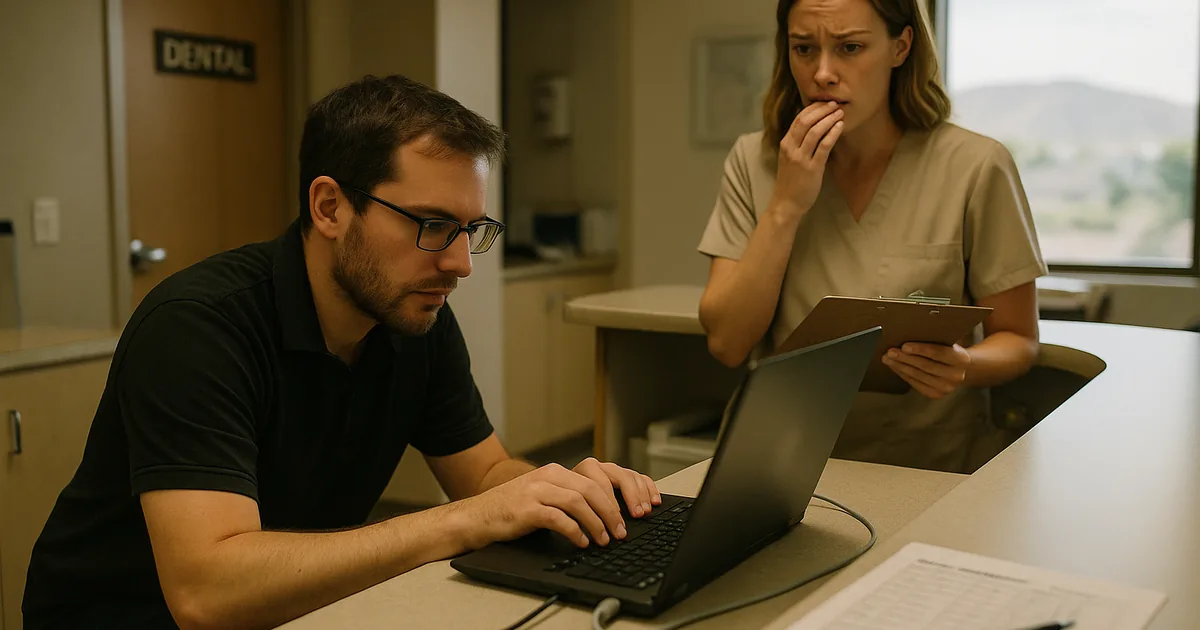
Why Login Failures in Dental Offices Often Point to a Hidden Identity Problem
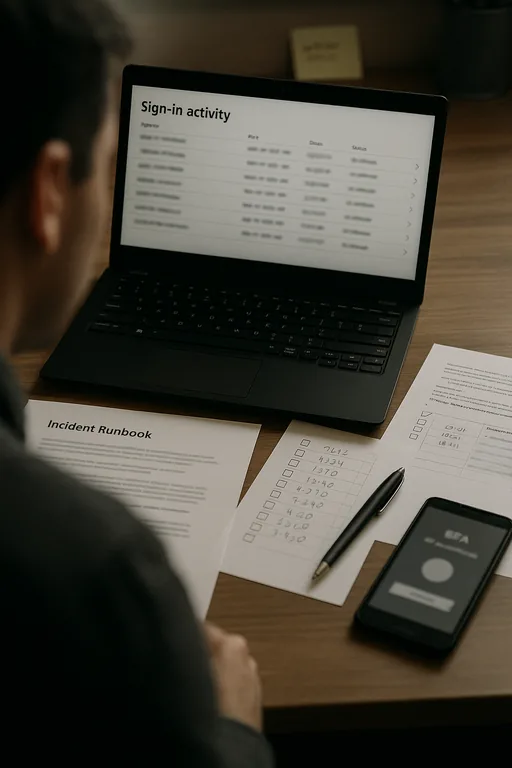
When a South Meadows dental office reports repeated login failures, we do not assume the issue starts and ends with a bad password. In many cases, the real problem is that stolen credentials, token abuse, or unmanaged sign-in behavior has already bypassed the perimeter. That is the core of the invisible threat: modern attackers often do not break through a firewall at all. They log in with valid credentials, then move through email, cloud applications, and line-of-business systems in ways that look normal until operations start failing.
For dental practices, the impact is immediate. Scheduling systems, digital imaging access, insurance portals, and patient communication tools all depend on stable identity services. If one account is locked out, repeatedly challenged, or silently used from an abnormal location, the office can see cascading issues across multiple devices. In environments that rely on shared workstations, remote access, and cloud-connected practice platforms, this is why network server and cloud management in Reno has to include identity visibility, sign-in monitoring, and device trust, not just server uptime. In incidents like this, the visible symptom is the failed login; the actual failure is weak control over who is authenticating, from where, and on what endpoint.
- Technical factor: Credential misuse often shows up first as intermittent lockouts, repeated MFA prompts, legacy authentication attempts, or impossible-travel sign-ins rather than a full system outage.
- Operational detail: Dental offices in South Meadows depend on fast access at the front desk and in operatories, so even short authentication delays can disrupt patient flow, chart access, and same-day billing.
- Business consequence: If the office treats the event as a one-time password reset instead of an identity incident, the same exposure can return through email, cloud storage, or remote access later.
Practical Remediation for Credential-Based Access Incidents
The right fix is not just unlocking accounts and moving on. We typically start by reviewing sign-in logs, conditional access behavior, endpoint health, and any legacy authentication paths that still allow weak access patterns. From there, the office needs to reset affected credentials, revoke active sessions, validate MFA enrollment, and confirm that only approved devices can reach sensitive systems. For practices with multiple software vendors and compliance obligations, this is where IT consulting in Northern Nevada becomes useful because remediation has to align technical controls with daily workflow, vendor dependencies, and HIPAA-related operational risk.
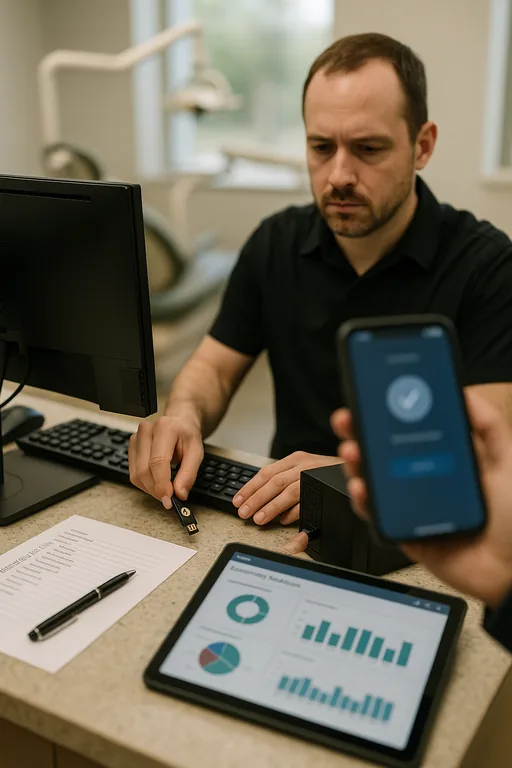
There are several controls that consistently reduce repeat incidents. Disable legacy protocols where possible, enforce phishing-resistant or app-based MFA, segment administrative accounts from daily user accounts, and make sure endpoint detection is feeding alerts into a process someone actually reviews. Backup validation also matters because a credential incident can become a broader compromise if mailbox rules, file sync tools, or cloud shares are altered. The CISA guidance on strong passwords and account protection is a practical baseline, but dental offices usually need tighter operational enforcement than baseline advice alone.
- Control step: Identity hardening
- Practical action: Enforce MFA, block legacy authentication, review impossible-travel and risky sign-in alerts, revoke suspicious sessions, and confirm every workstation accessing practice systems is managed and monitored.
Field Evidence: Restoring Access Without Letting the Threat Stay Hidden
We have seen this pattern in Northern Nevada offices where the first complaint is simply, “some users cannot log in,” but the deeper review shows repeated authentication attempts from outside the normal service area, stale credentials cached on old devices, or mailbox access from sessions no one recognized. In one corridor serving Reno and South Meadows, the office started the day with front-desk delays, imaging access interruptions, and uncertainty about whether the issue was local internet, Microsoft 365, or the practice platform itself. The initial symptom looked small, but the root cause sat in identity controls that had not been reviewed in months.
After log review, session revocation, MFA cleanup, and endpoint validation, access was stabilized and the office returned to normal scheduling. Just as important, leadership used the event to tighten account governance and document escalation paths through strategic IT leadership for growing Reno businesses . That shift matters because when Nayara-like incidents are treated as operational warnings instead of isolated annoyances, the next disruption is often prevented rather than merely recovered from.
- Result: Same-day restoration of user access, removal of unauthorized sessions, and a measurable drop in repeat lockouts over the following 60 days.
Reference Points for Identity and Login Incident Control
Scott Morris is an experienced IT and cybersecurity professional with 16 years of hands-on experience in managed technology services. He specializes in Network Server And Cloud Management and has spent his career building practical recovery, security, and operational continuity processes for businesses across South Meadows, Reno, Sparks, Carson City, and Northern Nevada and Northern Nevada.

About the Author: Scott Morris
Local Support in South Meadows, Reno, Sparks, Carson City, and Northern Nevada
Dental offices in South Meadows often need support that understands both the technical issue and the local operating reality. Travel time, multi-site coordination, vendor handoffs, and the need to restore front-desk access quickly all affect how incidents are handled. From our Reno office, we regularly support practices across the region, including locations that require coordination north toward Cold Springs when login failures or cloud access problems interrupt patient care and billing.
What This Incident Really Means for a Dental Office
A login incident in a South Meadows dental office is rarely just a login incident. When valid credentials are misused, the firewall may never show a classic break-in, yet the office still experiences downtime, scheduling friction, delayed billing, and unnecessary recovery work. The practical answer is to treat authentication failures as an identity-control issue, not just a help desk inconvenience.
For most practices, the path forward is straightforward: review sign-in behavior, tighten MFA and device trust, remove outdated access methods, and make sure someone is accountable for watching abnormal activity before it affects patient operations. That approach reduces repeat outages and gives the office a more stable operating baseline.