
Reno Dental Login Fail
Seeing login failures is often the visible symptom of compliance gaps, not the root problem itself. In dental offices across Reno, issues like missing controls, weak documentation, and loose access policies can quietly undermine managed cybersecurity programs until work stops or risk spikes. The fix usually starts with reviewing controls, access, and recovery steps before they are tested under pressure.
This case study reflects real breakdown patterns documented across 300+ regional IT incidents. Names and identifying details have been modified for confidentiality, while technical and financial data remain accurate to the original events.
Why Login Failures in Dental Offices Usually Point to a Compliance Gap

In Reno dental environments, login failures rarely start and end with a bad password. More often, they expose a deeper control issue: unclear account ownership, inconsistent access approvals, weak offboarding, missing audit trails, or recovery procedures that exist informally but are not documented. That is why these incidents often sit at the intersection of operations, cybersecurity, and compliance rather than basic help desk support.
We see this most often in practices that have grown quickly, added cloud imaging or practice management tools, and assumed the software vendor was covering the security side. Under HIPAA and similar control frameworks, the office still owns access governance, documentation, and response discipline. A structured approach to managed cybersecurity programs in Reno helps close those gaps before a lockout affects patient flow, insurance processing, or protected health information handling.
- Access control drift: Shared credentials, inactive accounts, and loosely assigned permissions make it difficult to tell whether a login failure is routine, suspicious, or reportable.
- Documentation weakness: When password reset, MFA enrollment, and escalation steps are not written and tested, front-desk staff lose time while providers wait on access.
- Regulatory pressure: HIPAA expectations do not stop because a practice is busy; if internal IT documentation lags behind changing requirements, risk grows quietly until an outage exposes it.
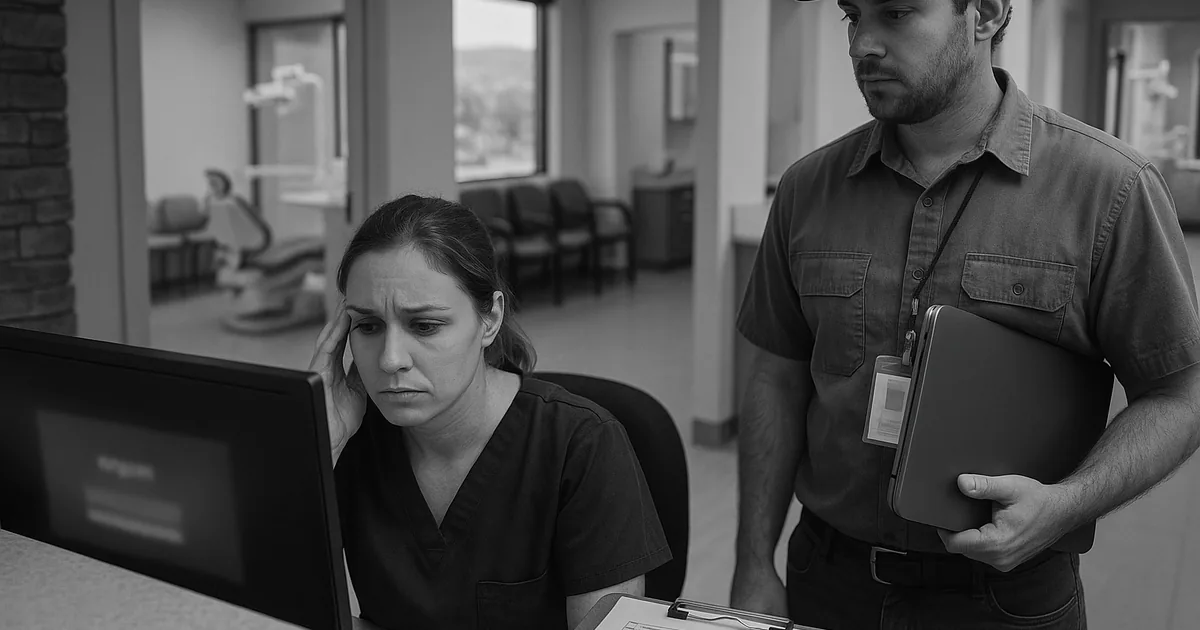
- Operational consequence: In a case like King’s, the visible symptom is a login problem, but the business impact shows up in delayed check-ins, slower chart access, and billing disruption.
How to Fix the Control Failure Before It Repeats
The practical fix is to treat the login issue as evidence, not the whole incident. Start by validating account ownership, reviewing recent authentication failures, confirming MFA status, and checking whether role-based access still matches actual job duties. Then document the reset path, escalation path, and recovery path so the office is not improvising during patient hours. For dental groups with recurring policy drift, we typically recommend formal compliance-focused IT management tied to written controls, periodic review, and accountable ownership.
It also helps to align those controls with recognized guidance. The HHS HIPAA Security Rule guidance is useful because it connects access management, audit controls, and contingency planning in a way practice leadership can operationalize. In most Reno offices, the right remediation is not exotic technology. It is disciplined identity management, tested backup access, endpoint visibility, and a documented response process that survives staff turnover.
- Identity review: Remove shared accounts, verify unique user identities, and enforce MFA on every clinical and administrative login path.
- Role-based access: Limit permissions by job function so front-desk, billing, and clinical users only reach the systems they actually need.
- Audit and alerting: Enable sign-in logging, failed-authentication alerts, and review thresholds so suspicious patterns are investigated quickly.
- Recovery validation: Test password reset workflows, emergency access procedures, and backup restoration for cloud and local systems.
- Policy maintenance: Use documented reviews and regulatory compliance support for healthcare operations to keep procedures current as requirements and software platforms change.
Field Evidence: Restoring Access Without Repeating the Same Failure
We worked through a similar pattern with a healthcare office corridor in Reno where staff had intermittent login failures tied to stale permissions, inconsistent MFA enrollment, and no written fallback process for front-desk access. The immediate symptom appeared random, especially during busy morning intake, but the underlying issue was control sprawl across Microsoft 365, the practice management platform, and a line-of-business imaging application.
After standardizing account ownership, tightening access groups, documenting emergency reset steps, and validating backup access procedures, the office moved from reactive lockout handling to predictable recovery. That mattered in a Northern Nevada setting where weather delays, vendor response windows, and multi-site coordination can stretch a small outage into a full-day disruption if no one owns the process.
- Result: Failed login escalations dropped by 68 percent over the next quarter, and front-desk recovery time for access issues fell from roughly 90 minutes to under 20 minutes.
Compliance and Access Control Reference Points for Dental Offices
Scott Morris is an experienced IT and cybersecurity professional with 16 years of hands-on experience in managed technology services. He specializes in Managed Cybersecurity Programs and has spent his career building practical recovery, security, and operational continuity processes for businesses across Reno and Northern Nevada.


About the Author: Scott Morris
Local Support in Reno
Our office at 500 Ryland St #200 supports healthcare and dental organizations across Reno, including practices along Kietzke Lane where access issues can quickly affect patient intake, charting, and billing. For this route, the estimated travel time to 4001 Kietzke Ln is about 11 minutes, which matters when a practice needs local technical response tied to compliance, documentation, and recovery discipline.
Closing the Gap Before the Next Lockout
A login failure in a Reno dental office is often the first visible sign that access control, documentation, and compliance oversight have drifted apart. If the office cannot clearly show who has access, how resets are handled, what gets logged, and how recovery works, the problem is larger than a single outage.
The practical takeaway is straightforward: review identity controls, document response steps, validate recovery, and keep compliance responsibilities current as systems and regulations change. That approach reduces downtime, limits confusion during patient hours, and gives leadership a clearer operational picture when something goes wrong.