Reno Data Protection
What looks like a one-off issue is often tied to growth outpacing IT capacity. In manufacturing plant environments, endpoint sprawl, underplanned infrastructure, and inconsistent standards can turn into performance, reliability, and future growth long before anyone notices the warning signs. Closing those gaps early makes risk assessments and security readiness far more resilient.
This case study reflects real breakdown patterns documented across 300+ regional IT incidents. Names and identifying details have been modified for confidentiality, while technical and financial data remain accurate to the original events.
Why Encrypted Files Often Point to a Scalability Ceiling

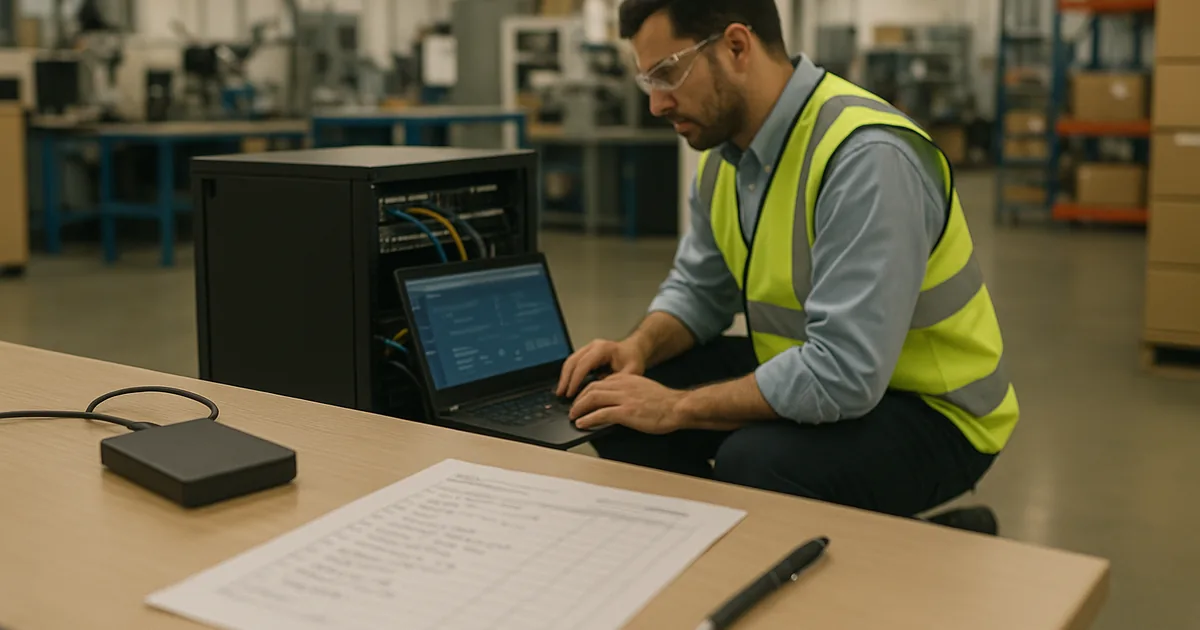
When a manufacturing plant in Washoe County suddenly reports encrypted files, the immediate assumption is usually malware alone. In practice, we often find a broader capacity problem underneath it. The scalability ceiling shows up when the business adds people, devices, production software, remote access paths, and shared storage faster than the environment is designed to support. That creates blind spots in permissions, patching, monitoring, and backup coverage. By the time encryption is visible, the underlying issue has often been building for months.
This is why risk assessments and security readiness in Northern Nevada need to evaluate growth pressure, not just current security tools. A plant may have added ten new users, several shop-floor workstations, a few unmanaged laptops for supervisors, and another line-of-business application without redesigning network segmentation or identity controls. In Ryder’s case, the encryption problem was not just a bad click. It was an environment where endpoint sprawl, inherited permissions, and inconsistent standards made lateral movement easier and recovery slower.
- Endpoint sprawl: As plants expand, older PCs, engineering stations, shared kiosks, and vendor-connected systems often remain in service without a unified baseline, increasing the number of weak points.
- Underplanned infrastructure: File servers, switches, wireless coverage, and backup jobs may still reflect the needs of a smaller operation, even though staffing and production demands have grown.
- Inconsistent standards: Different departments may use different local admin practices, naming conventions, MFA settings, or patch cycles, which weakens containment during an incident.
- Shared access concentration: Manufacturing teams frequently rely on common folders for drawings, scheduling, QA records, and shipping documents, so one compromised account can affect multiple workflows quickly.
How to Close the Gap Before Growth Turns Into Downtime
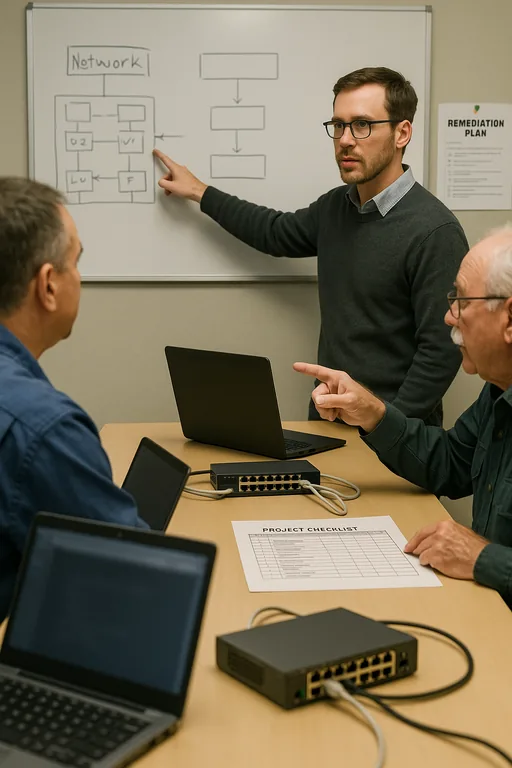
The fix is not a single product. It is a structured remediation plan that matches IT capacity to business growth. We typically start by identifying where the environment has outgrown its original design: user counts, endpoint inventory, server load, backup windows, remote access methods, and shared data dependencies. From there, the goal is to reduce the blast radius of any single compromise while improving recovery speed and operational visibility.
For manufacturers adding headcount or production systems, this usually means formal planning through IT strategy engagements for growing operations , combined with practical controls such as segmented VLANs for office and plant-floor devices, tighter role-based access, EDR on all endpoints, tested immutable backups, and alerting that catches unusual file activity early. The CISA ransomware guidance is a useful baseline because it aligns prevention, containment, and recovery into one operational model.
- Identity hardening: Enforce MFA for remote access, remove stale accounts, and reduce shared credentials that commonly persist in fast-growing plants.
- Network segmentation: Separate production systems, office users, guest access, and vendor connections so one compromised device cannot reach every file share.
- Backup validation: Test restore points against actual production files, not just backup job success messages, and confirm recovery time against shift requirements.
- Endpoint control: Standardize EDR, patching, and local admin restrictions across all workstations, including engineering and supervisory devices.
- Capacity planning: Review storage growth, server performance, and licensing before the next hiring wave so the network does not fail under normal expansion.
Field Evidence: Growth Pressure Exposed Through File Share Encryption
We worked through a similar pattern with a Northern Nevada operation supporting both warehouse and light manufacturing functions along the I-80 corridor. Before remediation, the environment had grown in pieces: added users, extra shared folders, a mix of old and new endpoints, and backup jobs that technically completed but had never been tested against a real restore scenario. When file encryption hit one department, the business discovered that permissions were too broad and recovery sequencing was unclear.
After standardizing endpoint controls, tightening access groups, separating critical shares, and putting recovery under documented oversight with IT systems for multi-location operations , the environment became much easier to manage. The next suspicious file activity alert was isolated to a single device instead of spreading across departments, and the business had a clear restore path that fit production scheduling.
- Result: Reduced recovery scope from multiple shared folders to one affected endpoint, cut restore validation time by more than 60 percent, and improved confidence in shift-level continuity planning.
Reference Points for Manufacturing Security Readiness
Scott Morris is an experienced IT and cybersecurity professional with 16 years of hands-on experience in managed technology services. He specializes in Risk Assessments And Security Readiness and has spent his career building practical recovery, security, and operational continuity processes for businesses across Washoe County and Northern Nevada.

About the Author: Scott Morris
Local Support in Washoe County
Reno Computer Services supports businesses across Washoe County with practical response planning, security reviews, and operational remediation. From our Reno office, the route to downtown locations such as the TIAA Financial Services Center is short, but the real value is having systems, documentation, and recovery priorities already aligned before an outage or encryption event affects production, finance, or shared records.
What Manufacturing Leaders Should Take Away
Encrypted files in a Washoe County manufacturing environment are often a symptom of a larger planning gap. When hiring, device counts, shared storage, and production dependencies expand faster than the network and security model, the business reaches a scalability ceiling. At that point, even a routine security event becomes harder to contain and more expensive to recover from.
The practical response is to align infrastructure, access control, monitoring, and backup validation with the next stage of growth rather than the last one. That gives plant leadership a more realistic view of risk, a cleaner recovery path, and fewer surprises when operations are already under pressure.