Reno Data Breach
Problems like this tend to stay hidden until something important breaks. For construction firms in South Meadows, that often means a data breach, avoidable delays, or a bigger recovery burden than expected. The best response is validating backups regularly and proving recovery before a real outage.
This case study reflects real breakdown patterns documented across 300+ regional IT incidents. Names and identifying details have been modified for confidentiality, while technical and financial data remain accurate to the original events.
Why the Resilience Test Fails Before the Breach Is Fully Understood
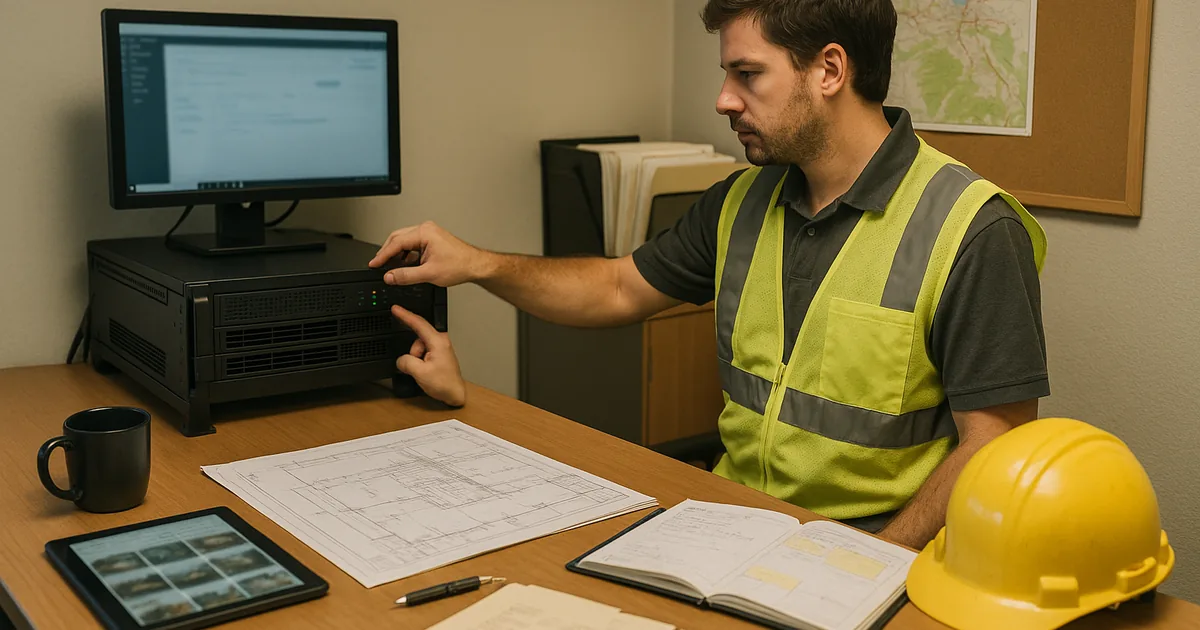
The core issue is straightforward: a backup file is not the same thing as a recoverable business system. Construction firms in South Meadows often depend on a mix of estimating platforms, shared drawings, accounting data, email, mobile field uploads, and line-of-business applications that all have to come back in the right order. When that recovery order is undocumented or never tested, a breach or outage turns into a resilience failure. The data may exist somewhere, but operations still stop.
We typically find that risk is understated when leadership sees green backup reports and assumes recovery is covered. In practice, the missing pieces are usually authentication dependencies, mapped drives, SQL services, cloud sync gaps, or old restore credentials. That is why risk assessments and security readiness in Northern Nevada need to include restore validation, dependency mapping, and a realistic recovery sequence. In a South Meadows construction environment, that means knowing what comes back first: project management, accounting, document storage, email, and remote access for field supervisors. When Rocio’s scenario happens in a contractor office, the breach is only part of the problem; the larger issue is that the business cannot keep working while systems are being rebuilt.
- Untested restore paths: Backup jobs may complete successfully while failing to restore permissions, databases, application services, or current file versions needed for daily construction operations.
- Missing recovery order: If accounting, project files, and identity services are restored in the wrong sequence, staff can see data but still cannot use it.
- Hybrid environment drift: Many firms now split data between local servers, Microsoft 365, cloud storage, and field devices, which creates gaps unless all systems are tested together.
- False confidence from backup alerts: A passed backup status does not confirm business continuity; it only confirms that a copy was attempted.
How to Turn Backup Copies Into Real Recovery Capability
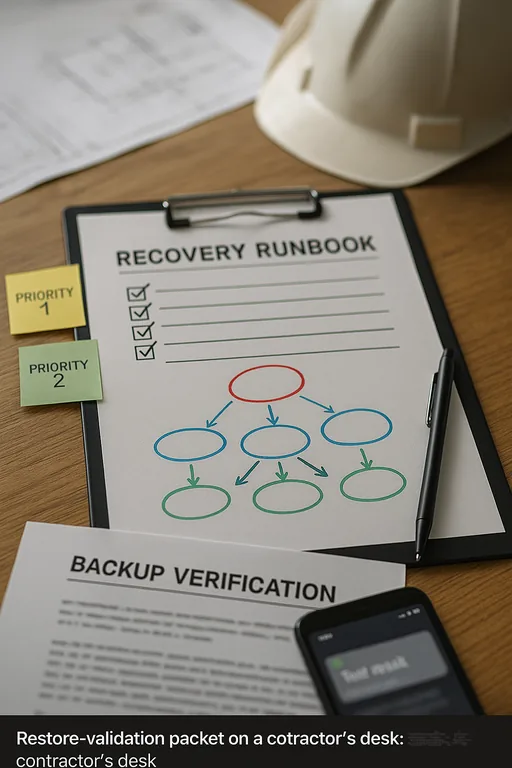
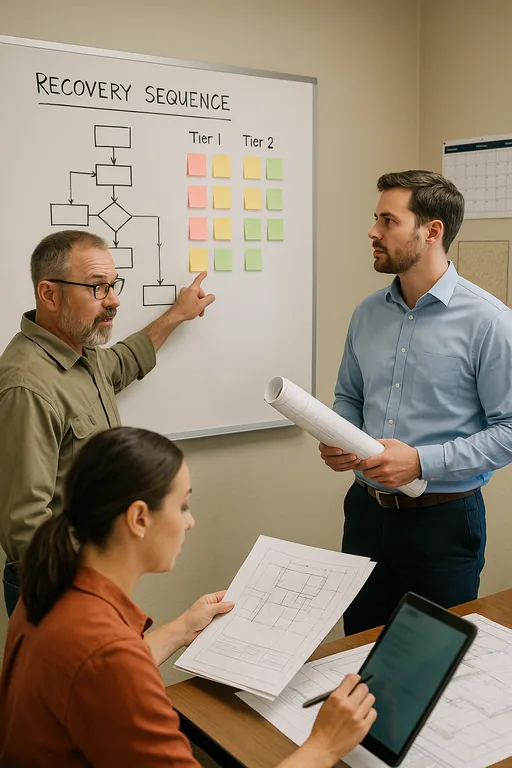
The fix is operational, not theoretical. Start by defining recovery tiers for the business: what must be restored in hours, what can wait until the next day, and what can be rebuilt later. For construction firms, that usually means prioritizing identity systems, file access, estimating data, accounting, and communications. Then run scheduled restore tests against those priorities, not just random file checks. We also recommend documenting application dependencies, validating backup integrity after software updates, and confirming that retained copies are isolated from the same credentials that could be compromised during a breach.
Network design matters here as well. Segmented systems, monitored storage, and stable switching reduce the chance that one failure spreads into a full operational outage. Firms that need stronger resilience often benefit from improving network reliability for multi-site operations so backup traffic, server performance, and remote access are not competing on the same weak foundation. For practical guidance on backup and recovery planning, CISA’s Ransomware Guide remains useful because it treats recovery testing as part of business continuity, not just storage administration.
- Restore testing cadence: Run quarterly full-system recovery tests and monthly targeted restores for critical applications and shared data.
- Dependency mapping: Document identity, database, licensing, DNS, and line-of-business requirements before an emergency exposes the gaps.
- Backup isolation: Protect backup repositories with separate credentials, MFA, and restricted administrative access.
- Recovery runbooks: Create a step-by-step order for restoring servers, cloud services, and user access so staff know what happens first.
Field Evidence: South Meadows Restore Validation for a Growing Contractor
We worked through this pattern with a contractor operating between South Meadows job sites and suppliers across Reno-Sparks. Before remediation, the company had nightly backups but no verified restore sequence, no tested recovery time target, and no clear separation between production credentials and backup administration. A failed server event would have forced staff to rebuild access manually while project managers waited on drawings, change orders, and billing support.
After a structured review, the firm moved critical workloads into a documented recovery order, tested image-based restores, validated application dependencies, and tightened storage and host protections through server and hybrid infrastructure management . The result was not just better backup reporting. It was a measurable reduction in uncertainty during an outage, including faster file recovery and cleaner handoff between office staff and field teams during a weather-delayed week when remote coordination mattered.
- Result: Verified recovery time for core file and accounting systems dropped from an estimated 1 to 2 business days to under 4 hours in testing, with critical shared data restored successfully in sequence.
Backup Resilience Controls for South Meadows Construction Operations
Scott Morris is an experienced IT and cybersecurity professional with 16 years of hands-on experience in managed technology services. He specializes in Risk Assessments And Security Readiness and has spent his career building practical recovery, security, and operational continuity processes for businesses across South Meadows, Reno, Sparks, Carson City, and Northern Nevada and Northern Nevada.

About the Author: Scott Morris
Local Support in South Meadows, Reno, Sparks, Carson City, and Northern Nevada
We support businesses across the Reno-Sparks corridor, including South Meadows firms that need practical recovery planning, restore testing, and infrastructure oversight. From our Reno office, the route to Northern Nevada Medical Center in Sparks is typically about 17 minutes under normal conditions, which reflects the kind of regional response pattern many local organizations work within when systems fail and time matters.
What Construction Firms Should Take From This
If a backup has never been restored under realistic conditions, it should not be treated as proof of resilience. For South Meadows construction firms, the real test is whether project files, accounting systems, permissions, and communications can be brought back in the right order without extended downtime. That is where many breach response plans break down.
The practical takeaway is simple: test restores, document dependencies, isolate backup access, and define recovery priorities before an incident forces those decisions. A copy of data may help with recovery, but only a validated continuity process keeps the business operating while technical work is underway.