Reno Construction Data Breach
This kind of issue rarely appears all at once. For construction firms in Northern Nevada, it usually builds through slow devices, ticket backlogs, and repeated workarounds and then surfaces as a data breach, slower recovery, or higher exposure. A more reliable setup starts with stabilizing daily support, reducing repeat issues, and standardizing how IT is handled.
This case study reflects real breakdown patterns documented across 300+ regional IT incidents. Names and identifying details have been modified for confidentiality, while technical and financial data remain accurate to the original events.
How the Operational Drain Turns into Breach Exposure

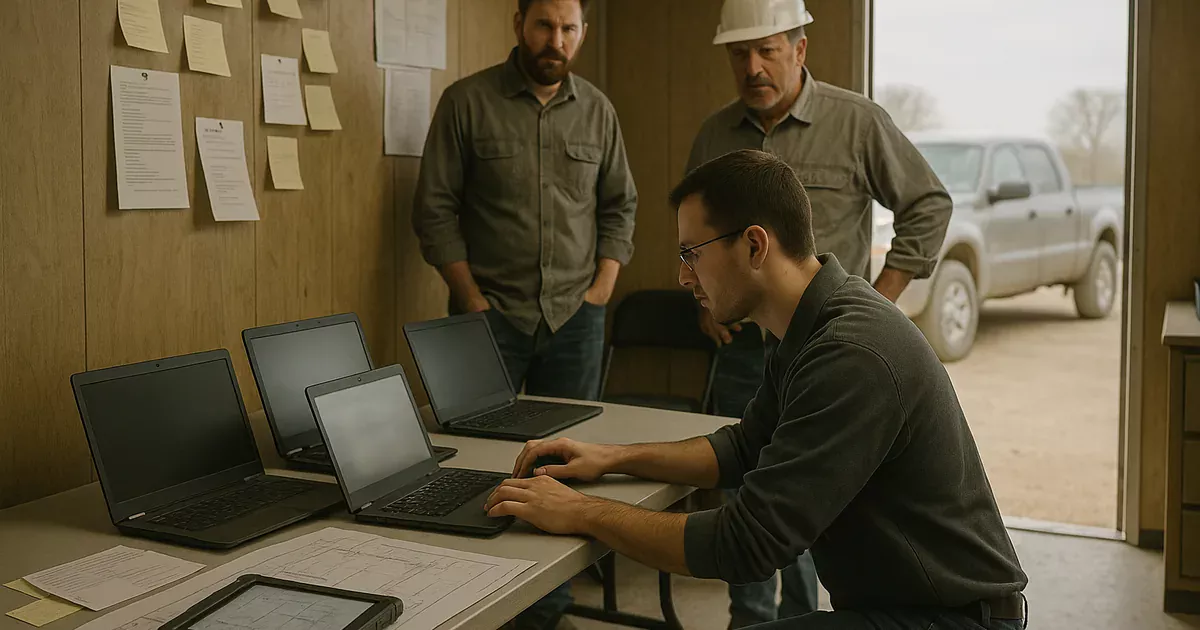
A data breach in a construction firm usually does not start with a dramatic event. In Northern Nevada, we more often see it begin with the operational drain: aging endpoints that take too long to boot, ticket queues that stay open too long, shared credentials that remain in circulation, and field teams relying on workarounds because the proper fix never gets scheduled. Those small failures reduce visibility and consistency, which is exactly where endpoint and threat protection starts to weaken.
For construction businesses working between Reno, Sparks, Carson City, and outlying job sites, the problem is amplified by mobility. Devices move between offices, trailers, homes, and vehicles. Internet quality varies by location. Staff often need immediate access to plans, submittals, accounting systems, and email. When routine support is unstable, patching slips, alerts get ignored, and local admin rights stay in place longer than they should. That is why firms dealing with recurring friction often need endpoint and threat protection in Northern Nevada tied directly to day-to-day operations, not treated as a separate security layer.
The business consequence is straightforward. Slow systems reduce billable time. Repeated login issues encourage unsafe shortcuts. Unresolved device health problems create blind spots in detection. In a case like Harold’s, the breach is not the first failure. It is the moment when months of tolerated inefficiency finally become visible to leadership.
- Endpoint inconsistency: Mixed patch levels, stale antivirus agents, and unmanaged laptops create uneven protection across office and field users.
- Ticket backlog pressure: When routine issues stay unresolved, staff adopt workarounds that bypass standard access and security controls.
- Construction workflow sprawl: Estimating files, vendor records, payroll data, and project documentation often live across multiple systems with different permission models.
- Remote-site reality: Job trailers and temporary locations can make monitoring, update timing, and device accountability harder without a structured process.
What Practical Remediation Looks Like
The fix is not a single tool. It is an operational reset. We typically start by identifying which endpoints are actually in use, which protections are active, which alerts are actionable, and where support delays are creating repeat risk. From there, the goal is to reduce noise, standardize device configuration, and make sure security controls hold up under normal construction workflow pressure.
That usually means centralizing endpoint telemetry, enforcing MFA, removing unnecessary local admin access, validating backup coverage for user data and line-of-business systems, and setting response thresholds that do not leave suspicious activity sitting in a queue. For firms that need broader oversight, a structured approach such as managed cybersecurity programs for growing Reno businesses helps connect monitoring, policy, and response. The technical baseline should also align with practical guidance from CISA’s ransomware and incident response recommendations , especially for access control, recovery readiness, and containment.
- EDR standardization: Deploy one monitored endpoint detection platform across office, remote, and field devices so alerts are consistent and visible.
- MFA hardening: Require multifactor authentication for email, remote access, cloud storage, and admin actions.
- Patch discipline: Set maintenance windows and escalation rules so delayed updates do not linger for weeks.
- Backup validation: Test restore points for project files, accounting data, and shared folders instead of assuming backups are usable.
- Access cleanup: Remove stale accounts, review vendor access, and tighten permissions around estimating, payroll, and contract records.
Field Evidence: From Daily Friction to Measurable Stability
We worked through a similar pattern with a regional contractor operating between Reno and warehouse space in the north valleys. Before remediation, the environment had recurring laptop complaints, inconsistent antivirus status, and no reliable way to confirm whether field devices were patched. Ticket volume stayed high because the same issues kept resurfacing, and leadership had no clean picture of which problems were operational versus security-related.
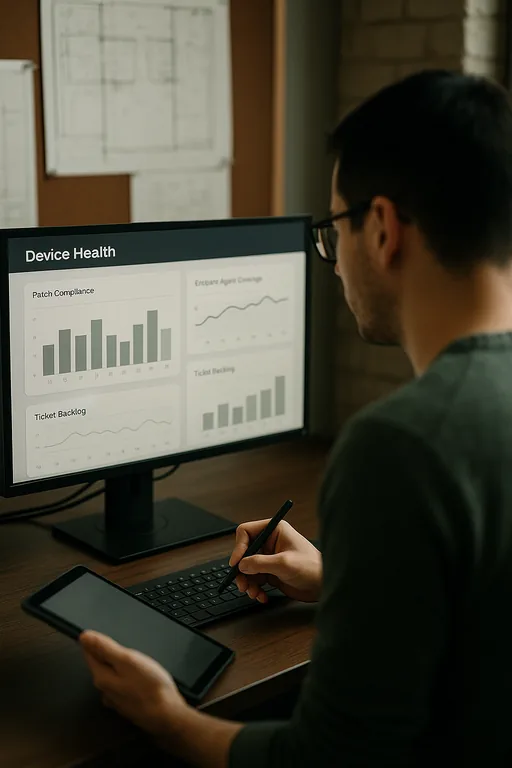
After standardizing endpoint controls, tightening account access, and documenting escalation paths, the environment became easier to support and easier to defend. Device health reporting improved, repeat tickets dropped, and incident review time shortened because the team was no longer sorting through fragmented logs and exceptions. For firms handling regulated records, contract data, or employee information, this is also where compliance-focused IT management becomes useful, since the same controls that reduce breach exposure also improve audit readiness and response documentation.
- Result: Repeat endpoint-related tickets dropped by 41 percent over one quarter, patch compliance moved above 95 percent, and suspicious activity review time fell from hours to under 30 minutes.
Construction IT Risk Control Reference
Scott Morris is an experienced IT and cybersecurity professional with 16 years of hands-on experience in managed technology services. He specializes in Endpoint And Threat Protection and has spent his career building practical recovery, security, and operational continuity processes for businesses across Northern Nevada and Northern Nevada.

About the Author: Scott Morris
Local Support in Northern Nevada
Reno Computer Services supports construction and operations teams across Reno, Sparks, Stead, and surrounding Northern Nevada service areas. For businesses managing office staff, field users, and remote jobsite access at the same time, local response still matters. The route below reflects the practical service relationship between our Reno office and the Stead area destination noted in this scenario.
Why Construction Firms Need to Fix the Drain Before the Breach
For construction firms in Northern Nevada, breach exposure often grows out of ordinary support problems that were allowed to become normal. Slow endpoints, unresolved tickets, inconsistent patching, and weak access discipline create the conditions where a security event becomes more likely and recovery becomes more expensive.
The practical takeaway is simple: stabilize the daily environment first, then enforce the controls that keep devices, accounts, and project data in a known state. When operations are cleaner, security becomes easier to maintain, response becomes faster, and leadership gets a more predictable IT posture.