
Regulatory Compliance Support
Regulatory compliance support helps businesses translate legal, contractual, and industry requirements into real IT controls, documentation, and review processes so leaders can reduce exposure, prepare for audits, and keep operations stable when scrutiny, incidents, or vendor demands arise.
Addison J. learned the problem during a vendor security review, not a breach notice: a departed employee still had cloud admin access, access reviews had never been documented, and the company spent $52,100 on emergency forensic work, legal review, and delayed contract approval.
This opening scenario is derived from real operational incidents observed in managed IT environments. Names and identifying details have been modified for confidentiality.

About the Author: Scott Morris
Scott Morris is an experienced IT and cybersecurity professional with 16 years of hands-on experience in managed technology services. He specializes in Regulatory Compliance Support and has spent his career building practical recovery, security, and operational continuity processes for businesses across Nevada.
Scott Morris is a managed IT and cybersecurity professional who helps businesses manage infrastructure stability, secure user access, reduce operational risk, maintain recovery readiness, and keep technology environments resilient under regulatory and operational pressure. Scott Morris has 16+ years of managed IT and cybersecurity experience. That experience is directly relevant to regulatory compliance support because weak documentation, inconsistent access control, unreviewed exceptions, and poor incident evidence are often exposed first during audits, insurer reviews, customer due diligence, or post-incident investigation. His work with Reno and Sparks business technology environments is grounded in practical risk reduction, business continuity, secure infrastructure management, recovery readiness, and operational resilience.
Regulatory obligations vary by industry, contracts, geography, and the types of data a business handles. This is general technical information; specific network environments and compliance obligations change strategy.
Regulatory compliance support is the operational work of mapping laws, contracts, and industry rules to actual systems, user behavior, documentation, and review cadence. It fits inside broader compliance and risk management, where the goal is not paperwork alone but consistent control of access, data handling, retention, logging, and incident response.
- Requirement mapping: Identify which regulations, customer clauses, insurer obligations, or industry rules actually apply to the business.
- Control implementation: Translate those obligations into real safeguards such as access restrictions, logging, device standards, retention rules, and response procedures.
- Evidence maintenance: Keep policies, review records, exceptions, and test results organized so leadership can show how controls are managed over time.
What is regulatory compliance support?
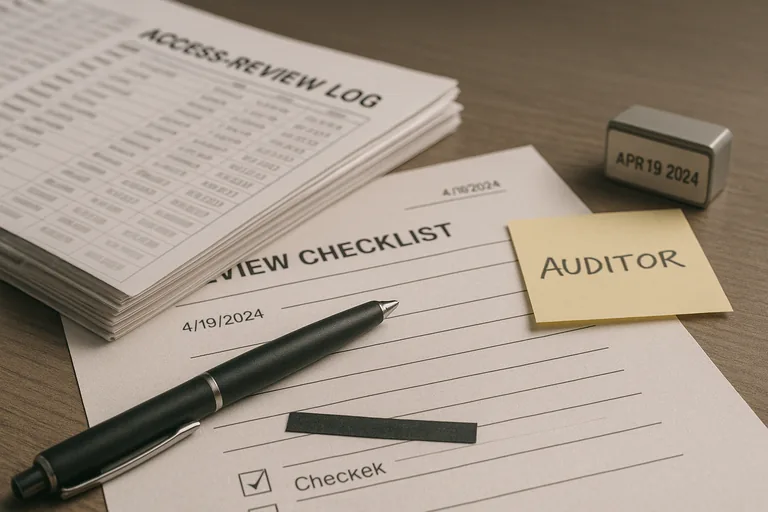
Regulatory compliance support is the disciplined process of turning an obligation into a control, an owner, a review schedule, and an evidence trail. That usually includes identifying which rules apply, defining where regulated data lives, assigning responsibility for access, retention, encryption, and reporting, and documenting how exceptions are approved. In mature environments, the issue is rarely the policy alone; it is whether the policy is reflected in real system settings and daily operating habits.
Why does regulatory compliance support matter in daily operations?
It matters because most compliance failures surface through ordinary work, not formal audits. A terminated employee account left active in Microsoft 365, an exported spreadsheet of personal information stored in the wrong place, or an unlogged admin change can create legal exposure and operational disruption at the same time. For Nevada organizations, Nevada Revised Statutes NRS 603A matters because it requires reasonable security measures for personal information; in business terms, that means leaders need defensible controls and a documented response path when something goes wrong.
Which business risks does regulatory compliance support reduce?
Effective support reduces more than fines. It may reduce downtime caused by emergency remediation, limit the scope of breach investigations, and improve the speed of customer or insurer responses because records already exist. A common failure point is assuming encryption, multifactor authentication, or vendor contracts alone satisfy an obligation; the real gap is often inconsistent offboarding, weak log retention, unmanaged file shares, or exceptions granted informally and never reviewed. When those weaknesses surface, the business pays in legal review, staff distraction, delayed transactions, and damaged credibility.
How does regulatory compliance support work in practice?
In practice, the work starts with scoping: identify regulated data, systems, users, vendors, and workflows, then map each obligation to a control and an owner. From there, teams implement baseline controls such as role-based access, multifactor authentication, audit logging, retention rules, device security, and documented incident escalation, then tie those controls to recurring reviews. During one routine tenant review, repeated failed sign-in alerts looked like ordinary noise until the investigation showed a generic front-desk account was exempt from multifactor authentication because an old scanner workflow depended on it. Guidance in NIST SP 800-63B matters here because authentication controls only reduce risk when identity lifecycle management and exception handling are enforced, documented, and removed when the business need ends.

How can leadership verify that compliance controls are real?
- Access review records: Dated approvals should show who reviewed privileged accounts, terminated users, and third-party access, not just that a review was supposed to happen.
- Configuration and change evidence: There should be records showing when multifactor authentication, logging, retention, and encryption settings were changed, by whom, and for what reason.
- Investigation evidence: Alert logs, incident timelines, exception approvals, and remediation notes should prove that controls are monitored and failures are handled instead of ignored.
- Testing evidence: Gap assessments, vulnerability scan summaries, and policy review dates should line up with the stated review cadence; if those artifacts do not exist, controls are usually assumed rather than proven.
When does weak compliance support become dangerous?
Weak implementation becomes dangerous when controls exist on paper but not in daily operations. This tends to break down when shared accounts survive staff turnover, vendor access is never revisited, retention settings conflict with legal hold needs, or new cloud apps are adopted outside review. A competent provider should be able to explain who reviews exceptions, how often evidence is refreshed, and what happens when a control fails; if the answer depends on memory instead of records, the environment is more fragile than it appears.
What should happen next if obligations are unclear?
Leadership should first define the data types involved, the systems that store them, the vendors that touch them, and the contracts or laws that create the obligation. The next step is a gap review that separates missing controls from undocumented controls, because those are different problems with different costs. What usually separates a stable environment from a fragile one is not the volume of policies but the presence of owners, review cadence, exception handling, and evidence that remediation work actually closes the gap.
If the kind of access-review request that hit Addison J. would trigger a scramble in your office, it may be time to speak with an experienced advisor. A measured review of scope, controls, and evidence can clarify what applies, what is missing, and how to reduce exposure before a regulator, customer, or insurer asks harder questions.