
Managed IT Services
Managed IT Services means ongoing ownership of support, monitoring, maintenance, security, and recovery planning so business systems stay usable under pressure. Done well, it reduces downtime, exposes hidden weaknesses early, and gives leadership clearer operational accountability.
At 10:14 a.m. on quarter-end invoicing day, Aaliyah H. lost access to her ERP after a neglected virtual host filled its datastore with old snapshots, freezing three office VMs and stopping billing, shipping, and customer service. Emergency recovery, overtime, and missed commitments drove the disruption to $49,500 before operations stabilized.
This opening scenario reflects a redacted failure pattern seen in real business networks and support environments. Identifying details have been altered for confidentiality.

About the Author: Scott Morris
Scott Morris is an experienced IT and cybersecurity professional with 16 years of hands-on experience in managed technology services. He specializes in Managed IT Services and has spent his career building practical recovery, security, and operational continuity processes for businesses across Nevada.
This article reflects the operating perspective of Scott Morris, a managed IT and cybersecurity professional who helps businesses maintain infrastructure, reduce security exposure, document recovery procedures, and recover from preventable technology failures. Scott Morris has 16+ years of managed IT and cybersecurity experience. That experience is directly relevant to Managed IT Services because stable operations depend on proactive support, secure infrastructure management, business continuity planning, recovery readiness, and operational resilience in real business environments, including Reno and Sparks organizations that need dependable, compliance-aware technology oversight.
Examples and controls described here are meant to help leadership evaluate operational maturity, not replace a detailed assessment. This is general technical information; specific network environments and compliance obligations change strategy.
Managed IT services are ongoing operational ownership of endpoints, servers, cloud platforms, identity systems, vendor coordination, patching, monitoring, and user support. A business using managed IT services is not just buying helpdesk time; it is assigning responsibility for keeping systems available, secure, documented, and recoverable. Break-fix support reacts after failure, while managed support is supposed to reduce the number of failures that reach staff in the first place.
- Monitoring: Devices, applications, storage, and network paths are watched for early signs of trouble before staff feel the impact.
- Maintenance: Patches, firmware, licensing, hardware age, and configuration drift are reviewed on a schedule instead of waiting for an outage.
- Security Operations: Identity controls, endpoint protection, suspicious sign-ins, and response workflow are treated as daily operational work.
- Documentation and Continuity: Asset records, admin access, vendor contacts, and recovery procedures are maintained so outages can be handled methodically.
In practice, the issue is rarely the tool alone; it is the process around it. Many businesses already own remote monitoring, cloud licensing, endpoint security, and backup software, yet still need managed cybersecurity services because nobody is consistently reviewing alerts, enforcing standards, or closing exceptions. What usually separates a stable environment from a fragile one is clear ownership, review cadence, and evidence that maintenance actually happened.
What are managed IT services in operational terms?
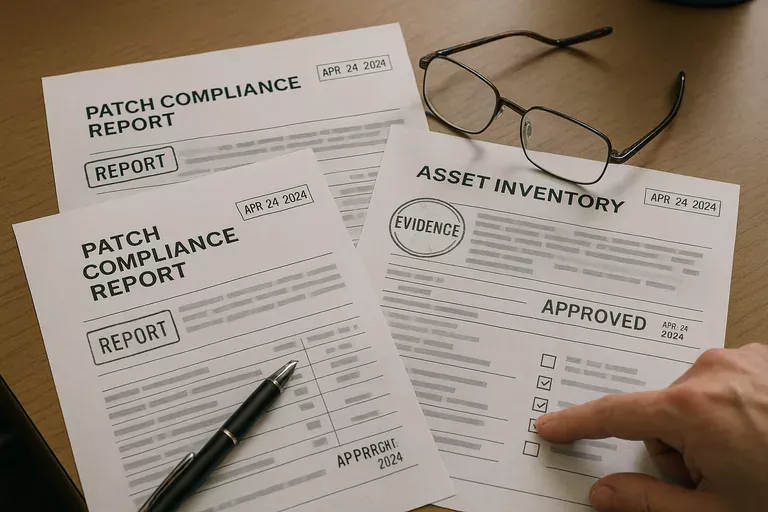
Operationally, managed IT services means someone owns the condition of the environment between incidents. That includes keeping an accurate asset list, knowing which systems support payroll, phones, inventory, scheduling, or production, standardizing configurations, and making sure service requests, maintenance tasks, and security events feed into the same accountable process. A common failure point is assuming helpdesk coverage alone equals management; it does not, because unmanaged infrastructure can look quiet right up until it fails.
Why do managed IT services matter to daily business operations?
Most business disruption starts as a small technical signal that nobody acted on: storage warnings, failing disks, repeated login failures, expiring certificates, unsupported software, or a cloud sync error affecting a shared process. In mature environments, those signals are triaged before staff notice them. When ownership is weak, the first person to discover the problem is usually the employee who cannot invoice, schedule, ship, check in a patient, or access customer records.
What risks do managed IT services reduce before they become incidents?
Managed IT services reduce exposure to account compromise, patching gaps, hardware failure, misconfigured cloud access, unsupported systems, and vendor dependencies that quietly accumulate risk. Guidance in NIST SP 800-63B exists because user identity is often the easiest way into a business network; in business terms, stronger authentication and account lifecycle control help prevent a reused password from becoming a larger internal incident. In practice, this means enforcing multifactor authentication for privileged access, removing stale accounts promptly, and reviewing vendor and administrator permissions before they are abused or forgotten.
How do managed IT services actually work in a real business environment?
In mature managed operations, endpoints and servers report into monitoring platforms, security tools generate prioritized alerts, patch policies are enforced in rings, and changes are documented so failures can be traced back to cause rather than guesswork. During a review pattern commonly seen in inherited environments, repeated overnight sign-in failures against a disabled warehouse account led investigators to an old scan-to-folder device still authenticating with stored credentials; the deeper issue was that no one owned service-account review, so the account remained in a privileged group long after the employee left. The lesson is that competent managed IT is workflow-driven: alerts are triaged, ownership is assigned, exceptions are documented, and the fix includes process correction, not just silencing the symptom.

How can a business verify that managed IT services are being performed properly?
What warning signs show weak managed IT services?
What should a business do before the next avoidable outage?
Before the next avoidable outage, leadership should identify the systems that truly stop revenue or service delivery, confirm who owns each layer of support, review evidence of maintenance and security enforcement, and test whether recovery priorities match business reality. A competent provider should be able to explain what is monitored, what is excluded, how after-hours escalation works, how privileged access is reviewed, and how the business would operate if a critical application were unavailable for half a day. Those answers reveal whether the environment is resilient by design or just functioning through habit.