Reno Law Firm IT
What looks like a one-off issue is often tied to untested backups. In law firm environments, failed restore tests, missing dependencies, and an unclear recovery order can turn into recovery time, data availability, and business continuity long before anyone notices the warning signs. Closing those gaps early makes governance policy and audit preparation far more resilient.
This case study reflects real breakdown patterns documented across 300+ regional IT incidents. Names and identifying details have been modified for confidentiality, while technical and financial data remain accurate to the original events.
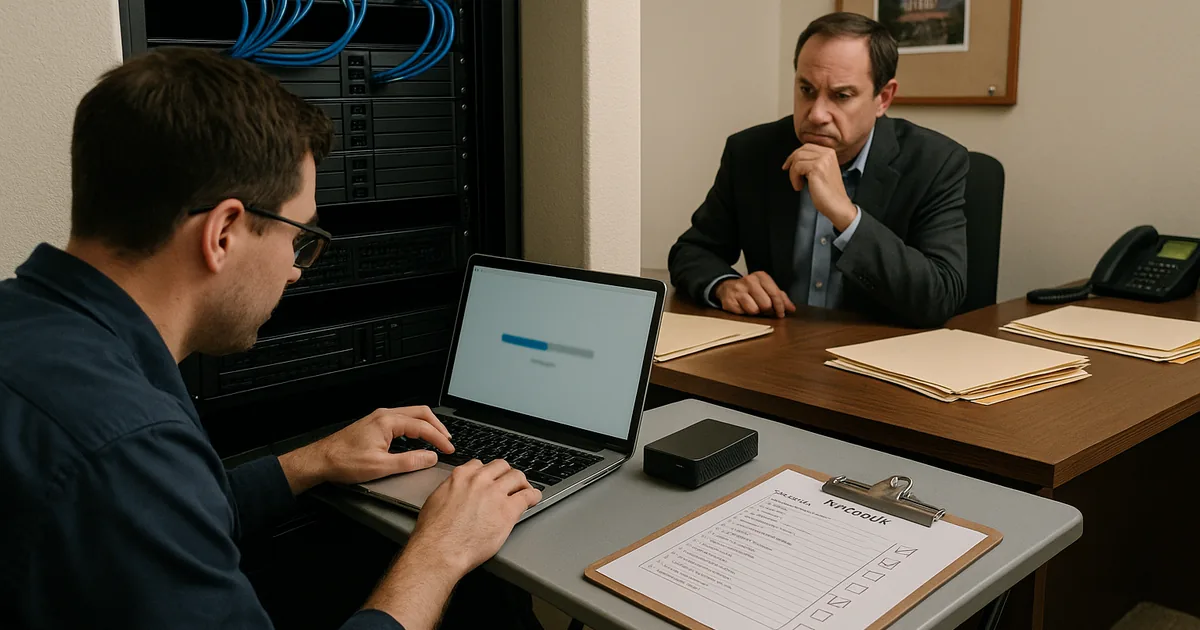
Why Backup Copies Alone Do Not Keep a Law Firm Running
When systems go down in a Washoe County law firm, the real problem is often not the outage itself. It is the resilience test gap behind it. A backup can exist and still fail the business when no one has confirmed whether the case management platform, document repository, user permissions, line-of-business integrations, and remote access tools can actually be restored in the right sequence. That is the difference between having data and having continuity.
We see this most often in firms that have grown over time, added cloud tools on top of older servers, or rely on a mix of on-premise file storage and Microsoft 365. In those environments, a restore test is not just a technical exercise. It is part of governance policy and audit preparation in Northern Nevada because it proves whether recovery objectives are real, documented, and defensible. When Belinda’s situation happens, the visible symptom is “systems down,” but the root cause is usually untested recovery assumptions.
- Restore dependency mapping: Law firms often back up servers successfully but fail to document application services, SQL instances, mapped drives, authentication dependencies, and licensing components required for a usable recovery.
- Recovery order confusion: If staff do not know whether identity services, file shares, practice software, scanning workflows, and email access must come back first, downtime expands even when backup files are intact.
- False confidence from backup success alerts: A green backup report only confirms a copy was created. It does not confirm the copy is complete, bootable, current, or aligned to the firm’s actual recovery time requirements.
- Business continuity gap: As the resilience discussion makes clear, backup is just a copy; business continuity is the ability to keep working while the server is effectively unavailable.
How to Close the Resilience Test Gap Before the Next Outage
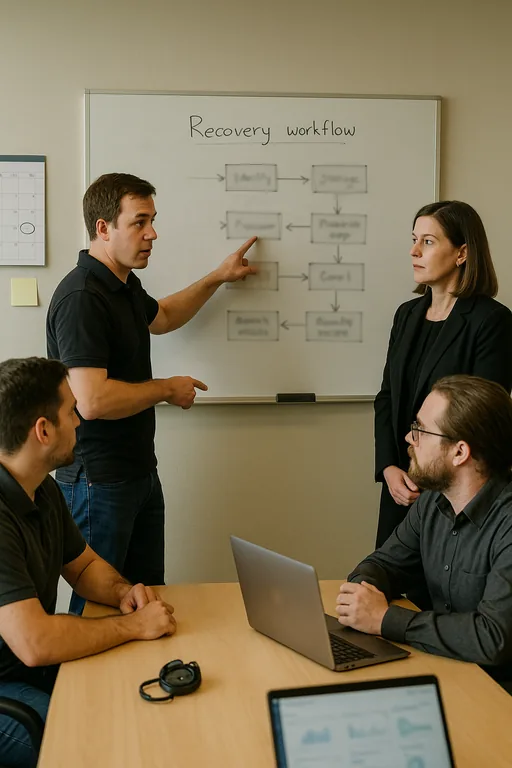
The fix is practical. Start by defining what the firm must restore first to keep legal operations moving: document access, matter management, email, calendaring, billing, and secure remote connectivity. Then test those systems in the same order they would be needed during a real interruption. Firms with mixed infrastructure usually need tighter oversight of server and hybrid infrastructure management so restore testing includes local servers, virtual hosts, network storage, and any cloud-connected dependencies.
We also recommend documenting recovery time objectives and recovery point objectives in plain operational language, then validating them through scheduled exercises. For firms using Microsoft 365 for email, Teams, or SharePoint, continuity planning should also include cloud and Microsoft environment management so staff know what remains available during a local server event and what still depends on on-premise identity or file systems. For a practical external benchmark, the CISA ransomware resilience guidance is useful because it emphasizes tested recovery, not just backup retention.
- Scheduled restore validation: Test full and item-level restores on a defined cadence, including legal application databases, file permissions, and scanned document workflows.
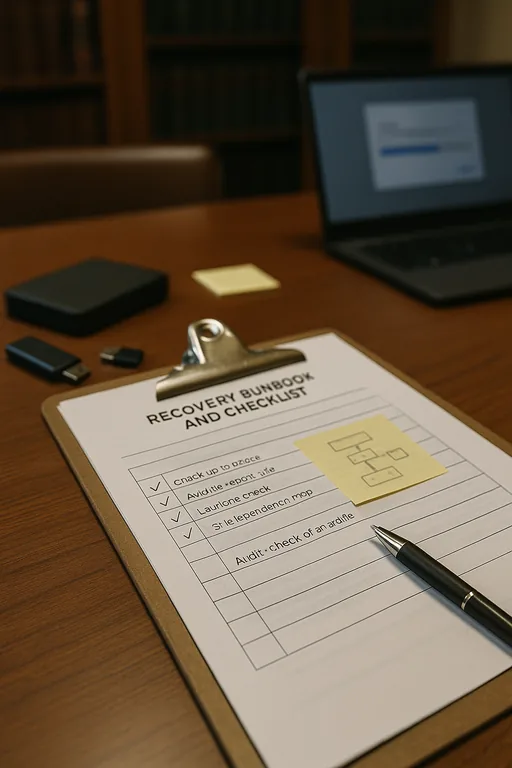
- Recovery runbooks: Build a written order of operations for domain services, storage, applications, and user access so recovery does not depend on memory during an outage.
- Backup integrity monitoring: Alert on failed jobs, corrupted chains, storage capacity issues, and missed replication windows before they become a business event.
- Continuity segmentation: Separate critical legal systems from less critical workloads so a single infrastructure issue does not stall the entire office.
Field Evidence: Tested Recovery Changes the Outcome
In one Northern Nevada professional office corridor, a firm operating between Reno and Carson City had recurring confidence issues around its backup platform after a storage controller fault caused an unplanned shutdown. Before remediation, the team had backup reports but no verified proof that the document management system and billing database could be restored together. Recovery estimates ranged from two hours to a full day because no one had tested the sequence.
After a structured resilience review, the firm documented dependencies, staged quarterly restore tests, and validated access from both office and remote users. When a later host issue interrupted production again during a winter weather week, the firm restored priority systems in a controlled order and resumed core work far faster because the process had already been rehearsed rather than improvised.
- Result: Verified recovery time for priority legal systems dropped from an uncertain 6 to 10 hours to a tested 95-minute restoration window, with billing and document access restored first.
Resilience Test Reference Points for Law Firms
Scott Morris is an experienced IT and cybersecurity professional with 16 years of hands-on experience in managed technology services. He specializes in Governance Policy And Audit Preparation and has spent his career building practical recovery, security, and operational continuity processes for businesses across Washoe County and Northern Nevada.

About the Author: Scott Morris
Local Support in Washoe County
Reno Computer Services supports firms across Reno, Sparks, and the broader Washoe County area where legal operations often depend on a mix of office servers, cloud platforms, and remote access for attorneys and staff. From our Ryland Street office, the route to CORE Construction Regional HQ is typically about 17 minutes, which reflects the practical local coverage needed when recovery planning, restore validation, and continuity testing cannot wait for a distant provider.
Resilience Testing Is What Turns Backup Into Continuity
For law firms in Washoe County, systems going down is rarely just a server problem. It is usually a proof problem. If the firm cannot show that critical systems restore in the right order, within an acceptable timeframe, and with the right dependencies intact, then backup status reports provide limited operational value.
The practical takeaway is straightforward: test restores, document recovery order, validate cloud and local dependencies, and tie the results back to governance policy and audit preparation. That is how firms reduce downtime, protect billing flow, and keep a technical incident from becoming a business continuity failure.