Reno Law Firm System Fail
When a business is dealing with systems going down, the failure usually started earlier. Slow devices, ticket backlogs, and repeated workarounds can weaken compliance advisory programs over time and leave law firms in The Truckee Meadows exposed when pressure hits. Addressing the problem means stabilizing daily support, reducing repeat issues, and standardizing how IT is handled.
This case study reflects real breakdown patterns documented across 300+ regional IT incidents. Names and identifying details have been modified for confidentiality, while technical and financial data remain accurate to the original events.
Why Systems Keep Going Down in Truckee Meadows Law Firms
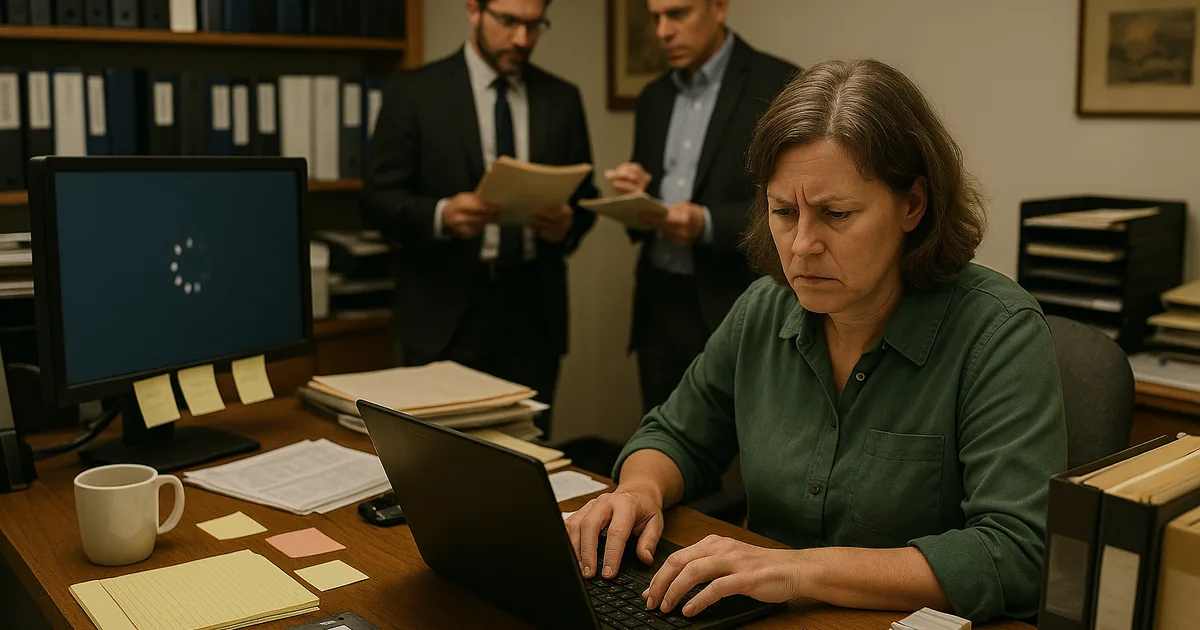
When systems go down in a law firm, the immediate failure is usually only the visible symptom. In The Truckee Meadows, we often find that the real issue is an operational drain: small recurring problems that never get fully resolved. Slow login times, Outlook profile corruption, unstable line-of-business applications, aging endpoints, and ticket queues that stay open too long all chip away at reliability. For firms handling client records, deadlines, and regulated data, that daily friction eventually weakens response discipline and creates compliance exposure.
This is where structured compliance advisory programs in The Truckee Meadows matter. They help move a firm away from reactive fixes and toward documented standards for access control, patching, retention, backup review, and incident handling. Without that structure, staff create their own workarounds. That is how a minor issue becomes a larger outage: one overloaded workstation, one missed update, one unsupported application dependency, and suddenly the office cannot trust timekeeping, document access, or matter status. We see this especially in smaller firms where attorneys, paralegals, and administrators are all compensating for the same unresolved technical drag.
- Ticket backlog: Repeated low-level issues stay open long enough that staff normalize them, which hides root causes until a full interruption occurs.
- Endpoint performance decay: Older devices with fragmented storage, failing drives, or heavy startup loads create slowdowns that affect document systems and legal billing tools.
- Workaround culture: Manual notes, local file copies, and shared passwords may keep work moving briefly, but they undermine auditability and consistency.
- Compliance drift: Policies may exist on paper, yet daily support gaps prevent them from being followed in a repeatable way.
How to Stabilize Daily Support and Reduce Repeat Failures
The fix is not a single reboot or one emergency visit. It is a controlled remediation plan that restores operational discipline. We typically start by identifying the repeat offenders: devices with chronic performance issues, unresolved application errors, failed updates, weak admin practices, and any dependency on one person knowing how to keep things running. For law firms, the goal is to reduce interruption at the workflow level, not just the device level. That means intake, document access, email, billing, and remote access all need to be reviewed together.
From there, firms usually benefit from documented disaster recovery planning and recovery procedures so a workstation failure, server issue, or cloud sync problem does not stop legal operations cold. Controls should also align with practical guidance from CISA’s ransomware and resilience guidance , especially around backups, privileged access, and tested recovery steps. In legal environments, recovery planning is not separate from compliance; it is part of proving that the firm can maintain access, integrity, and continuity under pressure.
- Endpoint standardization: Replace or remediate unstable devices, enforce patch baselines, and remove unsupported software that creates recurring failures.
- MFA hardening: Require multifactor authentication for email, remote access, and administrative actions to reduce account compromise risk during periods of disruption.
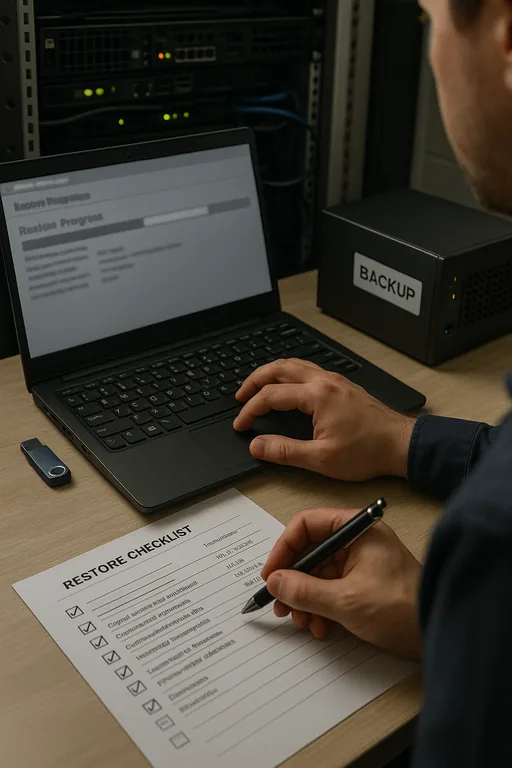
- Backup validation: Test restores regularly, confirm file-level and system-level recovery points, and document recovery time expectations for legal operations.
- Alerting improvements: Use monitoring that flags storage issues, failed backups, service stoppages, and repeated login or sync failures before staff report them.
Field Evidence: From Daily Friction to Stable Legal Operations
We worked through a similar pattern with a professional office corridor operation serving clients between Reno and Sparks. Before remediation, the environment had recurring workstation slowdowns, inconsistent file access over VPN, and a billing process that depended too heavily on manual correction at the end of the week. Staff were losing time every day, but because the interruptions were spread across multiple users and systems, leadership saw them as isolated annoyances rather than one connected operational problem.
After standardizing endpoint health, tightening permissions, validating backups, and documenting escalation paths, the office moved from recurring disruption to predictable support. That also improved confidence in business continuity and backup compliance , because recovery was no longer assumed; it was tested. In one review cycle, the firm cut repeat support tickets by more than half and reduced unplanned interruption during billing periods. That is the difference between a reactive environment and one that can absorb normal business pressure without stalling.
- Result: Repeat ticket volume dropped by 58 percent over 90 days, and end-of-month billing delays were reduced from multiple hours to less than 30 minutes.
Operational Controls That Reduce Legal IT Downtime
Scott Morris is an experienced IT and cybersecurity professional with 16 years of hands-on experience in managed technology services. He specializes in Compliance Advisory Programs and has spent his career building practical recovery, security, and operational continuity processes for businesses across The Truckee Meadows and Northern Nevada.


About the Author: Scott Morris
Local Support in The Truckee Meadows
We support firms across Reno, Sparks, and nearby industrial and office corridors where a short drive can still turn into a long operational delay if systems are unstable. From our Reno office, the route to the destination shown below is typically about 17 minutes, which is close enough for practical local response but still a reminder that law firms need documented support processes, not just emergency visits, when daily IT friction starts affecting billing, intake, and compliance work.
Operational Takeaway for Law Firms Facing Repeated Downtime
Systems going down in a Truckee Meadows law firm rarely starts with one dramatic event. More often, it begins with unresolved daily friction that drains billable time, weakens consistency, and leaves the firm exposed when workload spikes or a key system fails. The operational drain is real because it affects not only productivity, but also the firm’s ability to follow its own compliance and recovery expectations.
The practical response is to reduce repeat issues, standardize support, validate recovery, and treat recurring slowdowns as early indicators rather than minor annoyances. Once those basics are handled consistently, firms are in a much better position to protect client work, maintain billing flow, and avoid preventable outages.