Reno Law Firm Gap
When a business is dealing with systems going down, the failure usually started earlier. Poor safeguards, inconsistent records handling, and a slow response can weaken managed cybersecurity services over time and leave law firms in The Truckee Meadows exposed when pressure hits. Addressing the problem means documenting safeguards, tightening response steps, and protecting sensitive data.
This case study reflects real breakdown patterns documented across 300+ regional IT incidents. Names and identifying details have been modified for confidentiality, while technical and financial data remain accurate to the original events.
Where the Legal Liability Usually Starts
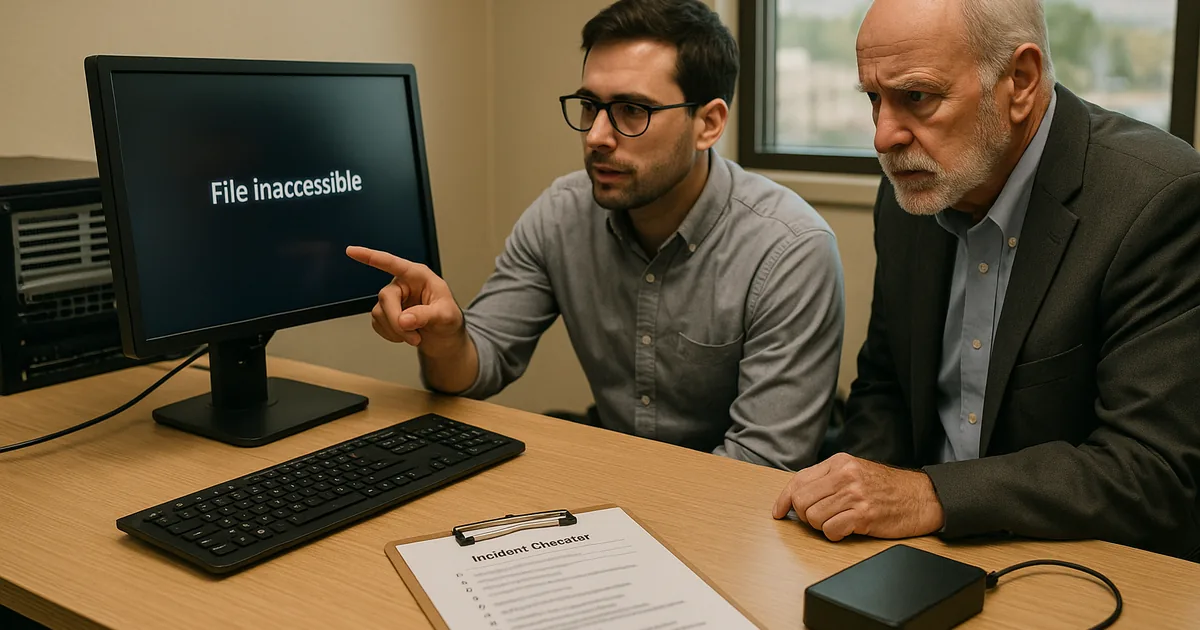
When systems go down in a law firm, the legal liability gap is rarely caused by a single outage. We usually find a chain of smaller failures that built up over time: shared credentials, incomplete matter access controls, unverified backups, undocumented intake procedures, and no clear record of who handled sensitive files. In The Truckee Meadows, that becomes more serious because firms are balancing court deadlines, client communications, and document retention obligations at the same time. If client data is lost or exposed, saying it was an honest mistake does not carry much weight once reporting duties and evidentiary questions begin.
The immediate issue may look like a server problem or a workstation lockout, but the deeper problem is governance. A law office needs technical safeguards that support chain of custody, confidentiality, and recoverability. That is why firms dealing with recurring outages or access failures often need managed cybersecurity services in The Truckee Meadows that focus on documented controls, monitoring, and response discipline rather than just break-fix support. In cases like Herbert’s, the outage exposed a larger weakness: the firm could not quickly prove what data was affected, who still had access, or whether the latest client records were fully recoverable.
- Records handling drift: Matter files stored across email, desktops, and shared folders make it difficult to confirm the authoritative version of a document during an outage or after a security event.
- Slow incident response: Without a written escalation path, staff lose time deciding whether the issue is a permissions problem, a server failure, or a possible compromise.
- Legal exposure: In Reno-area practice, missed deadlines, inaccessible discovery files, and uncertain breach scope can create reporting, malpractice, and client trust issues quickly.
- Technical factor: Flat permissions and inconsistent logging reduce the firm’s ability to isolate affected systems and reconstruct events after systems go down.
How to Close the Gap Before the Next Outage
The fix is operational as much as technical. Start by identifying where client records actually live, who needs access, and which systems are essential for intake, calendaring, billing, document management, and secure communication. Then reduce the number of places sensitive data can be stored outside approved workflows. Firms with aging servers, mixed cloud storage, or inconsistent remote access usually benefit from tighter oversight of network, server, and cloud management for legal operations so that permissions, backups, and recovery priorities are aligned.
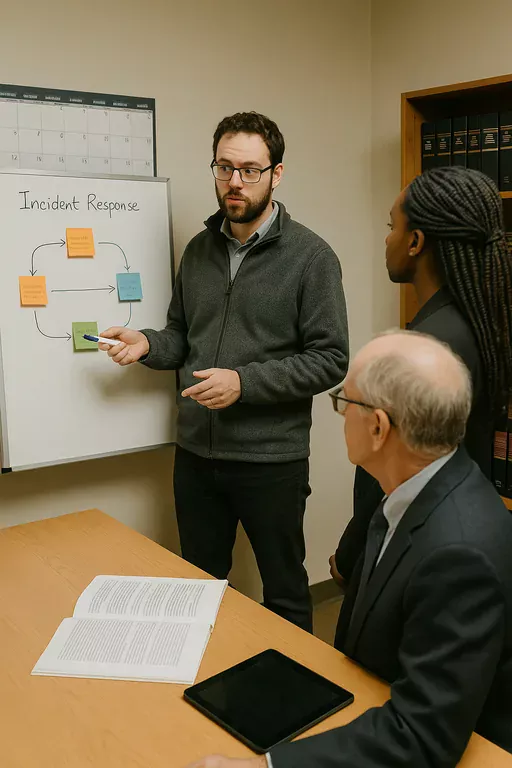
We also recommend building response steps around evidence preservation and business continuity. That means verified backups, MFA enforcement, endpoint detection, alerting on unusual file activity, and a written incident process that tells staff what to stop, who to call, and how to preserve logs. For practical guidance on reducing cyber risk and improving response readiness, the CISA StopRansomware resources are useful because they translate security controls into operational actions.
- Access control cleanup: Remove shared accounts, apply role-based permissions by matter and department, and review dormant accounts on a fixed schedule.
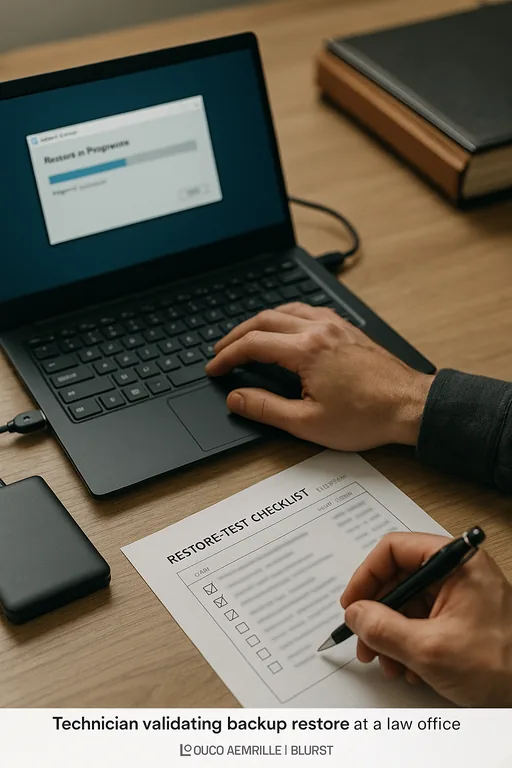
- Backup validation: Test restore points against actual legal documents and case folders, not just system status reports.
- Endpoint and email hardening: Deploy EDR, enforce MFA, and block risky attachment behavior that commonly starts legal-office incidents.
- Control step: Segment critical file systems and document repositories so a workstation issue does not immediately spread across the full office environment.
Field Evidence: Restoring Order After a Multi-System Legal Office Failure
We have seen this pattern in firms operating between Reno, Sparks, and Carson City where a small internal issue turns into a broader legal operations problem because no one can confirm the current state of files, permissions, or backups. Before remediation, the office was relying on a mix of local shares, cloud sync folders, and ad hoc remote access. After standardizing permissions, validating backup recovery, and improving network infrastructure controls for multi-office legal systems , the firm could isolate failures faster and keep unaffected staff working.
- Result: Recovery time for file access incidents dropped from most of a business day to under 75 minutes, backup verification moved to a documented monthly process, and billing disruption was reduced to the affected users instead of the entire office.
Operational Controls Law Firms Should Review
Scott Morris is an experienced IT and cybersecurity professional with 16 years of hands-on experience in managed technology services. He specializes in Managed Cybersecurity Services and has spent his career building practical recovery, security, and operational continuity processes for businesses across The Truckee Meadows and Northern Nevada.

About the Author: Scott Morris
Local Support in The Truckee Meadows
Reno Computer Services supports firms across Reno, Sparks, and nearby legal and professional corridors where response time matters, but documented recovery matters more. From our Ryland Street office, the Skyline area is typically about 12 minutes away under normal traffic, which helps when a law office needs on-site coordination for access failures, server issues, or incident containment.
What Law Firms Need to Take Seriously
For law firms in The Truckee Meadows, systems going down is not only an IT inconvenience. It is a records, confidentiality, and liability problem. The real exposure usually comes from weak documentation, inconsistent access control, and the inability to show what happened, what was affected, and how recovery was validated.
The practical takeaway is straightforward: tighten the handling of client data before the next outage, define response steps before staff are under pressure, and make sure backups, permissions, and logs support legal operations instead of undermining them. That is how firms reduce downtime and reduce the chance that a technical failure becomes a legal one.