Reno Law Firm Drain Fix
This kind of issue rarely appears all at once. For law firms in Northern Nevada, it usually builds through slow devices, ticket backlogs, and repeated workarounds and then surfaces as systems going down, slower recovery, or higher exposure. A more reliable setup starts with stabilizing daily support, reducing repeat issues, and standardizing how IT is handled.
This case study reflects real breakdown patterns documented across 300+ regional IT incidents. Names and identifying details have been modified for confidentiality, while technical and financial data remain accurate to the original events.
Why Small Daily IT Friction Turns Into Systems Going Down
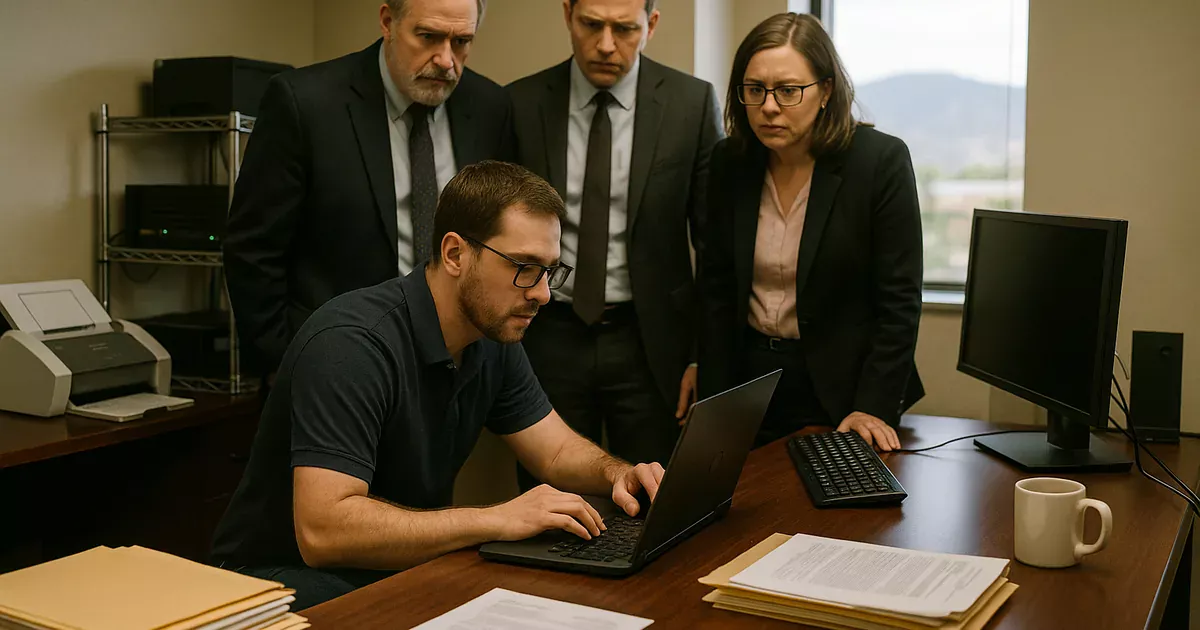
When a law firm says its systems are down, the root problem is often not a single outage. In our experience across Reno, Sparks, and Carson City, the larger issue is operational drain: slow logins, aging endpoints, unresolved tickets, inconsistent user permissions, and too many manual workarounds. Those small interruptions eat into billable hours first, then eventually surface as a larger failure when a file share stalls, a line-of-business application hangs, or a workstation cannot reconnect after a reboot.
For legal offices, the impact is sharper because document access, email continuity, calendaring, scanning, and practice-management tools all depend on stable day-to-day support. Firms dealing with recurring friction usually need more than break-fix help; they benefit from structured managed IT support in Reno that focuses on monitoring, ticket discipline, lifecycle planning, and standard operating procedures. That is usually the point where the pattern becomes visible: the firm is not facing one bad day, it is carrying months of unresolved technical debt. In cases like Ariana’s, the visible outage is just the moment the backlog finally interrupts legal work.
- Technical factor: Unstandardized endpoints, delayed patching, and inconsistent support response often create repeat failures that slow document access, interrupt billing workflows, and increase recovery time when a workstation or shared system stops responding.
- Operational factor: Law firms rely on tightly sequenced work between attorneys, paralegals, intake staff, and billing, so even minor device or access issues can ripple through the entire office.
- Local factor: Northern Nevada firms with satellite users, hybrid staff, or offices spread between Reno and surrounding areas often see delays worsen when on-site troubleshooting, ISP coordination, and vendor follow-up are not clearly owned.
How We Remediate the Operational Drain Before It Becomes Downtime
The fix is usually not one tool. It is a controlled cleanup of support operations, endpoint health, access controls, and recovery readiness. We typically start by identifying the repeat offenders: machines with chronic performance issues, unresolved tickets older than expected, failed backups, unstable line-of-business integrations, and users relying on local-only storage or ad hoc permissions. From there, the goal is to reduce noise and restore predictability.
For firms that need steadier execution, this often means putting formal IT systems for multi-location operations in place so ticket handling, escalation, vendor coordination, and maintenance windows are managed consistently. Security and resilience should be aligned with practical guidance such as the CISA ransomware resilience recommendations , especially where legal data, email continuity, and recovery procedures are involved.
- Endpoint standardization: Replace or remediate unstable devices, align operating system versions, and remove unsupported software that creates recurring tickets.
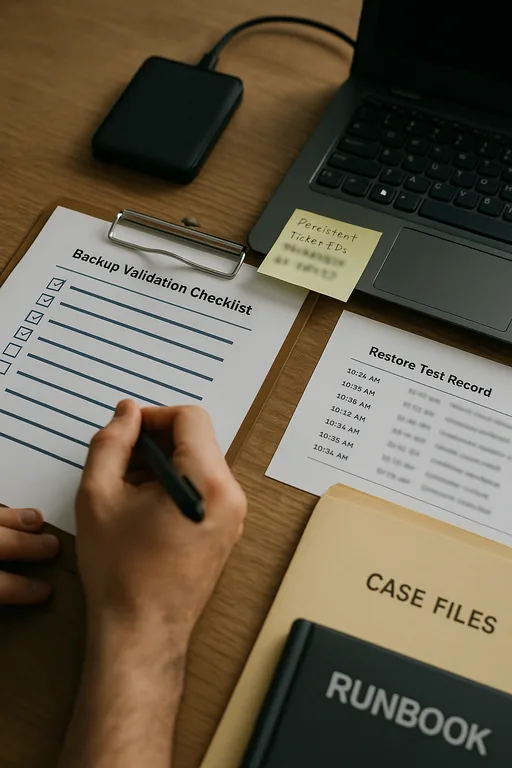
- Backup validation: Confirm backups are not only running but restorable, with test recoveries for document repositories and key legal applications.
- MFA hardening: Enforce multi-factor authentication on email, remote access, and admin accounts to reduce account compromise risk during periods of operational disorder.
- Alerting improvements: Set thresholds for disk health, failed services, backup jobs, and line-of-business application errors so issues are addressed before users report them.
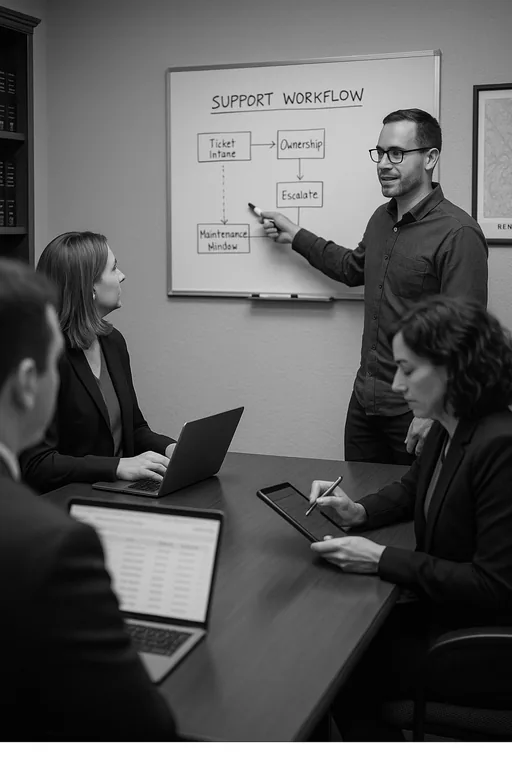
- Support workflow control: Define ownership, response targets, and escalation paths so recurring issues are permanently resolved instead of repeatedly patched around.
Field Evidence: Stabilizing a Reno Legal Office After Recurring Support Failures
We worked through a pattern common in the South Reno corridor: a professional office with no single catastrophic event, but constant low-grade disruption. Staff were restarting workstations daily, scanning to inconsistent folders, and waiting too long for resolution on access and performance issues. The firm had enough technology in place to operate, but not enough structure to keep it reliable.
After standardizing endpoints, cleaning up permissions, validating backups, and tightening support ownership, the office moved from reactive troubleshooting to a more predictable operating state. Later in the engagement, the firm also adopted compliance-focused IT management to keep ticket volume, patching, and user support from drifting back into the same pattern.
- Result: Repeat support tickets dropped by 43 percent over the next quarter, average workstation performance complaints fell sharply, and staff regained consistent access to case files and billing systems during normal business hours.
Operational Controls That Reduce Law Firm Downtime
Scott Morris is an experienced IT and cybersecurity professional with 16 years of hands-on experience in managed technology services. He specializes in Managed It Services and has spent his career building practical recovery, security, and operational continuity processes for businesses across Northern Nevada and Northern Nevada.

About the Author: Scott Morris
Local Support in Northern Nevada
From our Reno office, we regularly support firms across the region that need faster response, clearer ownership, and more stable day-to-day IT operations. For legal offices in South Reno and nearby business corridors, travel time, vendor coordination, and on-site follow-up all matter when systems are unstable. The route below reflects the practical service relationship between our office and the South Meadows area discussed in this article.
Stability Comes From Reducing Friction Before It Becomes an Outage
For law firms in Northern Nevada, systems going down is often the final symptom of a longer operational problem. Slow devices, unresolved tickets, inconsistent support, and weak recovery processes create a steady drain on billable work long before a visible outage occurs.
The practical takeaway is straightforward: stabilize support operations, standardize the environment, and validate recovery before the next disruption forces the issue. Firms that do this well usually see fewer repeat incidents, faster response, and better control over both productivity and risk.