
Reno/Sparks Logistics Hub
What looks like a one-off issue is often tied to untested backups. In logistics hub environments, failed restore tests, missing dependencies, and an unclear recovery order can turn into recovery time, data availability, and business continuity long before anyone notices the warning signs. Closing those gaps early makes managed backup solutions far more resilient.
This case study reflects real breakdown patterns documented across 300+ regional IT incidents. Names and identifying details have been modified for confidentiality, while technical and financial data remain accurate to the original events.
Why Backup Copies Fail the Resilience Test

A backup is only a copy. Business continuity is the ability to keep working when the primary system is unavailable, corrupted, or physically offline. That distinction matters in Washoe County logistics environments where shipping windows, scan stations, inventory systems, and billing workflows are tightly connected. When a restore has never been tested under real conditions, the first true audit of resilience happens during an outage, and that is the worst time to discover missing application dependencies or a recovery sequence that does not match actual operations.
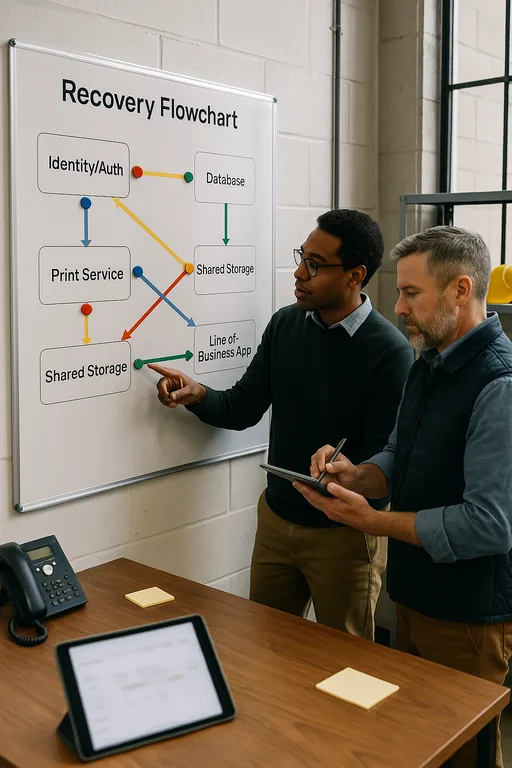
We typically find three root causes. First, backup jobs may protect data but not the application stack around it. Second, restore testing is often limited to file-level checks instead of full workload recovery. Third, no one has documented which systems must come back first for the business to function. In a warehouse or logistics hub, restoring a server image without the print queue, authentication service, SQL instance, or shared drive mapping still leaves operations stopped. That is why organizations relying on managed backup solutions in Washoe County need regular resilience testing, not just successful nightly job reports.
This is where the resilience test becomes practical. If a logistics team cannot answer how long it takes to restore order entry, barcode printing, dispatch visibility, and billing access in sequence, then recovery time objectives are assumptions rather than controls. In the case above, Ava was not dealing with a single failed server. She was dealing with an undocumented chain of dependencies that turned a recoverable event into a business interruption.
- Failed restore validation: Backup software may confirm that data was copied, but without test restores of the full workload, corrupted images, missing credentials, and broken application dependencies remain hidden until production is down.
- Unclear recovery order: If domain services, databases, file shares, and line-of-business applications are not prioritized correctly, staff regain partial access without being able to ship, receive, invoice, or report accurately.
- Dependency gaps: Logistics systems often rely on printers, mapped drives, middleware, and vendor integrations that are not always included in standard backup scope.
- Operational blind spots: Multi-shift facilities in Reno and Sparks may not notice backup drift immediately because overnight jobs appear healthy while actual restore readiness steadily degrades.
How to Turn Backup Into Real Recovery Capability
The fix is not simply buying more storage or increasing retention. The practical answer is to define recovery by business function, then test against that standard. For logistics hubs, we start by identifying the minimum systems required to receive inventory, process orders, print labels, communicate with carriers, and complete billing. From there, each backup set is mapped to a recovery order with documented dependencies, credential access, and expected restore times.
That work usually benefits from structured oversight such as IT consulting in Northern Nevada , especially when backup design has grown around old servers, vendor appliances, and undocumented workarounds. We also recommend aligning restore testing with guidance from CISA’s ransomware and recovery guidance , because the same controls that improve cyber recovery also improve day-to-day operational resilience.
In practice, remediation means testing the actual restore path, not the dashboard. That includes isolated recovery tests, application-level validation, backup immutability where appropriate, MFA on backup administration, and confirmation that staff know who owns each recovery step. If a logistics operation depends on a server, a cloud app, a scanner fleet, and a billing export, all four need to be part of the recovery plan.
- Restore runbooks: Document the exact order for recovering identity services, databases, file shares, print services, and line-of-business applications.
- Quarterly recovery testing: Perform full restore exercises in a non-production environment and measure actual recovery time against business requirements.
- Dependency mapping: Include printers, middleware, vendor connectors, shared folders, and licensing services in the backup scope.
- MFA and admin hardening: Protect backup consoles and privileged accounts so recovery tools are not compromised during a broader incident.
- Executive review: Use documented recovery metrics to support strategic IT leadership for continuity planning and budget decisions.
Field Evidence: The Resilience Test in a Reno Distribution Corridor
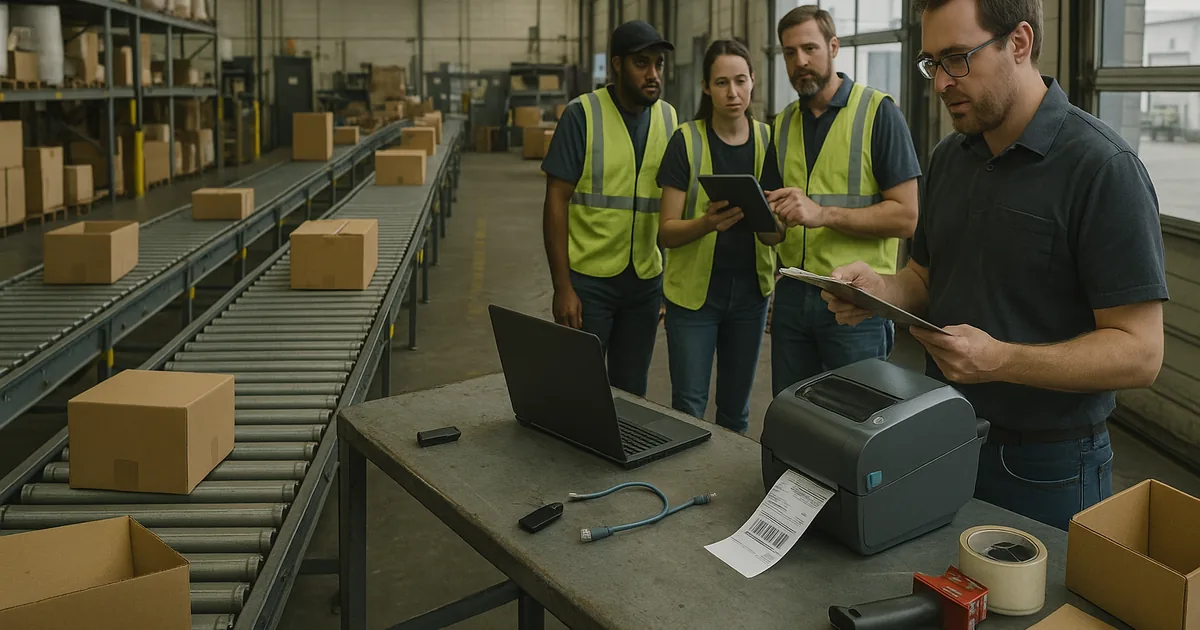
In one Northern Nevada logistics environment near the Reno industrial corridor, the initial state looked acceptable on paper: nightly backups completed, retention targets were met, and storage capacity was healthy. The problem surfaced during a controlled restore exercise. The team could recover the virtual server, but the barcode label application failed because the SQL dependency and print service configuration were not included in the documented sequence. That meant the system was technically restored but still not usable for shipping.
After remediation, the environment was reorganized around business functions instead of backup jobs. Recovery order was documented, service accounts were validated, and quarterly test restores were added to the operating calendar. The result was a measurable shift from uncertainty to predictable recovery, even with the common regional variables we see in Northern Nevada such as multi-building operations, older flex-space wiring, and mixed internet circuits from different carriers.
- Result: Full functional recovery time for core shipping and billing systems dropped from an estimated 7 to 8 hours to 95 minutes during the next live test.
Resilience Test Reference Points for Logistics Backup Environments
Scott Morris is an experienced IT and cybersecurity professional with 16 years of hands-on experience in managed technology services. He specializes in Managed Backup Solutions and has spent his career building practical recovery, security, and operational continuity processes for businesses across Washoe County and Northern Nevada.

About the Author: Scott Morris
Local Support in Washoe County
Reno Computer Services supports organizations across Reno, Sparks, and the broader Washoe County area where logistics, warehousing, and flex-space operations often depend on a small number of critical systems staying available. From our Ryland Street office, the route to the Innovation District is short, which helps when a resilience review needs to move quickly from planning into hands-on validation. For backup and continuity work, local context matters because recovery priorities are tied to how each facility actually ships, receives, bills, and communicates.
Backup Readiness Has to Be Proven, Not Assumed
For logistics hubs in Washoe County, operations usually stop for predictable reasons: the backup was never fully tested, the recovery order was unclear, or a critical dependency was left out of scope. A successful backup job does not confirm that shipping, receiving, billing, and reporting can resume inside the time the business actually needs.
The resilience test is what closes that gap. When recovery steps are documented, dependencies are validated, and restore exercises are measured against real operating requirements, backup becomes part of continuity instead of a false sense of security. That is the practical standard businesses should expect from any recovery program.