Reno/Sparks Hub Down
When a business is dealing with operations stopping, the failure usually started earlier. Slow devices, ticket backlogs, and repeated workarounds can weaken disaster recovery planning and recovery over time and leave logistics hubs in The Truckee Meadows exposed when pressure hits. Addressing the problem means stabilizing daily support, reducing repeat issues, and standardizing how IT is handled.
This case study reflects real breakdown patterns documented across 300+ regional IT incidents. Names and identifying details have been modified for confidentiality, while technical and financial data remain accurate to the original events.
Why Operational Drain Turns Into Full Downtime

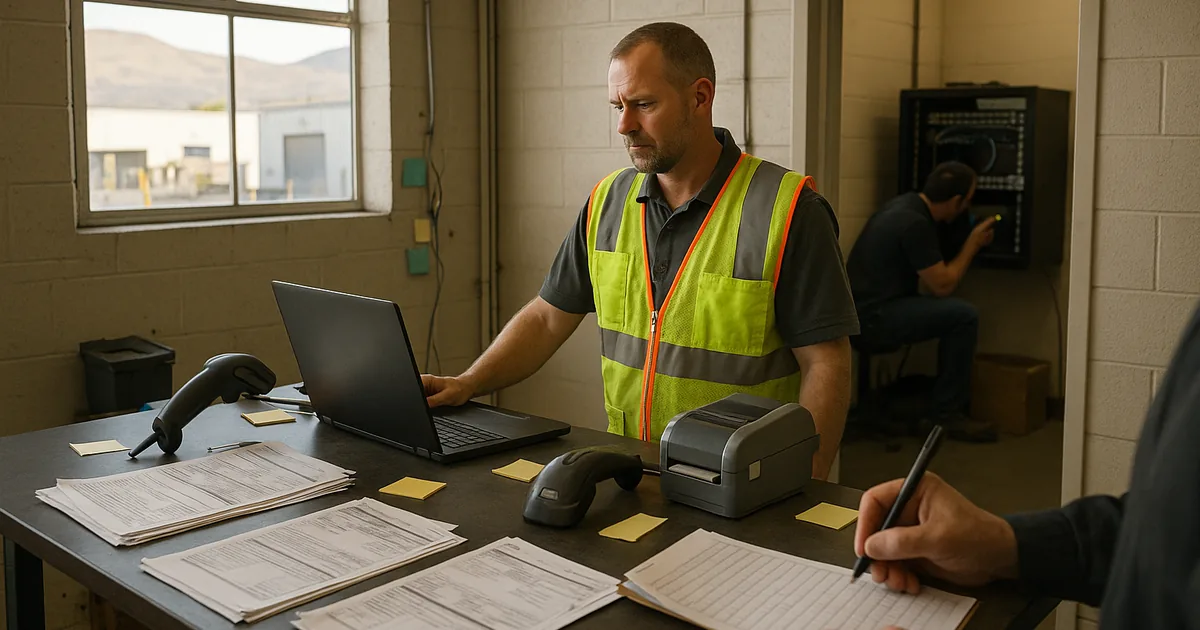
When operations stop at a logistics hub in The Truckee Meadows, the immediate outage is usually the final symptom, not the first problem. The pattern is familiar: slow workstations, unresolved printer and scanner issues, aging switches, overloaded file shares, and a growing ticket queue that trains staff to work around IT instead of relying on it. Over time, those small failures weaken recovery readiness because nobody is working from a clean, consistent environment when pressure hits.
In freight, warehousing, and route coordination environments around Reno and Sparks, every delay compounds. Dispatch depends on current data, receiving depends on stable connectivity, and billing depends on accurate transaction flow. If the network is inconsistent or endpoints are drifting out of standard, recovery becomes slower because the business is already operating in a degraded state. That is why disaster recovery planning and recovery in Northern Nevada has to start before the major incident. In Jenny’s case, the stoppage was driven by accumulated friction that had quietly become normal.
- Ticket backlog: Repeated low-level issues were never fully resolved, so staff kept using manual workarounds that increased re-entry errors and slowed response during the actual disruption.
- Endpoint inconsistency: Devices were running with uneven patch levels, stale profiles, and local performance issues that made login, printing, and line-of-business access unreliable.
- Shared infrastructure strain: Core office traffic, scanner traffic, and cloud sync activity were competing across the same environment without enough visibility into bottlenecks.
- Recovery gap: Backups may exist on paper, but if systems are unstable day to day, restoration priorities, user access, and failover steps are rarely clean in practice.
How To Stabilize Daily IT Before Recovery Fails
The fix is not just to restore service after a stoppage. The practical approach is to reduce the operational drag that made the stoppage possible. We typically start by identifying repeat incidents, standardizing endpoints, validating backup integrity, and separating critical business traffic from general office noise. For logistics operations, that often means tightening authentication, cleaning up device sprawl, and improving visibility across servers, switches, wireless, and cloud dependencies.
That work usually depends on stronger network, server, and cloud management for multi-site operations so the business can see where latency, failed jobs, and access issues are actually starting. It is also worth aligning controls with practical guidance from CISA , especially around backup validation, privileged access, and incident response readiness. Recovery is faster when the environment is already disciplined.
- Backup validation: Test restores against current operational systems, not just backup job success messages, so recovery time estimates are real.
- MFA hardening: Require stronger authentication for remote access, admin accounts, and cloud platforms tied to dispatch, inventory, and finance.
- Alerting improvements: Set thresholds for storage, failed backups, WAN instability, and authentication anomalies before users feel the impact.
- Traffic segmentation: Use VLAN and policy controls to separate warehouse devices, office systems, guest access, and management traffic.
Field Evidence: From Daily Friction To Controlled Recovery
We have seen this pattern in warehouse and distribution corridors stretching from central Reno down toward South Meadows, where mixed office and operational traffic often share infrastructure that was never designed for current load. Before remediation, staff were losing time to recurring disconnects, delayed print jobs, and inconsistent access to shared files. During any larger incident, that meant supervisors had no confidence in what would come back first or how long manual processing would last.
After standardizing endpoints, cleaning up switch and wireless configuration, and adding network infrastructure management that improves network reliability , the environment became predictable again. Recovery testing moved from guesswork to documented sequence, and support volume dropped because the same issues were no longer resurfacing every week.
- Result: Repeat support tickets dropped by 43 percent over one quarter, backup verification passed on schedule, and a later line-of-business outage was contained and restored in under 90 minutes instead of consuming most of the workday.
Operational Controls That Reduce Recovery Risk
Scott Morris is an experienced IT and cybersecurity professional with 16 years of hands-on experience in managed technology services. He specializes in Disaster Recovery Planning And Recovery and has spent his career building practical recovery, security, and operational continuity processes for businesses across The Truckee Meadows and Northern Nevada.


About the Author: Scott Morris
Local Support in The Truckee Meadows
We support businesses across Reno, Sparks, and nearby operational corridors where warehouse offices, dispatch teams, and back-office staff depend on stable systems to keep freight, scheduling, and billing moving. From our Ryland Street office, the Kietzke Center area is typically about 10 minutes away, which makes local response practical when an issue needs hands-on validation instead of another remote workaround.
Operational Stability Has To Come Before Recovery
For logistics hubs in The Truckee Meadows, operations rarely stop because of one isolated technical event. More often, the real cause is operational drain: slow systems, unresolved support issues, and inconsistent infrastructure that chip away at resilience until a normal business day turns into a recovery event.
The practical takeaway is straightforward. If daily IT friction is increasing, recovery readiness is already being affected. Stabilizing endpoints, reducing repeat incidents, validating backups, and tightening infrastructure control gives the business a better chance of keeping freight, scheduling, and billing moving when pressure hits.