Sparks Logistics Hub
The outage or lockout is usually the last symptom to appear, not the first. Poor safeguards, inconsistent records handling, and a slow response create weak points that can disrupt IT support and help desk and put legal exposure, reporting obligations, and client trust at risk. Reducing that risk starts with documenting safeguards, tightening response steps, and protecting sensitive data.
This case study reflects real breakdown patterns documented across 300+ regional IT incidents. Names and identifying details have been modified for confidentiality, while technical and financial data remain accurate to the original events.
Why Legal Liability Expands After Operations Stop
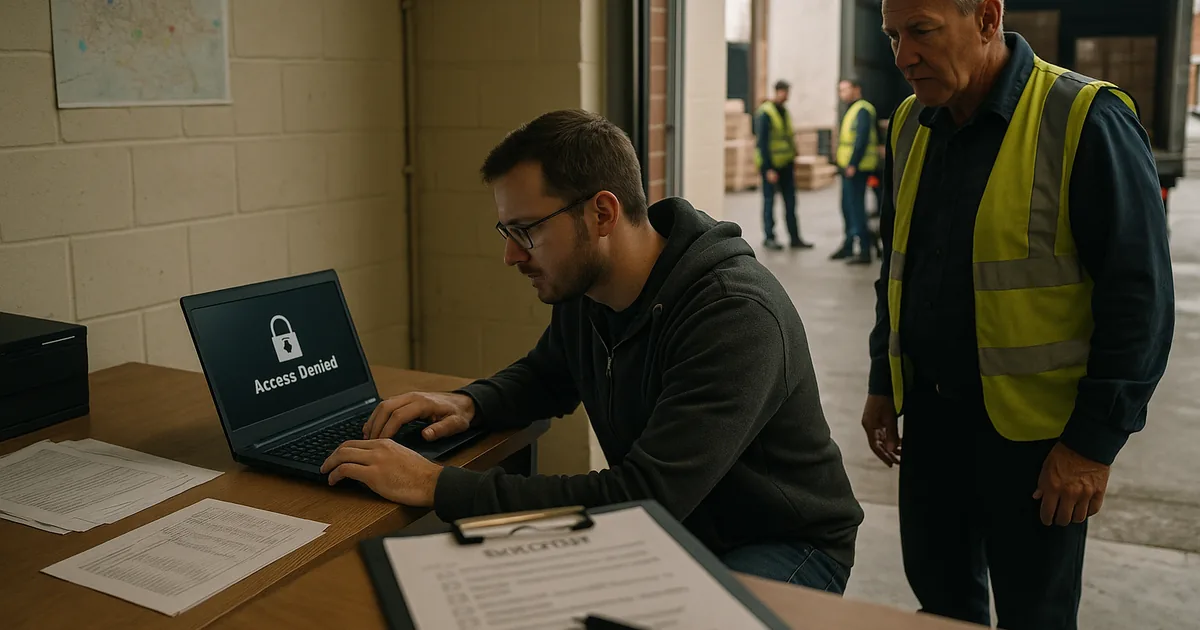
For a Sparks logistics hub, the legal problem is rarely the outage by itself. The larger exposure comes from what the business cannot prove after the interruption: who accessed shipment records, whether customer data was copied, whether retention rules were followed, and whether management responded in a timely and documented way. In Nevada operations, especially where dispatch, warehousing, and client reporting move quickly across shared systems, weak documentation turns a technical incident into a liability issue.
We typically find that poor safeguards show up as broad shared-folder access, inconsistent offboarding, missing MFA enforcement, and no reliable record of who changed what. That is where IT support and help desk coverage in Northern Nevada matters operationally. When access control, ticketing, and escalation are structured correctly, businesses can isolate the event, preserve evidence, and keep service moving. Without that structure, the same lockout that stalled Lara’s team can also undermine a company’s position if a client asks what happened to their data or if counsel requests a defensible timeline.
- Access governance: Shared credentials, inherited permissions, and stale user accounts make it difficult to determine responsibility after a records incident.
- Audit visibility: If file changes, login events, and admin actions are not logged centrally, management cannot establish a clean incident timeline.
- Records handling: Inconsistent storage of bills of lading, customer contacts, and delivery exceptions increases the chance that sensitive information is exposed or misplaced.
- Response delay: A slow first response often means systems stay unavailable longer and legal reporting decisions are made with incomplete facts.
Practical Remediation for Security, Records, and Response Control
The fix is not a single tool. It is a controlled process that combines access hardening, backup validation, incident documentation, and recovery planning. For logistics businesses in Sparks and the Reno corridor, we usually start by narrowing permissions to role-based groups, enforcing MFA on all remote and administrative access, and centralizing logs so file activity and authentication events can be reviewed quickly. We also verify whether dispatch systems, shared drives, and line-of-business applications are covered by tested backup jobs rather than assumed coverage.
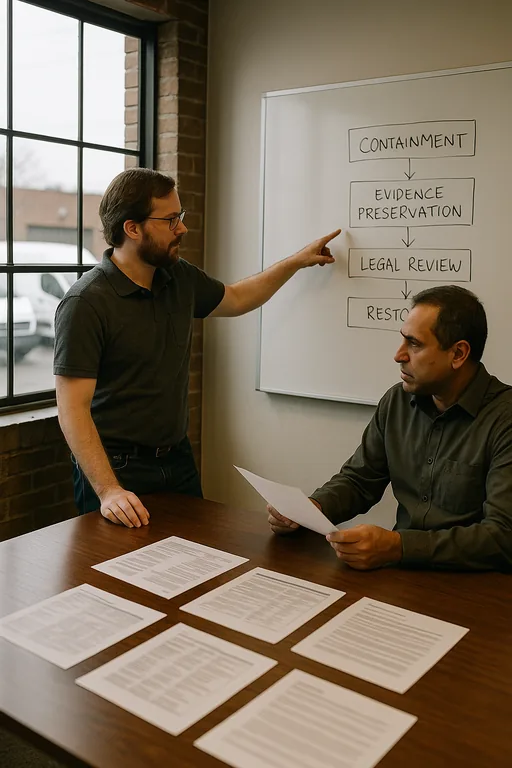
From there, the business needs a written response path: who isolates affected accounts, who preserves logs, who evaluates legal notice requirements, and who communicates with clients. Reliable managed backup solutions for operational continuity reduce downtime only if restores are tested and retention matches the business record set. For incident handling and reporting discipline, the guidance in CISA’s ransomware and incident response guidance is useful even when the event is a lockout or unauthorized access issue rather than confirmed ransomware.
- Identity hardening: Enforce MFA, remove dormant accounts, and separate admin credentials from daily user accounts.
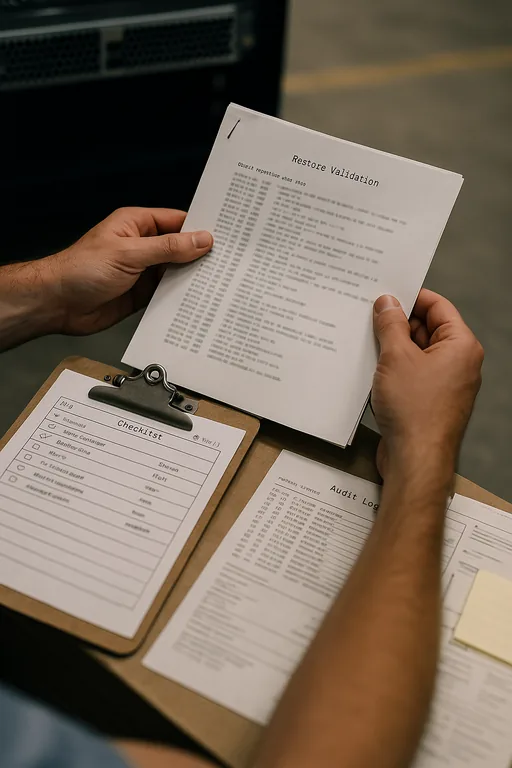
- Backup validation: Test restores for file shares, dispatch records, and cloud data so recovery time is measured, not guessed.
- Logging and alerting: Retain authentication, file access, and privilege-change logs in one reviewable location.
- Response workflow: Define who handles containment, legal review, client communication, and evidence preservation.
Field Evidence: Multi-Shift Freight Operations Regained Control
We worked through a similar pattern for a Northern Nevada operation running early-morning receiving and late-day outbound scheduling between Sparks and Reno. Before remediation, the company relied on broad shared access, had no tested restore point for a key document repository, and could not quickly tell whether a user mistake or unauthorized access caused missing records. During busy shipping windows, that uncertainty forced supervisors to stop normal work and manually verify paperwork.
After permissions were rebuilt, backup jobs were validated, and a written escalation path was put in place, the business could isolate account issues without freezing the entire file environment. Management also added disaster recovery planning for multi-site operations so dispatch, warehouse, and office teams had a defined fallback when a core system became unavailable. The result was not just faster recovery; it was a cleaner legal and operational position because the company could show what controls existed and what actions were taken.
- Result: Restore verification reduced document recovery time from several hours of manual searching to under 45 minutes, while access-related incidents dropped after role-based permissions and documented escalation were implemented.
Operational Controls That Reduce Legal and Downtime Exposure
Scott Morris is an experienced IT and cybersecurity professional with 16 years of hands-on experience in managed technology services. He specializes in It Support And Help Desk and has spent his career building practical recovery, security, and operational continuity processes for businesses across Sparks, Reno, and Northern Nevada and Northern Nevada.

About the Author: Scott Morris
Local Support in Sparks, Reno, and Northern Nevada
Reno Computer Services supports businesses across Sparks, Reno, and nearby operational corridors where warehouse, dispatch, and office systems have to stay aligned. For organizations working between industrial sites and administrative offices, response time matters, but so does having documented controls in place before an outage or records incident forces a legal review. The route below reflects the local service reality tied to this scenario.
Stopping the Technical Issue Is Only Part of the Fix
When operations stop at a Sparks logistics site, the immediate goal is to restore access and keep freight, billing, and reporting moving. The larger responsibility is to show that access was controlled, records were handled properly, and the business responded in a documented and reasonable way. That is what limits legal exposure after the incident.
In practice, businesses reduce risk by tightening permissions, validating backups, centralizing logs, and defining who does what when a lockout or data-handling problem appears. Those steps improve uptime, but they also give management a defensible record when clients, insurers, or legal counsel ask for answers.