Reno Logistics Hub Risk
Problems like this tend to stay hidden until something important breaks. For logistics hubs in South Meadows, that often means operations stopping, avoidable delays, or a bigger recovery burden than expected. The best response is hardening identity, watching for abnormal behavior, and closing blind spots across users and devices.
This case study reflects real breakdown patterns documented across 300+ regional IT incidents. Names and identifying details have been modified for confidentiality, while technical and financial data remain accurate to the original events.

Why Invisible Threats Stop Logistics Operations
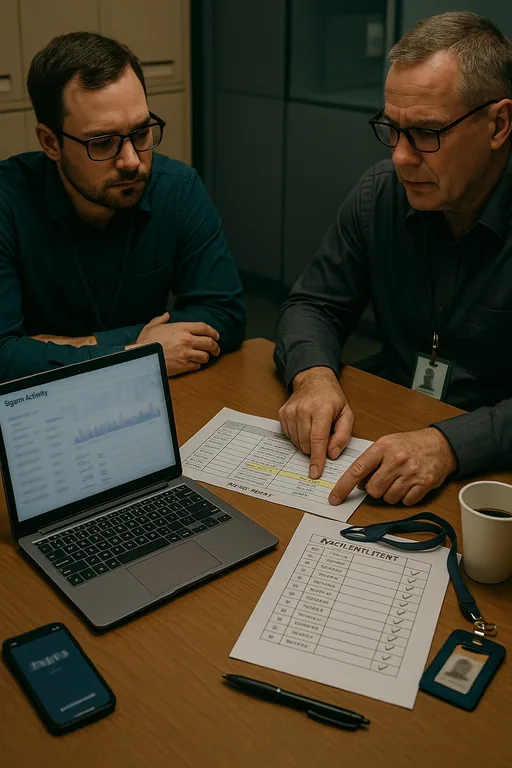
The core failure is usually not a missing firewall rule. It is an identity and visibility gap. Modern attackers often do not force entry through the perimeter. They use stolen credentials, session tokens, reused passwords, or weak MFA enrollment to log in through normal channels. For logistics hubs in South Meadows, that matters because warehouse systems, dispatch portals, cloud file shares, handheld devices, and line-of-business applications all depend on trusted sign-ins. When those sign-ins are abused, operations can stop even though the internet circuit, switches, and servers still appear healthy.
We see this most often in environments where growth outpaced security discipline. A site may have Microsoft 365, remote access tools, shipping software, and mobile endpoints in place, but no one is watching for impossible travel, unusual device registration, privilege escalation, or after-hours mailbox rules. That is where managed cybersecurity services in Northern Nevada become operationally important. The goal is not just blocking malware; it is detecting when a valid account starts behaving like an attacker. In a logistics setting near South Meadows, that can mean the difference between a contained account reset and a full stop on receiving, routing, and customer updates.
- Identity exposure: Shared admin habits, weak MFA enrollment, and stale privileged accounts create openings that standard perimeter tools do not reliably catch.
- Monitoring blind spots: If cloud sign-in logs, endpoint alerts, and network events are not correlated, suspicious activity looks like normal user behavior until business systems fail.
- Operational dependency: Dispatch, inventory movement, proof-of-delivery workflows, and billing queues all depend on continuous access, so even a short credential incident creates immediate business drag.
- Local complexity: Multi-building layouts, mixed carrier connectivity, and remote access from drivers, managers, and vendors make South Meadows environments harder to secure without structured oversight.
Practical Remediation for Credential-Based Disruption
The fix starts with accepting that successful logins can still be malicious. We typically begin by tightening identity controls, reducing standing privilege, and validating that MFA is enforced consistently across email, VPN, cloud apps, and administrative access. From there, endpoint detection, sign-in analytics, and alert tuning need to be aligned so the team can see abnormal behavior before users lose access or data is touched. For logistics operators with audit obligations, this work also supports stronger compliance-focused IT management by tying controls to documented risk decisions instead of one-off tool settings.
There is also a process side. Response plans should define who disables accounts, who checks mailbox forwarding rules, who validates backup integrity, and how warehouse and office teams continue operating during containment. Guidance from CISA remains useful here because strong passwords and phishing resistance are only part of the answer; the larger requirement is continuous review of identity events, device trust, and access changes.
- MFA hardening: Enforce phishing-resistant methods where possible, remove SMS fallback for privileged users, and review unenrolled or bypassed accounts.
- Privileged access control: Separate admin accounts from daily user accounts and remove dormant elevated permissions.
- EDR and sign-in correlation: Tie endpoint alerts to cloud identity logs so suspicious logins can be investigated with device context.
- Backup validation: Confirm that file, system, and SaaS recovery points are restorable, not just present in a dashboard.
- Alerting improvements: Trigger review for impossible travel, mass file access, new inbox rules, unusual OAuth consent, and off-hours administrative changes.
Field Evidence: South Reno Credential Misuse Containment
In one regional distribution environment serving Reno and Sparks routes, the initial condition looked minor: a single user reported repeated prompts and intermittent access to shared operational files. Review showed successful cloud sign-ins from an unmanaged device, followed by mailbox rule changes and unusual file access patterns. Before controls were tightened, supervisors were spending time confirming shipment status manually because they could not trust what they were seeing in the system.
After identity cleanup, conditional access enforcement, endpoint visibility improvements, and documented escalation steps, the environment moved from reactive lockouts to controlled containment. That included better handling for early-morning shift changes, when many Northern Nevada operations open before full office staffing is in place. In the follow-up phase, the organization also aligned reporting and policy documentation with regulatory compliance support requirements so security events could be tracked in a way that supported audits as well as operations.
- Result: Suspicious sign-in response time dropped from several hours to under 20 minutes, and no further shipping delays were tied to unauthorized account activity during the next review period.
Reference Points for Closing the Invisible Threat Gap
Scott Morris is an experienced IT and cybersecurity professional with 16 years of hands-on experience in managed technology services. He specializes in Managed Cybersecurity Services and has spent his career building practical recovery, security, and operational continuity processes for businesses across South Meadows, Reno, Sparks, Carson City, and Northern Nevada and Northern Nevada.


About the Author: Scott Morris
Local Support in South Meadows, Reno
Reno Computer Services supports organizations across Reno with practical response planning, identity hardening, and operational cybersecurity controls. From our Ryland Street office, the route to the Caughlin Ranch area is typically about 12 minutes under normal conditions, which reflects the local reality of supporting nearby business corridors without treating every issue as remote-only.
Closing the Gap Before Operations Stop
The invisible threat gap is usually an identity problem first and a technology problem second. If a logistics hub in South Meadows relies on cloud apps, shared files, mobile devices, and remote access, then successful but abnormal logins need the same attention as malware alerts. Waiting until users are locked out or shipment workflows stall makes recovery slower and more expensive.
A practical response is to reduce privilege, enforce stronger MFA, monitor sign-in behavior, and test recovery steps against real operating conditions. That approach keeps security aligned with dispatch, warehouse timing, customer communication, and compliance obligations instead of treating cybersecurity as a separate project.