Reno Logistics Hub
Seeing operations stopping is often the visible symptom of untested backups, not the root problem itself. In logistics hubs across Reno, issues like failed restore tests, missing dependencies, and an unclear recovery order can quietly undermine proactive device and endpoint management until work stops or risk spikes. The fix usually starts with validating backups regularly and proving recovery before a real outage.
This case study reflects real breakdown patterns documented across 300+ regional IT incidents. Names and identifying details have been modified for confidentiality, while technical and financial data remain accurate to the original events.

Why Resilience Tests Fail Before Backups Fail
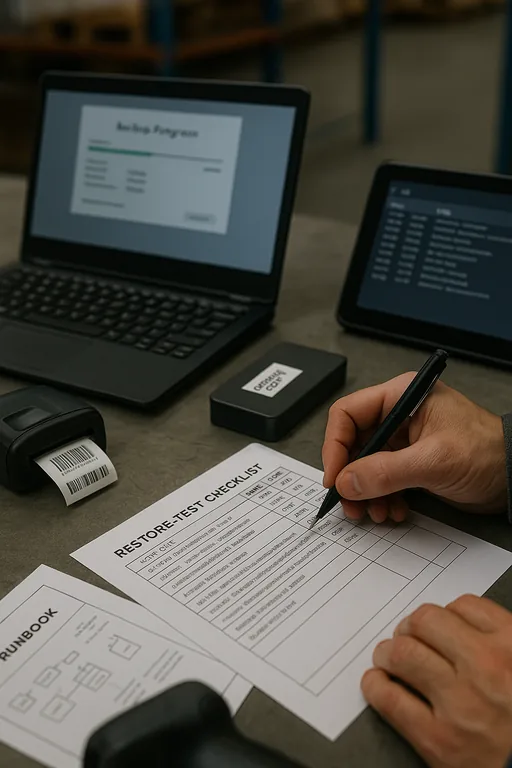
The core issue is straightforward: a backup file is not the same thing as business continuity. A logistics hub can have nightly backup jobs, green check marks, and storage retention in place, yet still be unable to ship, receive, bill, or reconcile inventory when a real outage occurs. In Reno operations, especially around distribution corridors where timing, scanner uptime, and dispatch coordination matter, the real test is whether systems can be restored in the correct sequence with all dependencies intact.
We typically find three gaps. First, restore tests are either never performed or only tested at the file level. Second, the backup set may exclude critical dependencies such as line-of-business application databases, printer queues, mapped drives, or local configuration on endpoint devices. Third, no one has documented recovery order, so staff restore a server before confirming identity services, network shares, DNS, or application licensing are available. That is where proactive device and endpoint management in Reno becomes operationally important. It is not just about patching laptops; it is about knowing which endpoints, scanners, workstations, and local services must come back first so the warehouse can function. In incidents like the one Jane faced, the visible outage is only the last stage of a longer resilience failure.
- Failed restore validation: Backup software may confirm that data copied successfully, but without periodic test restores, there is no proof that the application, permissions, and endpoint workflows can actually be recovered under pressure.
- Missing system dependencies: Logistics environments often rely on shared folders, barcode devices, print servers, ERP connectors, and local network services that are not always included in a simple backup scope.
- Unclear recovery order: If teams do not know whether to restore identity, storage, application servers, or endpoint access first, recovery drifts into trial-and-error and downtime expands.
- Operational blind spots: Multi-shift facilities in Reno and Sparks often have different user roles and device profiles, which means a restore that works for accounting may still fail on the shipping floor.
How To Turn Backup Into Real Recovery
The practical fix starts with treating resilience as a tested process, not a storage task. We recommend scheduled restore exercises that verify full workflow recovery: authentication, application launch, shared data access, printing, scanner communication, and remote access where needed. For logistics operations, that means proving a dispatcher can log in, a floor workstation can print labels, and a supervisor can access current order data without manual workarounds.
Remediation also needs governance. Recovery objectives should be documented by business function, not just by server name. That is especially important for organizations dealing with customer data, shipping records, or regulated retention requirements, where compliance-focused IT management helps align backup validation with audit and reporting obligations. A useful external reference is CISA’s guidance on backup, recovery, and ransomware resilience , which reinforces the need for offline copies and tested restoration procedures.
- Restore testing cadence: Run quarterly recovery tests that include full-system and workflow validation, not just spot checks of individual files.
- Dependency mapping: Document which servers, applications, credentials, printers, scanners, and network services each warehouse process depends on.
- Recovery order runbook: Build a step-by-step sequence for restoring identity, networking, storage, applications, and endpoint access in the right order.
- Endpoint configuration capture: Preserve local settings for scanners, label printers, mapped drives, and line-of-business clients so restored systems are usable immediately.
- Backup validation alerts: Configure reporting that flags failed jobs, incomplete snapshots, and untested restore points before they become production outages.
Field Evidence: Warehouse Recovery That Actually Worked
We reviewed a Northern Nevada distribution operation that had backup retention in place but no proven recovery sequence. Before remediation, a failed host left the shipping team without current order visibility, and staff had to rebuild access manually across workstations on the floor. The environment looked protected on paper, but the restore process depended on tribal knowledge and guesswork.
After documenting dependencies, validating endpoint settings, and running a full resilience test, the same operation was able to restore core dispatch and shipping functions in a controlled sequence during a later disruption. That included reconnecting label printers, restoring shared inventory access, and confirming user authentication before the morning outbound window. For organizations evaluating similar exposure, a structured review such as risk assessments and security readiness often identifies the hidden gaps before they interrupt operations.
- Result: Recovery time for core warehouse functions dropped from most of a workday to under 90 minutes, with no manual paper fallback required for the next shipping cycle.
Backup Resilience Control Points For Reno Logistics Operations
Scott Morris is an experienced IT and cybersecurity professional with 16 years of hands-on experience in managed technology services. He specializes in Proactive Device And Endpoint Management and has spent his career building practical recovery, security, and operational continuity processes for businesses across Reno, Sparks, Carson City, and Northern Nevada and Northern Nevada.
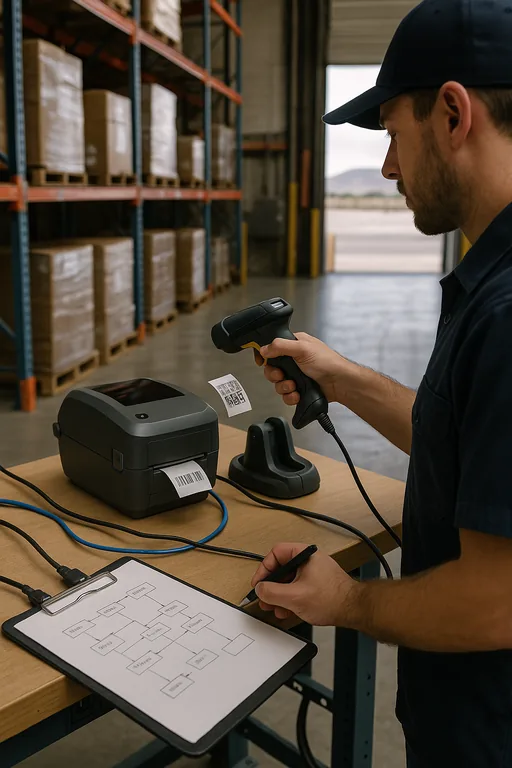

About the Author: Scott Morris
Local Support in Reno
Our office on Ryland Street is positioned to support businesses across Reno with practical response planning, backup validation, and recovery testing. For logistics and warehouse operations near Vassar Street and the surrounding industrial corridors, local proximity matters because resilience work often requires understanding the actual workflow on the floor, not just the server list in a dashboard.
Backups Only Matter If Recovery Works
When operations stop at a Reno logistics hub, the underlying problem is often not the outage itself but the lack of a tested recovery path. Backup success messages can create false confidence if no one has verified restore order, application dependencies, endpoint readiness, and user access under real conditions.
The operational takeaway is simple: treat resilience testing as part of day-to-day IT management, not as a once-a-year checkbox. If shipping, receiving, billing, or inventory workflows depend on technology, then recovery has to be proven in the same practical sequence the business actually uses.