
Reno Network Crash Fix
Problems like this tend to stay hidden until something important breaks. For financial offices in South Meadows, that often means a network crash, avoidable delays, or a bigger recovery burden than expected. The best response is hardening identity, watching for abnormal behavior, and closing blind spots across users and devices.
This case study reflects real breakdown patterns documented across 300+ regional IT incidents. Names and identifying details have been modified for confidentiality, while technical and financial data remain accurate to the original events.
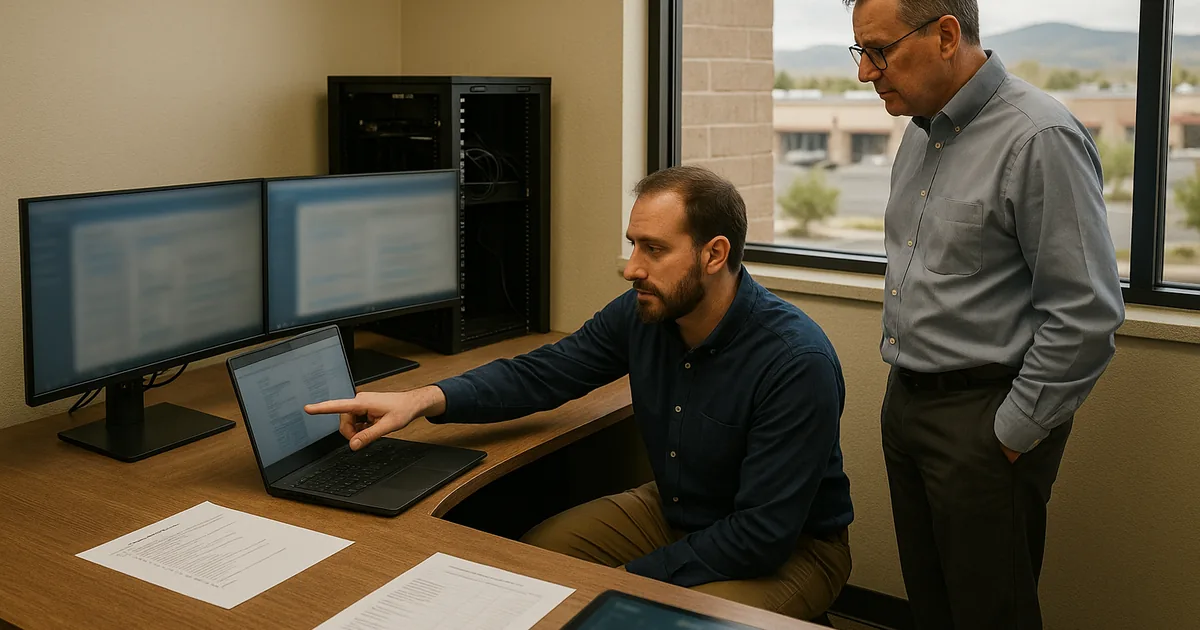
Why the Invisible Threat Causes Network Crashes in Financial Offices
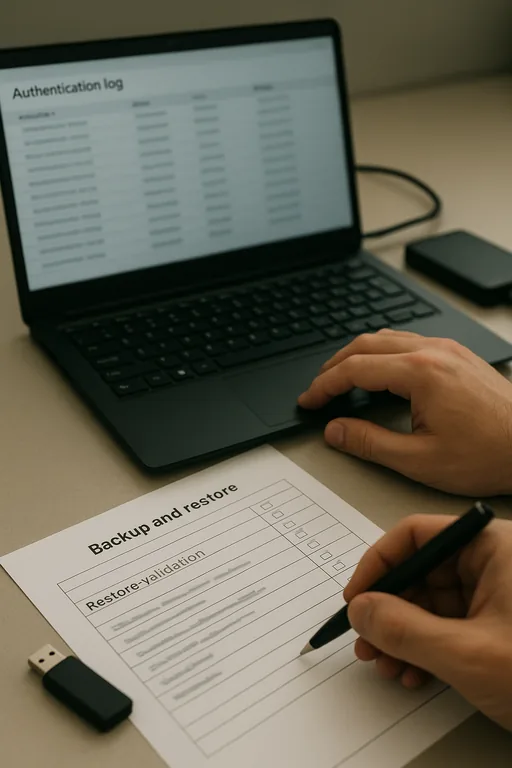
The main issue is not always a failed switch, a bad cable, or an ISP outage. In many South Meadows financial environments, the more serious problem is that an attacker logs in with valid credentials, blends into normal traffic, and starts changing conditions inside the network before anyone notices. That can trigger account lockouts, overloaded file access, broken line-of-business sessions, disabled security tools, or failed synchronization between local servers and cloud platforms. To staff, it looks like the network crashed. Operationally, it is often an identity and monitoring failure first.
We see this most often in offices that rely on Microsoft 365, remote desktop access, shared drives, and a small number of key applications for planning, billing, and document retention. A firewall will not reliably stop a user who appears legitimate. That is why businesses reviewing disaster recovery planning and recovery in Reno need to treat stolen credentials, weak MFA enforcement, and poor alert visibility as part of the outage problem, not as a separate cybersecurity topic. In a financial office, even a short interruption can delay approvals, client communications, and time-sensitive reporting. That is the same pattern behind what happened in Kate’s case: the visible outage was only the final symptom.
- Credential misuse: Attackers increasingly use valid usernames and passwords to access email, cloud storage, VPNs, or remote sessions without triggering the kind of alarms businesses expect from a traditional break-in.
- MFA gaps: Inconsistent multi-factor enforcement across admin accounts, legacy apps, or mobile access creates blind spots that let one compromised account spread risk across multiple systems.
- Monitoring weakness: If nobody is watching impossible travel, repeated sign-in anomalies, privilege changes, or unusual file activity, the first alert may be a business interruption instead of a security event.
- Recovery drag: Financial offices cannot simply reboot and move on; they need to verify data integrity, access rights, audit trails, and client document availability before normal work resumes.
Practical Remediation for Identity-Driven Outages
The fix starts with separating a true infrastructure failure from a hidden access problem. We typically review authentication logs, endpoint telemetry, admin role changes, mailbox rules, remote session history, and backup status before declaring the incident contained. In many cases, the right remediation path includes forced credential resets, MFA hardening, session revocation, endpoint scans, and validation that backups were not only completed but are actually restorable.
For offices with on-premise servers, hybrid file access, or application dependencies, structured server and hybrid infrastructure management helps reduce the chance that one compromised account can disrupt the whole office. That means segmenting admin access, limiting lateral movement, tightening remote management exposure, and improving alerting around unusual authentication behavior. For practical guidance on identity protections and incident response, the CISA identity security recommendations are a useful baseline.
- Identity hardening: Enforce MFA across all users, remove legacy authentication where possible, and require separate privileged accounts for administrative work.
- Session containment: Revoke active sessions, rotate passwords, and disable suspect accounts immediately to stop ongoing access while investigation continues.
- Endpoint visibility: Deploy EDR and review device-level activity so abnormal sign-ins can be tied to actual workstation behavior instead of guesswork.
- Backup validation: Test restores for file shares, application data, and configuration states so recovery planning is based on proof, not assumptions.
- Alert tuning: Create actionable alerts for impossible travel, repeated MFA failures, privilege escalation, and unusual file access after business hours.
Field Evidence: South Reno Financial Workflow Recovery
In one South Reno engagement, a small office initially believed its network core had failed because staff could not open shared documents and several cloud sessions kept dropping. The actual cause was a compromised account combined with weak visibility into hybrid authentication events. Before remediation, the team was manually reconnecting users, restarting systems, and delaying client work while trying to determine whether the issue was local, cloud-based, or ISP-related. That kind of confusion is common in Northern Nevada offices where a mix of local servers, Microsoft 365, and remote access has grown over time without a unified review.
After identity controls were tightened, admin access was separated, and cloud activity was brought under better oversight through cloud and Microsoft environment management , the office had a much clearer recovery path. Instead of treating every interruption as a mystery outage, staff could isolate user issues faster, confirm whether data was intact, and restore normal operations without extended guesswork.
- Result: Recovery time for access-related incidents dropped from most of a business day to under 90 minutes, and backup verification moved from occasional checks to scheduled monthly restore testing.
Reference Table: Controls That Reduce Hidden Outage Risk
Scott Morris is an experienced IT and cybersecurity professional with 16 years of hands-on experience in managed technology services. He specializes in Disaster Recovery Planning And Recovery and has spent his career building practical recovery, security, and operational continuity processes for businesses across Reno, Sparks, Carson City, and Northern Nevada and Northern Nevada.


About the Author: Scott Morris
Local Support in Reno and South Meadows
Our office in downtown Reno is a practical base for supporting financial firms in South Meadows, including locations around Kietzke Lane and nearby business corridors. That proximity matters when an issue starts as a suspected network failure but turns into an identity, server, or recovery problem that needs hands-on validation. For offices balancing client confidentiality, uptime, and audit expectations, local response paired with disciplined remote triage usually shortens downtime and reduces unnecessary recovery steps.
What Financial Offices in South Meadows Should Take Away
When a financial office reports a network crash, the real cause may be hidden inside identity systems, remote access, or cloud activity that standard perimeter tools do not fully expose. That is why recovery planning has to include credential abuse, MFA coverage, endpoint visibility, and tested restore procedures. If those controls are weak, the outage lasts longer and the business impact grows.
For South Meadows firms, the practical goal is straightforward: reduce blind spots before they become downtime. A stable environment is not just one with working internet and healthy switches. It is one where user access, server dependencies, cloud systems, and recovery steps are all visible enough to diagnose quickly and restore with confidence.