Reno Dental Audit
What looks like a one-off issue is often tied to compliance gaps. In dental office environments, missing controls, weak documentation, and loose access policies can turn into audit findings, fines, and operational disruption long before anyone notices the warning signs. Closing those gaps early makes proactive device and endpoint management far more resilient.
This case study reflects real breakdown patterns documented across 300+ regional IT incidents. Names and identifying details have been modified for confidentiality, while technical and financial data remain accurate to the original events.
Why Login Audits Matter in Dental Offices

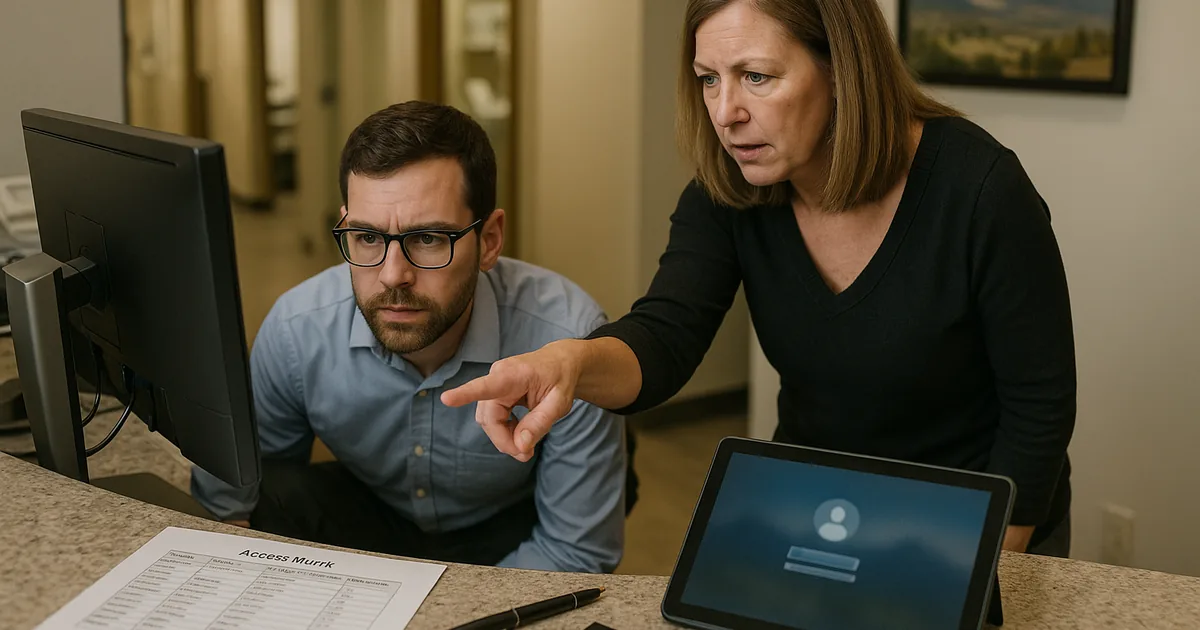
A login audit in a Washoe County dental office is not just a password review. It is a control review of who has access, why they have it, whether that access matches their role, and whether the office can prove those decisions were documented. In practice, the compliance gap usually shows up before a formal audit does. We see it in shared front-desk credentials, inactive accounts left enabled after staffing changes, missing endpoint inventory, and inconsistent multi-factor enforcement across clinical and administrative systems.
That is why login failures often point to a broader documentation and control problem. In dental environments handling patient data, imaging systems, billing platforms, and cloud email, weak access governance can affect both operations and HIPAA readiness. A practice that depends on proactive device and endpoint management in Washoe County still needs clear user lifecycle controls, written approval paths, and evidence that devices and accounts are being reviewed together. When Harmony’s office lost access, the immediate symptom was a lockout, but the root cause was a gap between technical access and compliance oversight.
- Access governance: User accounts, endpoint assignments, and role permissions often drift over time when onboarding and offboarding are handled informally.
- Documentation weakness: Practices may have security tools in place but no reliable record of who approved access, when reviews occurred, or what changed.
- Regulatory pressure: HIPAA expectations and broader security frameworks evolve faster than many internal teams can document, especially in smaller offices with limited IT depth.
- Operational consequence: Scheduling, treatment coordination, claims processing, and patient communications can all stall when identity controls are inconsistent.
How to Close the Compliance Gap Before It Becomes Downtime
The fix is not a single reset or a one-time audit. It is a repeatable operating process. We typically start by reconciling users, devices, and business roles across the practice management system, Microsoft 365 or Google Workspace, line-of-business applications, and local workstations. From there, we establish a documented access review schedule, remove stale accounts, enforce MFA where appropriate, and verify that endpoint policies match the office’s actual workflow. This is where structured business IT operations management becomes important, because compliance controls fail when nobody owns the process after the initial cleanup.
For dental offices in Reno, Sparks, and the wider Washoe County area, the practical goal is simple: every login should map to a person, a role, an approved device, and a documented business reason. Offices should also align their access controls with recognized guidance such as the HHS HIPAA Security Rule guidance , especially around access control, audit controls, and workforce security. Once those basics are in place, login issues become easier to isolate and far less likely to trigger a larger compliance event.
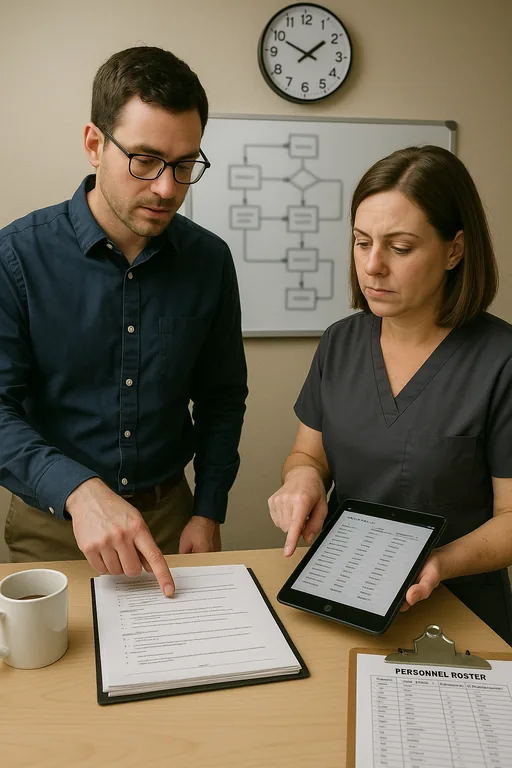
- User access review: Compare active accounts against current staff rosters, job roles, and approved application access.
- MFA hardening: Require multi-factor authentication for email, remote access, and administrative functions.
- Endpoint alignment: Confirm each workstation is assigned, encrypted, patched, and tied to a documented owner.
- Audit logging: Retain sign-in and privilege change logs long enough to support investigations and compliance review.
- Offboarding control: Disable accounts immediately, revoke tokens, and document completion as part of the separation checklist.
Field Evidence: Access Cleanup in a Multi-Provider Practice
In one Northern Nevada dental environment, the office had grown from a small single-location practice into a busier operation with multiple providers, rotating assistants, and outside billing support. Before remediation, account reviews were informal, several shared workstations had inconsistent local permissions, and the office manager could not quickly confirm which devices were tied to which users. After a structured cleanup, the practice had a current access matrix, documented approval records, and standardized sign-in controls across front desk and clinical endpoints.
The operational difference was immediate. Instead of treating each login problem as a separate help desk event, the office could trace access issues back to a known device, a known user, and a known policy. That kind of consistency is one reason many organizations adopt support for growing Reno businesses that includes recurring review cycles rather than one-off fixes. In a corridor where offices may rely on a mix of older tenant improvements, shared internet circuits, and fast staffing changes, documented controls reduce both downtime and audit friction.
- Result: Access-related tickets dropped by 43 percent over the next quarter, and quarterly user review time fell from most of a day to under 90 minutes.
Compliance Control Reference for Dental Login Audits
Scott Morris is an experienced IT and cybersecurity professional with 16 years of hands-on experience in managed technology services. He specializes in Proactive Device And Endpoint Management and has spent his career building practical recovery, security, and operational continuity processes for businesses across Washoe County and Northern Nevada.

About the Author: Scott Morris
Local Support in Washoe County
Our office in Reno supports dental and healthcare-related organizations across Washoe County with practical response planning, endpoint oversight, and access control reviews. For practices operating between central Reno, South Meadows, Sparks, and nearby business corridors, local support matters because user issues often affect patient flow, billing, and front-desk operations immediately. The route below reflects the service relationship between our Ryland Street office and the Sierra Meadows area referenced in this article.
Closing the Gap Before It Turns Into an Audit Problem
For dental offices in Washoe County, login trouble is often the first visible sign of a larger compliance gap. If user access, endpoint ownership, and approval records are not aligned, a simple lockout can expose weak controls that affect patient operations, billing, and audit readiness at the same time.
The practical takeaway is straightforward: review accounts on a schedule, tie every device to a responsible user, document permission changes, and keep access controls consistent across the office. When those basics are handled well, practices spend less time reacting to login failures and more time running stable operations.