
Reno Lockout Med Help
What looks like a one-off issue is often tied to growth outpacing IT capacity. In medical practice environments, endpoint sprawl, underplanned infrastructure, and inconsistent standards can turn into performance, reliability, and future growth long before anyone notices the warning signs. Closing those gaps early makes managed cybersecurity programs far more resilient.
This case study reflects real breakdown patterns documented across 300+ regional IT incidents. Names and identifying details have been modified for confidentiality, while technical and financial data remain accurate to the original events.

Why Lockouts in Growing Medical Practices Usually Signal a Scalability Ceiling

A lockout in a Washoe County medical practice is rarely just a password problem. More often, it is the first visible symptom of growth outpacing the systems underneath it. When a practice adds providers, front-desk staff, mobile devices, printers, scanners, exam-room endpoints, cloud applications, and remote access workflows without a consistent onboarding standard, identity management starts to drift. Permissions become inconsistent, endpoint health becomes uneven, and authentication failures begin showing up as isolated incidents even though the root cause is structural.
We see this pattern across Reno and Sparks medical environments where expansion happens faster than infrastructure planning. A practice may still be operating on a network and endpoint model built for 12 users while trying to support 25 or 30. At that point, account lockouts, session failures, slow EHR access, and policy conflicts become more common. This is where managed cybersecurity programs in Northern Nevada matter operationally, because the goal is not only to stop the current outage but to standardize how users, devices, and access controls scale safely.
- Identity sprawl: New hires, role changes, and temporary access exceptions create inconsistent permissions that increase lockout risk and make troubleshooting slower.
- Endpoint growth without standards: Laptops, exam-room PCs, and personal or lightly managed devices often join the environment faster than patching, encryption, and policy enforcement can keep up.
- Infrastructure mismatch: Firewalls, switches, wireless coverage, and line-of-business application dependencies may still reflect the practice’s old headcount rather than current demand.
- Operational consequence: As Kerry’s incident showed, the visible failure is user access, but the real business impact lands in delayed intake, provider downtime, and billing disruption.
How to Remediate the Ceiling Before the Next Hiring Wave
The fix is not a single reset or one new appliance. Medical practices need a repeatable operating model for growth. That starts with standardizing user provisioning, enforcing endpoint baselines, reviewing directory structure, and validating that network capacity matches the number of active users, devices, and cloud sessions the practice now supports. In practical terms, that means every new employee, workstation, and application should enter the environment through the same documented process rather than through one-off exceptions.
We typically recommend leadership-level review before the next expansion cycle, especially for practices adding providers or opening additional service lines. That is where strategic IT leadership for multi-location operations becomes useful: it aligns staffing plans, compliance requirements, and infrastructure decisions before the environment becomes unstable. For healthcare organizations, the CISA guidance on securing accounts, devices, and access controls is also a practical baseline for reducing recurring access failures.
- Provisioning standardization: Build role-based templates for front desk, billing, clinical staff, and providers so access is assigned consistently and reviewed on schedule.
- Endpoint control: Enroll all workstations and laptops into centralized patching, EDR, encryption, and configuration management before they touch production workflows.
- MFA hardening: Apply conditional access and stronger authentication policies to remote access, email, and cloud clinical systems to reduce lockout confusion and account misuse.
- Network segmentation: Separate clinical systems, guest wireless, printers, and administrative devices with VLANs and policy controls to reduce instability and lateral risk.
- Capacity review: Validate firewall throughput, switch utilization, wireless density, and ISP performance so the environment can absorb the next 10 hires without degrading.
- Backup and recovery validation: Test restore paths for identity systems, shared files, and critical application data so access failures do not become extended outages.
Field Evidence: Stabilizing Access Before Expansion Breaks Operations
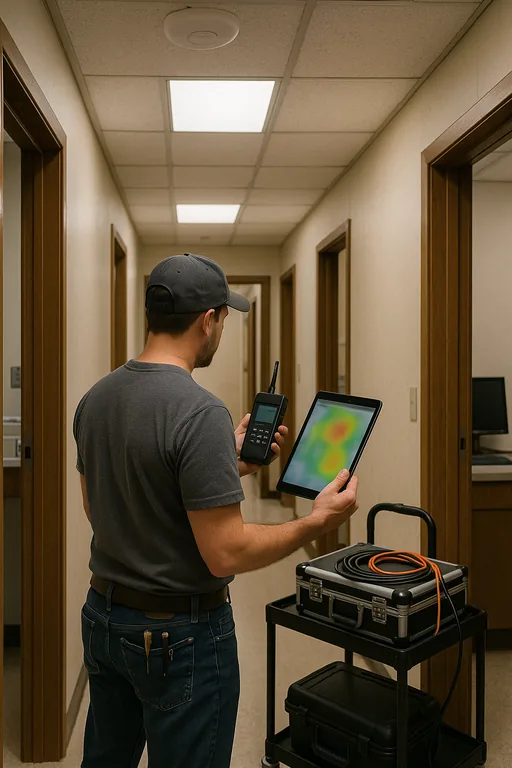
In one Northern Nevada medical office corridor, a growing practice was dealing with recurring login failures, slow cloud application sessions, and inconsistent workstation behavior after a hiring push. The environment had expanded in pieces: added wireless access points, reused desktops, manually created user accounts, and no consistent review of role permissions. The result was a fragile setup where every staffing change increased support tickets and front-desk delays.
After standardizing onboarding, cleaning up directory groups, replacing unsupported endpoints, and documenting a 12-month growth roadmap through IT planning and budgeting for growing Reno businesses , the practice moved from reactive fixes to predictable operations. A common local factor was building layout: older construction and room-by-room additions had created uneven wireless coverage that was affecting both check-in stations and provider mobility. Once that was corrected alongside identity and endpoint controls, access issues dropped sharply and expansion no longer created immediate instability.
- Result: Login-related support tickets fell by 62 percent over the next quarter, new-user setup time dropped from multiple hours to under 30 minutes, and no further front-desk lockout event caused patient scheduling delays during the next staffing increase.
Medical Practice Scalability Risk Reference
Scott Morris is an experienced IT and cybersecurity professional with 16 years of hands-on experience in managed technology services. He specializes in Managed Cybersecurity Programs and has spent his career building practical recovery, security, and operational continuity processes for businesses across Washoe County and Northern Nevada.

About the Author: Scott Morris
Local Support in Washoe County
Our office in Reno supports medical practices throughout Washoe County, including clinics and administrative sites that need fast response when access issues interrupt patient flow. For practices near Keystone and central Reno, local proximity matters when a lockout is tied to a broader infrastructure problem and needs both immediate triage and follow-up remediation planning.
Growth Has to Be Planned Into the Environment, Not Added After the Failure
When a medical practice gets locked out during a growth phase, the immediate incident is only part of the problem. The larger issue is usually that user counts, device counts, access policies, and network demand have moved beyond what the original environment was built to support. In Washoe County healthcare settings, that creates operational risk quickly because scheduling, chart access, intake, and billing all depend on stable identity and endpoint management.
The practical takeaway is straightforward: if the practice expects to hire, add providers, or expand locations, IT capacity and standards need to be reviewed before that growth lands. That includes identity design, endpoint baselines, wireless coverage, security controls, and budget planning. Done early, those steps prevent lockouts from becoming recurring business interruptions.