
Reno Lockout Audit
Problems like this tend to stay hidden until something important breaks. For medical practices in South Meadows, that often means a lockout, avoidable delays, or a bigger recovery burden than expected. The best response is reviewing controls, access, and recovery steps before they are tested under pressure.
This case study reflects real breakdown patterns documented across 300+ regional IT incidents. Names and identifying details have been modified for confidentiality, while technical and financial data remain accurate to the original events.
Why Compliance Gaps Turn Into Lockouts

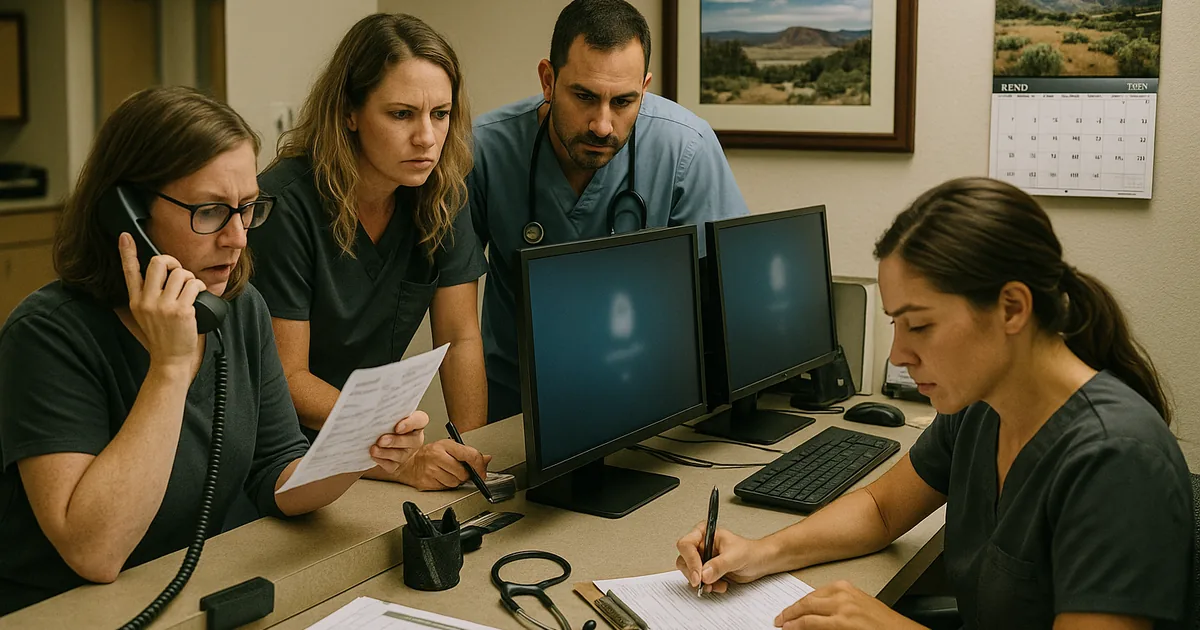
A medical practice usually does not get locked out because of one isolated mistake. In South Meadows, we more often find a chain of smaller failures: stale user accounts, undocumented role changes, weak offboarding, inconsistent multifactor enforcement, and policy settings that no longer match how the practice actually operates. The compliance gap is the space between what leadership believes is controlled and what the systems are really enforcing.
That gap matters more in healthcare because access controls are tied directly to patient scheduling, charting, billing, and protected data. When HIPAA-related safeguards are updated on paper but not reflected in Microsoft 365, line-of-business applications, or remote access tools, a lockout can happen during a password reset, conditional access change, or account review. Practices trying to stabilize these issues often need tighter identity and user security controls in Reno so access, email, and authentication are managed as one operational system instead of separate tasks. In cases like Alba’s, the visible outage is only the symptom; the root problem is that documentation, permissions, and recovery authority have drifted apart.
- Identity drift: User roles change faster than permissions are reviewed, leaving medical staff with either too much access, not enough access, or conflicting policy assignments that trigger lockouts at the worst time.
- Compliance documentation lag: Regulations and internal policy updates move faster than many small practice IT records, so audit evidence does not match the live environment.
- Recovery dependency: If only one person knows how to restore access or approve emergency changes, a simple account issue becomes a business interruption.
- Clinical workflow impact: Front-desk intake, provider messaging, and claims processing all slow down when authentication systems fail, even if the internet connection itself is still working.
What a Practical Remediation Plan Looks Like
The fix is not just unlocking accounts and moving on. A proper remediation starts with an access audit tied to actual job roles, followed by cleanup of inactive accounts, review of conditional access policies, verification of multifactor enrollment, and testing of emergency access procedures. For medical practices, we also recommend mapping each critical workflow, including scheduling, EHR access, secure email, and billing, to the identity systems that support it so there is no ambiguity during an outage.
From there, the practice needs ongoing visibility. That means alerting on suspicious sign-in behavior, failed login spikes, privilege changes, and mailbox anomalies through structured security monitoring and response for healthcare operations . It is also worth aligning controls with practical guidance from HHS HIPAA Security Rule guidance , especially around access management, contingency planning, and audit controls. The goal is not to overbuild the environment. The goal is to make sure the next policy change, staffing transition, or software update does not interrupt patient care and billing.
- Access review: Reconcile every active account against current job duties, including shared mailboxes, EHR roles, and remote access permissions.
- MFA hardening: Enforce multifactor authentication consistently and remove legacy exceptions that bypass current policy.
- Break-glass accounts: Maintain secured emergency admin access with documented approval and testing procedures.
- Audit logging: Retain sign-in, mailbox, and privilege-change logs long enough to support both troubleshooting and compliance review.
- Recovery validation: Test account restoration, email continuity, and access rollback steps before an incident forces the issue.
Field Evidence: South Reno Access Recovery Review
We recently reviewed a healthcare environment serving patients across South Reno where account provisioning had grown inconsistent after several staffing changes and a software migration. Before the review, the practice had duplicate permissions, incomplete offboarding records, and no tested emergency admin path. A routine policy adjustment created login failures for multiple users, and the office had to fall back to phone calls and handwritten intake notes while staff waited for access to be restored.
After the cleanup, the practice had role-based access groups, documented approval paths, tested recovery accounts, and a standing review cadence tied to a broader compliance-focused cybersecurity program . That changed the outcome materially. When the next account issue surfaced, staff isolated it to one user in minutes instead of treating it like a sitewide outage. In Northern Nevada, where many clinics operate lean teams and cannot afford long delays between Reno, South Meadows, and satellite locations, that difference is operationally significant.
- Result: Access-related disruptions dropped from multi-hour events to targeted fixes completed in under 20 minutes, with cleaner audit records and no missed billing batch that week.
Compliance Gap Audit Reference Points for Medical Practices
Scott Morris is an experienced IT and cybersecurity professional with 16 years of hands-on experience in managed technology services. He specializes in Identity Email And User Security and has spent his career building practical recovery, security, and operational continuity processes for businesses across South Meadows, Reno, and Northern Nevada and Northern Nevada.

About the Author: Scott Morris
Local Support in South Meadows, Reno, and Northern Nevada
Medical practices in South Meadows often need support that understands both healthcare workflow and the practical realities of serving offices spread across Reno corridors. From our Reno office, the route to the Wedge Parkway area is typically about 18 minutes under normal conditions, which is why remote access readiness, documented recovery steps, and clear escalation paths matter before an access issue turns into a patient-facing disruption.
The Operational Takeaway for South Meadows Medical Practices
A lockout in a medical office is rarely just an inconvenience. It usually exposes a deeper control problem involving identity management, documentation, recovery authority, and compliance follow-through. When those areas drift apart, even a routine policy change can interrupt scheduling, delay billing, and create unnecessary audit risk.
The practical answer is to review access, recovery, and monitoring before the next disruption forces the issue. For South Meadows practices, that means treating compliance as an operating control, not just a paperwork exercise. If the environment can be audited, restored, and explained clearly under pressure, the practice is in a much stronger position.