
Reno Lockout Audit
This kind of issue rarely appears all at once. For medical practices in Northern Nevada, it usually builds through unclear ownership, overlapping tools, and fragmented support and then surfaces as a lockout, slower recovery, or higher exposure. A more reliable setup starts with clarifying ownership and enforcing cleaner escalation paths.
This case study reflects real breakdown patterns documented across 300+ regional IT incidents. Names and identifying details have been modified for confidentiality, while technical and financial data remain accurate to the original events.
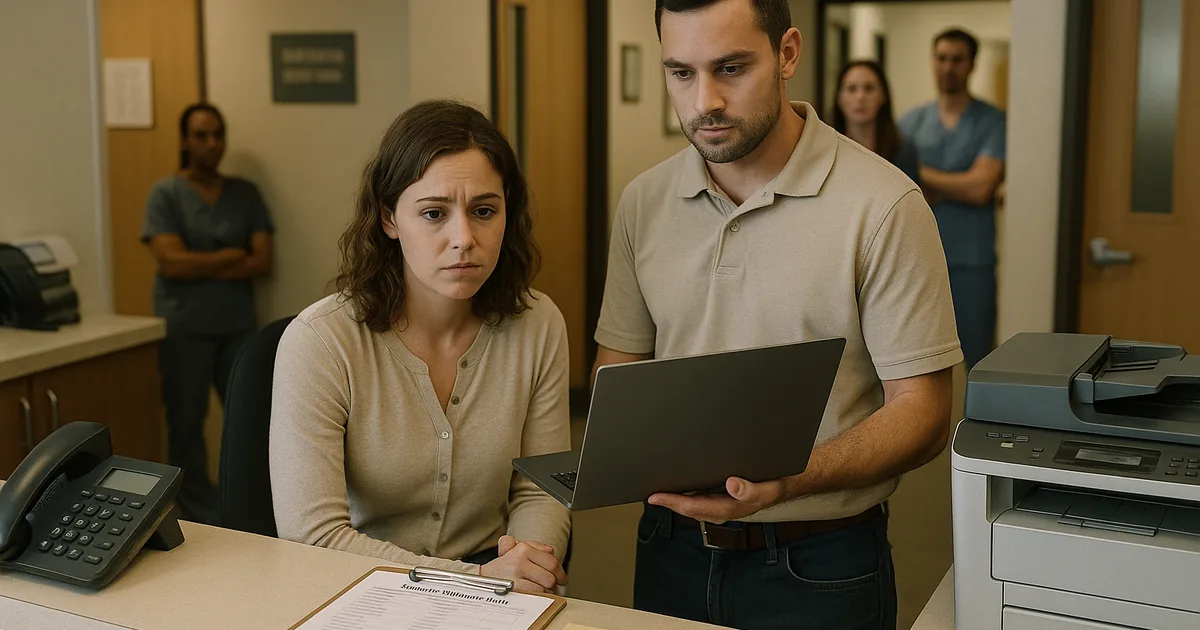
Why Medical Practices Get Locked Out When Vendor Ownership Is Unclear

The core failure in vendor chaos is not usually one bad device or one bad login. It is the absence of a clear operating model. In many Northern Nevada medical offices, internet service, phones, Microsoft 365, line-of-business software, printers, wireless, and backup systems are all supported by different companies. When a lockout or outage happens, each vendor checks only its own boundary. That leaves the practice trying to coordinate technical triage while front-desk staff are still checking in patients.
We see this most often when an office manager is informally acting as the vendor coordinator without documented authority, current credentials, or a tested escalation list. That is where The Vendor Chaos becomes a business risk rather than an inconvenience. A practice may have support contracts in place and still lack accountability. For clinics trying to stabilize operations, structured managed IT support plans in Northern Nevada help establish ownership, response paths, and one source of operational truth. In situations like the one Dariana faced, the real issue is that nobody can quickly answer who owns identity, who owns the firewall, who owns the scan workflow, and who has authority to make changes.
- Technical Factor: Identity systems, EHR access, internet connectivity, and document workflows often span multiple vendors, creating delays when no single party is responsible for end-to-end diagnosis.
- Operational Detail: Medical practices depend on scheduling, intake forms, scanned IDs, insurance verification, and claims processing, so even a partial lockout can affect patient flow and same-day revenue.
- Local Reality: Across Reno, Sparks, Carson City, and outlying clinics, we often find older suites, mixed cabling, and layered vendor handoffs that make troubleshooting slower unless documentation is current.
How To Audit Vendor Responsibility and Restore Control
The fix starts with a vendor responsibility audit. That means documenting every critical system, the vendor attached to it, the contract owner, the admin credential location, the escalation path, and the expected response window. In healthcare environments, we also map dependencies between Microsoft 365, identity controls, EHR access, scanning, and secure communications. Once those dependencies are visible, lockouts become easier to isolate and recover from.
Practically, we recommend standardizing admin ownership, reducing overlapping tools, and assigning one technical lead to coordinate incidents. For practices with Microsoft 365 and hybrid identity issues, tighter cloud and Microsoft environment management often closes the gap between user access, MFA enforcement, mailbox continuity, and device trust. It is also worth aligning controls with guidance from CISA so the environment is easier to secure and recover.
- Control Step: Build a current vendor matrix with named owners, support numbers, contract scope, and after-hours escalation contacts.
- Practical Action: Consolidate admin accounts, enforce MFA, validate backup access, and test who can authorize changes before an outage occurs.
- Control Step: Reduce duplicate tooling that causes confusion during incidents.
- Practical Action: Retire overlapping remote access, endpoint, or email security products that split visibility across multiple providers.
Field Evidence: From Multi-Vendor Confusion to Defined Escalation
We recently reviewed a Northern Nevada healthcare office operating between Reno and Carson City with separate vendors for internet, phones, Microsoft 365, EHR support, and network hardware. Before the audit, password resets were inconsistent, scanner failures were treated as copier issues instead of workflow failures, and after-hours incidents depended on whichever contact number staff could find first. The office had support agreements, but not a coordinated incident process.
After documenting ownership, centralizing credentials, and defining who handled identity, connectivity, and infrastructure, recovery time dropped materially. The practice also added clearer oversight for switches, firewall policies, and wireless coverage through IT systems for multi-location operations , which reduced finger-pointing when issues crossed vendor boundaries. In one follow-up event involving a failed authentication sync, the team isolated the root cause in under 30 minutes instead of losing half a day.
- Result: Incident triage time dropped from several hours to under 30 minutes, with fewer scheduling delays and faster restoration of intake and billing workflows.
Vendor Chaos Audit Reference Points for Medical Practices
Scott Morris is an experienced IT and cybersecurity professional with 16 years of hands-on experience in managed technology services. He specializes in Managed It Support Plans and has spent his career building practical recovery, security, and operational continuity processes for businesses across Reno, Sparks, Carson City, Lake Tahoe, and Northern Nevada and Northern Nevada.
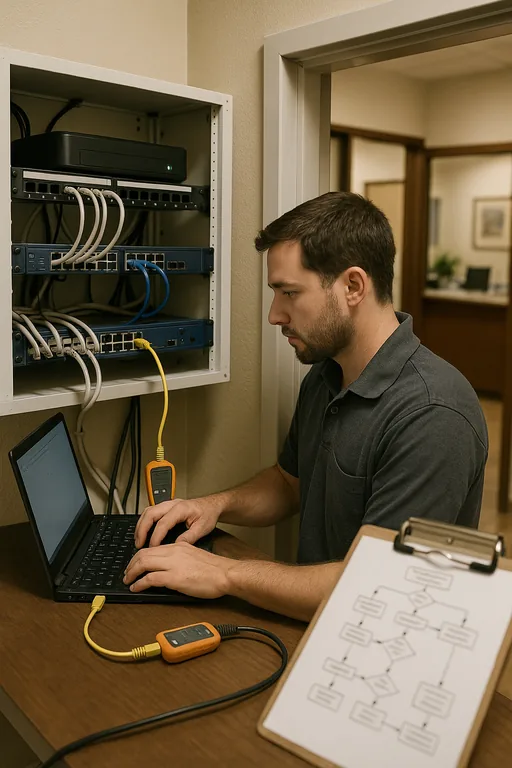

About the Author: Scott Morris
Local Support in Reno, Sparks, Carson City, Lake Tahoe, and Northern Nevada
We regularly support medical offices and other regulated businesses across Reno and the surrounding region, including locations where multiple vendors touch the same workflow. From our Ryland Street office, the Midtown destination in this scenario is about 2 minutes away, which helps when an onsite review is needed, but the larger value comes from organizing ownership, escalation, and recovery before a lockout spreads into scheduling and billing disruption.
Operational Takeaway for Northern Nevada Medical Practices
A medical practice usually gets locked out because responsibility is fragmented, not because every system failed at once. When internet, phones, identity, EHR access, scanning, and infrastructure are split across vendors without one accountable coordinator, recovery slows down and staff are left improvising during patient hours.
The practical answer is to audit ownership, reduce overlap, document escalation, and test recovery paths before the next incident. That approach protects scheduling, intake, billing, and compliance far more effectively than adding another disconnected tool after the fact.