
Reno Data Breach
What looks like a one-off issue is often tied to growth outpacing IT capacity. In construction firm environments, endpoint sprawl, underplanned infrastructure, and inconsistent standards can turn into performance, reliability, and future growth long before anyone notices the warning signs. Closing those gaps early makes endpoint and threat protection far more resilient.
This case study reflects real breakdown patterns documented across 300+ regional IT incidents. Names and identifying details have been modified for confidentiality, while technical and financial data remain accurate to the original events.
How the Scalability Ceiling Turns Growth Into Breach Exposure
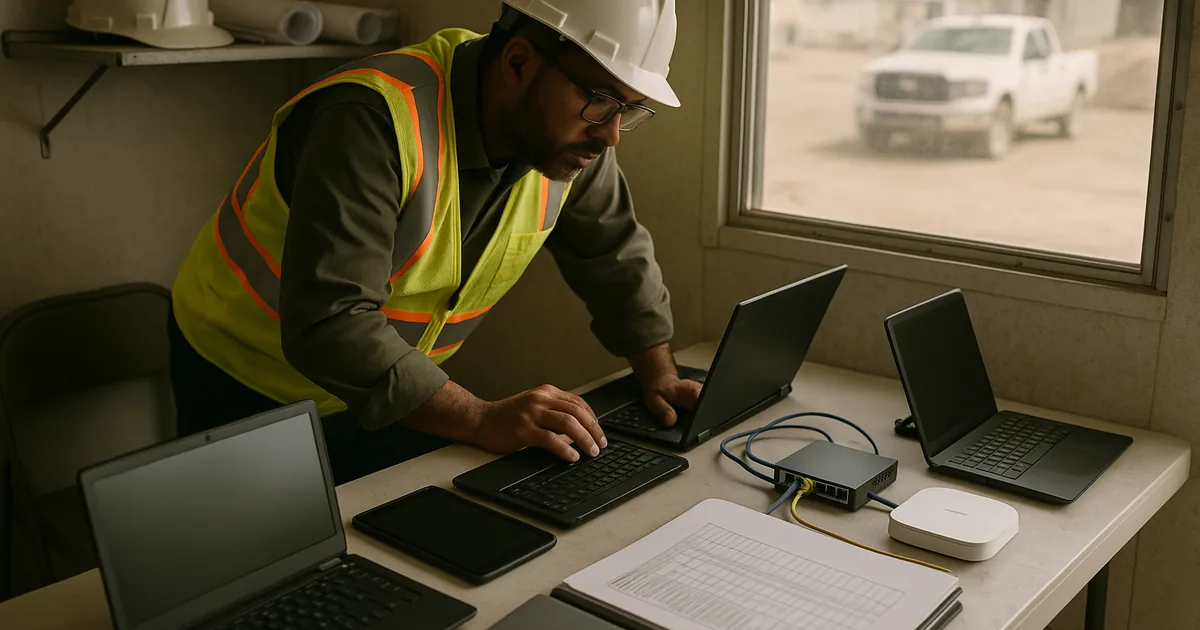
The short answer is that a construction firm in Washoe County becomes more breach-prone when headcount, devices, and jobsite connectivity expand faster than the underlying IT model. What starts as a few extra laptops, a temporary file share, or a quick remote login exception can become a fragmented environment with uneven patching, inconsistent permissions, and too many unmanaged endpoints. In practice, that is the scalability ceiling: the point where the business keeps growing but the controls do not.
We see this often in firms that move between office staff, estimators, superintendents, and subcontractor coordination across Reno, Sparks, and surrounding job sites. The network may still function, but the security posture weakens quietly. A company may have antivirus on most systems, but not a consistent policy for device enrollment, alerting, or response. That is why endpoint and threat protection for Washoe County construction operations has to be treated as a growth control, not just a security add-on. In Deyaneira’s case, the visible problem was access disruption, but the root issue was that the business had already outgrown its original standards.
- Endpoint sprawl: New laptops, tablets, and mobile devices are added quickly for field use, but inventory, patching, and monitoring do not stay consistent.
- Underplanned infrastructure: File access, VPN capacity, wireless coverage, and identity controls are often built for yesterday’s staff count rather than the next 10 hires.
- Inconsistent standards: Different teams may use different login practices, local admin rights, or storage methods, which creates uneven security and harder incident response.
- Construction workflow pressure: When project deadlines are tight, temporary exceptions become permanent risk, especially around shared credentials and rushed remote access.
Practical Remediation Before Growth Breaks the Environment
The fix is not a single tool. It is a controlled expansion plan that standardizes endpoints, identities, cloud access, and infrastructure before the next hiring wave lands. For most construction firms, that means establishing a device baseline, removing unnecessary admin rights, enforcing MFA, centralizing logging, and validating that backup and recovery processes actually work for project data and line-of-business systems. Where Microsoft 365 is already in place, firms usually benefit from tighter cloud and Microsoft environment management in Northern Nevada so device compliance, conditional access, and account lifecycle controls are handled consistently.
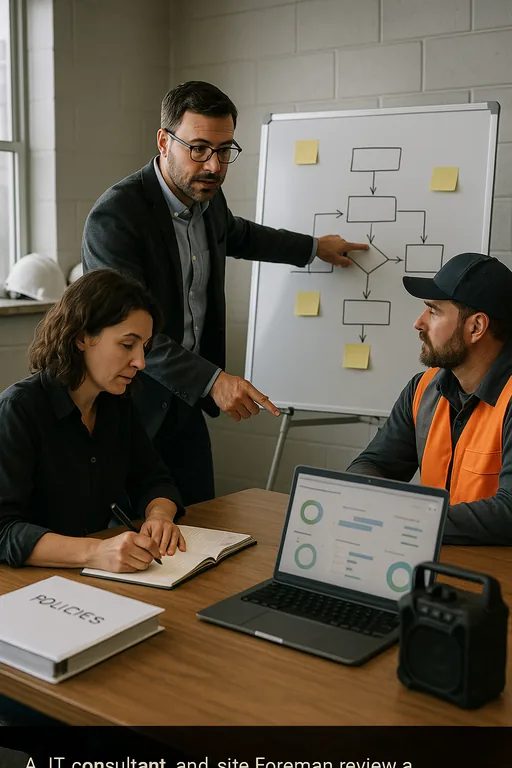
We also recommend mapping controls to a recognized framework so growth decisions do not stay informal. The CISA small business cyber guidance is a practical starting point for identity protection, backups, and endpoint visibility. For construction firms with multiple trailers, offices, or temporary site connections, remediation should include network segmentation, documented onboarding and offboarding, EDR deployment, and alerting that distinguishes routine field activity from suspicious access patterns.
- Control baseline: Standardize every workstation and mobile endpoint with EDR, MFA, patch policy, encryption, and centralized monitoring.
- Identity hardening: Remove shared accounts, limit local admin rights, and apply conditional access to remote and cloud logins.
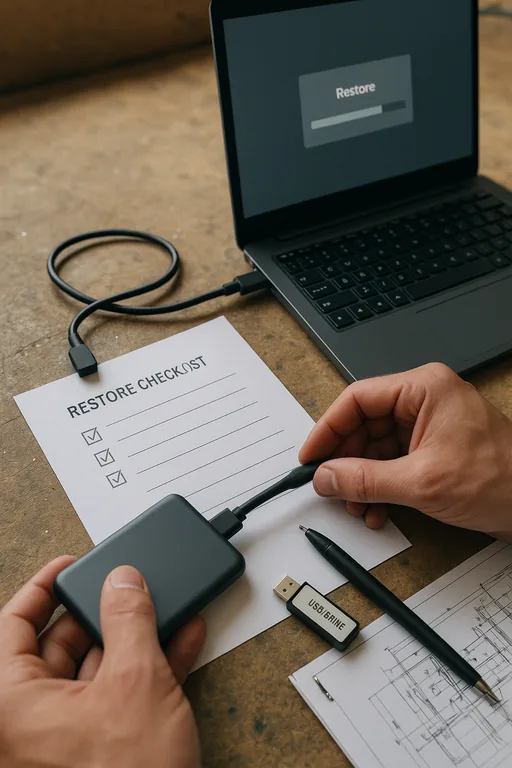
- Backup validation: Test restores for project files, accounting data, and cloud content so recovery is measured, not assumed.
- Capacity planning: Review bandwidth, wireless coverage, VPN load, and storage growth before the next hiring phase or new site launch.
Field Evidence: When a Growing Construction Network Gets Standardized
In one Northern Nevada construction environment, the before-state looked familiar: mixed-age laptops, inconsistent Microsoft 365 controls, weak device inventory, and a file access model that had grown organically between the main office and active project locations. The business was not fully down, but recurring login issues, delayed sync, and uneven patching made every new hire harder to support.
After standardizing endpoint enrollment, tightening identity controls, and putting the network under infrastructure management for multi-location operations , the after-state was much more stable. Device onboarding became repeatable, suspicious login activity was easier to isolate, and project teams had fewer interruptions during normal work hours. In the Reno-Sparks corridor, where crews may move between office, warehouse, and field locations in the same day, that consistency matters more than most firms expect.
- Result: New-user setup time dropped by 60%, unmanaged endpoints were eliminated from active staff use, and recurring access disruptions were reduced within the first quarter.
Construction IT Scalability Risk Reference
Scott Morris is an experienced IT and cybersecurity professional with 16 years of hands-on experience in managed technology services. He specializes in Endpoint And Threat Protection and has spent his career building practical recovery, security, and operational continuity processes for businesses across Washoe County and Northern Nevada.

About the Author: Scott Morris
Local Support in Washoe County
Construction firms in Washoe County often operate across office, yard, and jobsite environments where growth creates uneven IT conditions fast. From our Reno office, we regularly support businesses that need tighter endpoint standards, stronger account controls, and infrastructure planning that can keep up with hiring, project turnover, and field mobility. The Saddlehorn area is a practical example of how local response and local familiarity help when access issues affect active operations.
Growth Has to Be Planned at the Security Layer Too
A data breach risk in a Washoe County construction firm is often less about one dramatic failure and more about accumulated capacity gaps. When hiring, device count, and remote access expand without matching standards, the business reaches a point where performance issues, access problems, and security exposure start showing up together.
The practical takeaway is straightforward: build endpoint, identity, and infrastructure controls ahead of growth, not after disruption. Firms that do this early usually avoid the more expensive cycle of downtime, emergency cleanup, and delayed operations that follows when the scalability ceiling is ignored.