Reno’s Hidden Risk
What looks like a one-off issue is often tied to hidden threats. In construction firm environments, stolen credentials, MFA gaps, and weak monitoring can turn into ransomware, fraud, and data loss long before anyone notices the warning signs. Closing those gaps early makes backup and disaster recovery far more resilient.
This case study reflects real breakdown patterns documented across 300+ regional IT incidents. Names and identifying details have been modified for confidentiality, while technical and financial data remain accurate to the original events.

Why the Invisible Threat Is So Dangerous for Construction Firms

The main risk is not always a dramatic outage at the start. In many Washoe County construction environments, the first sign of a breach is a small inconsistency: a missing MFA prompt, an invoice that looks slightly off, a user locked out after normal hours, or a backup job that suddenly starts protecting already-encrypted files. That is why hidden credential abuse is so disruptive. Modern attackers often move through email, cloud storage, and remote access tools using legitimate logins that blend into normal traffic.
We see this pattern often in firms that rely on Microsoft 365, field-to-office file sharing, and fast coordination between estimators, project managers, accounting, and subcontractors. If identity controls are weak, a stolen password can expose bid documents, payroll records, vendor communications, and job costing data before anyone realizes there is a problem. Strong backup and disaster recovery support in Northern Nevada matters here because recovery is not just about restoring files. It is about restoring trusted operations after hidden access has already touched email, cloud folders, and line-of-business data. In cases like Matthew’s, the real issue is not one mailbox. It is the loss of confidence in what systems, messages, and records can still be trusted.
- Credential-based intrusion: Attackers use stolen usernames and passwords to access email and cloud systems in ways perimeter security may not detect.
- MFA gaps: Incomplete multifactor enforcement, weak conditional access, or legacy authentication leave a direct path into business systems.
- Low-visibility monitoring: Without alerting on impossible travel, inbox rule creation, privilege changes, or unusual file activity, compromise can sit unnoticed for days.
- Operational spread: Construction firms often connect accounting, project files, mobile devices, and shared vendor workflows, so one compromised account can affect several departments quickly.
Practical Remediation That Reduces Breach and Recovery Risk
The fix starts with identity control, not just perimeter hardware. We typically begin by reviewing sign-in logs, disabling legacy authentication, forcing password resets where exposure is suspected, and validating that MFA is enforced for every user, including executives, field supervisors, and shared administrative accounts. Then we verify that backups are isolated, restorable, and not silently inheriting corrupted or encrypted data from compromised systems. For firms with multiple offices, trailers, or remote jobsite access, structured network, server, and cloud management in Reno helps close the visibility gap between office systems and cloud workloads.
From there, the goal is to reduce attacker dwell time. That means alerting on suspicious mailbox rules, impossible travel, repeated failed sign-ins, privilege escalation, and unusual file access. It also means segmenting sensitive systems, tightening admin rights, and documenting recovery order so accounting, project files, and communications come back in the right sequence. The CISA guidance on strong authentication and account protection is a practical baseline, especially for organizations that still depend on password-only access in part of the environment.
- Identity hardening: Enforce MFA everywhere, disable legacy protocols, review conditional access, and remove stale accounts.
- Backup validation: Test restores regularly, protect immutable or offline copies, and confirm backup scope includes cloud data that matters to operations.
- Detection improvements: Alert on mailbox forwarding, impossible travel, suspicious sign-ins, and abnormal file activity.
- Recovery sequencing: Restore critical systems in business order so payroll, project management, and vendor communication resume without confusion.
Field Evidence: Hidden Account Compromise Before Full Outage
In one Northern Nevada construction workflow, the initial complaint was simple: staff were seeing odd email behavior and delayed approvals, but no one believed there was a breach because the firewall and internet circuit looked normal. After review, the issue traced back to a compromised cloud account, unauthorized inbox rules, and weak alerting around sign-in anomalies. The business had backups, but they had not fully mapped which cloud data and shared project folders needed priority restoration if the incident expanded.
After tightening identity controls, validating restore points, and improving segmentation with IT systems for multi-location operations , the environment became much easier to trust and recover. That matters in Washoe County, where teams may be moving between Reno offices, Sparks yards, and active jobsites while depending on stable access to plans, schedules, and billing records.
- Result: Suspicious sign-in activity was contained the same day, backup verification time dropped by 60 percent, and critical file access was restored under a documented recovery sequence instead of improvised troubleshooting.
Construction Firm Breach Risk Reference
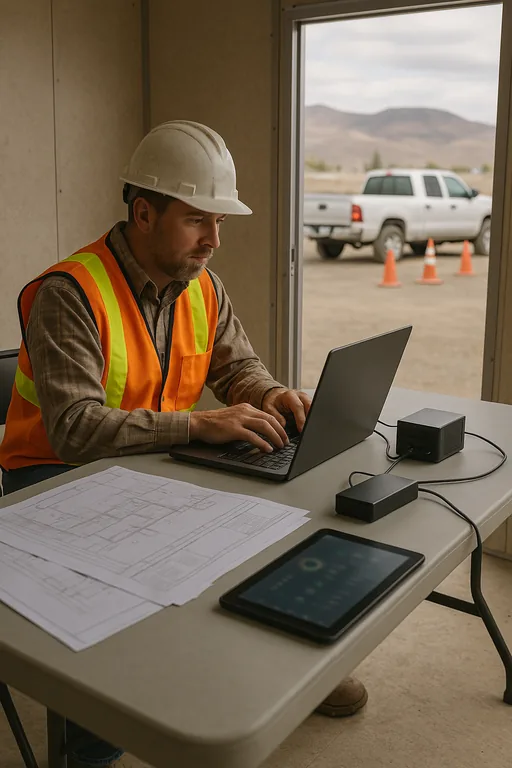
Scott Morris is an experienced IT and cybersecurity professional with 16 years of hands-on experience in managed technology services. He specializes in Backup And Disaster Recovery and has spent his career building practical recovery, security, and operational continuity processes for businesses across Washoe County and Northern Nevada.

About the Author: Scott Morris
Local Support in Washoe County
We support businesses throughout Reno, Sparks, and the broader Washoe County area where construction firms often depend on a mix of office staff, field access, cloud platforms, and shared project data. From our Ryland Street office, the Plumb Lane corridor is a short drive, which helps when an incident needs on-site validation alongside remote containment. That local proximity matters when the issue involves both user access and recovery planning, not just a single device.
Closing the Gaps Before a Small Issue Becomes a Breach
For construction firms in Washoe County, the invisible threat is usually an identity and visibility problem before it becomes a full recovery problem. If attackers can log in with valid credentials, they can interfere with email, approvals, file access, and backup confidence without triggering the kind of alarms many teams expect. That is why early detection, MFA enforcement, and verified recovery planning matter so much.
The practical takeaway is straightforward: do not treat odd account behavior, unexplained inbox changes, or inconsistent access prompts as isolated annoyances. In our experience, those are often the first operational signs that a larger breach path is already open. The firms that recover fastest are the ones that have already mapped critical systems, tested restores, and tightened identity controls before the incident expands.