Reno Drain Remediation
When a business is dealing with a data breach, the failure usually started earlier. Slow devices, ticket backlogs, and repeated workarounds can weaken network server and cloud management over time and leave construction firms in The Truckee Meadows exposed when pressure hits. Addressing the problem means stabilizing daily support, reducing repeat issues, and standardizing how IT is handled.
This case study reflects real breakdown patterns documented across 300+ regional IT incidents. Names and identifying details have been modified for confidentiality, while technical and financial data remain accurate to the original events.

Why Operational Drain Often Comes Before the Breach
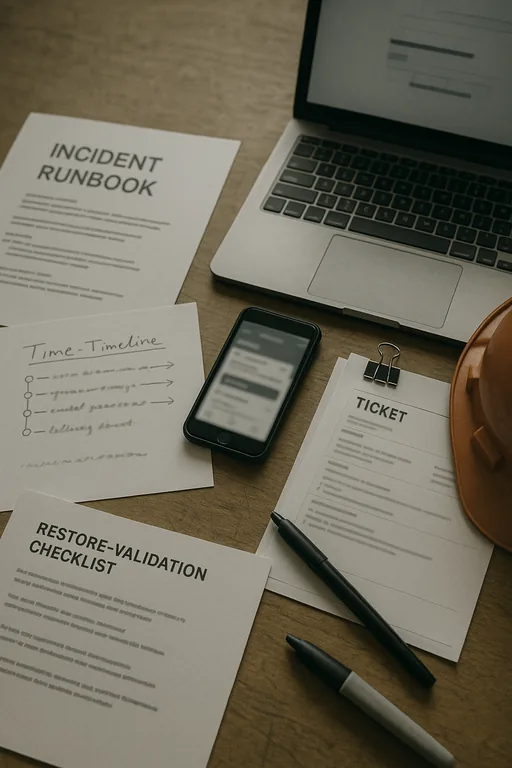
For construction firms in The Truckee Meadows, a breach rarely starts with a dramatic event. More often, it starts with small unresolved issues: laptops that take too long to boot at the job trailer, shared folders that sync inconsistently, stale permissions that never get reviewed, and support tickets that stay open because everyone is trying to keep projects moving. That operational drain matters because it weakens visibility and discipline across identity, storage, and endpoint management. Businesses that rely on network server and cloud management in The Truckee Meadows need those systems to be consistent, not improvised.
The pattern is familiar. A team creates workarounds to keep submittals, change orders, and field documentation moving. Those workarounds become normal. Then a phishing event, reused password, or over-permissioned account lands in an environment that is already disorganized. In Emery’s case, the breach exposure was not caused by one bad click alone. It was made worse by backlog, inconsistent account review, and too many exceptions in how files and devices were being handled across office and field operations.
- Ticket backlog: Repeated low-level issues consume support time, delay root-cause work, and leave account hygiene, patching, and access review unfinished.
- Cloud sprawl: Estimating files, project photos, and finance records often end up spread across email, local desktops, and shared cloud folders with uneven permissions.
- Endpoint inconsistency: Mixed-age laptops and unmanaged mobile devices create blind spots for patch status, malware detection, and user access control.
- Construction workflow pressure: When crews need plans immediately, staff are more likely to bypass process, share credentials, or store files in the wrong place.
What Remediation Looks Like in Practical Terms
Remediation has to do more than remove the immediate threat. It needs to reduce the daily friction that allowed the environment to drift in the first place. We typically start by isolating affected accounts and endpoints, reviewing sign-in activity, resetting privileged access, and validating whether any file movement or mailbox rules indicate further compromise. From there, the work shifts to standardization: device baselines, permission cleanup, alert tuning, and documented response steps.
For firms running Microsoft 365, SharePoint, OneDrive, and line-of-business applications, structured cloud and Microsoft environment management is usually part of the fix. That includes MFA hardening, conditional access, mailbox auditing, and retention controls. It also helps to align remediation with practical guidance from CISA on multi-factor authentication , especially where field and office users access the same systems from different locations.
- MFA hardening: Require phishing-resistant or app-based MFA for email, file access, and admin accounts.
- Permission review: Remove stale access to project folders, finance data, and archived job records.
- EDR deployment: Standardize endpoint detection and response across office PCs, laptops, and remote devices.
- Backup validation: Confirm that cloud and server backups are restorable, not just scheduled.
- Alerting improvements: Escalate unusual sign-ins, mass file access, and mailbox forwarding changes before they become larger incidents.
Field Evidence: From Daily Friction to Controlled Operations
We have seen this pattern in Northern Nevada construction corridors where office staff in Reno support crews moving between Sparks, Stead, and outlying project sites. Before remediation, the environment usually shows the same signs: recurring login complaints, inconsistent file access, aging laptops, and no clear owner for cloud permissions. After remediation, the change is measurable because the support model becomes structured instead of reactive.
In one comparable scenario, the business moved from repeated access issues and delayed project document retrieval to a controlled environment with reviewed permissions, standardized endpoint policies, and documented escalation paths. They also added IT systems for multi-location operations so server, network, and cloud oversight were handled together rather than as separate problems.
- Result: Ticket volume dropped by 37 percent over the next quarter, high-risk sign-in alerts were reviewed the same day, and project admins recovered an average of 4 to 6 hours per week previously lost to repeated access and sync issues.
Operational Controls That Reduce Breach Exposure
Scott Morris is an experienced IT and cybersecurity professional with 16 years of hands-on experience in managed technology services. He specializes in Network Server And Cloud Management and has spent his career building practical recovery, security, and operational continuity processes for businesses across The Truckee Meadows and Northern Nevada.


About the Author: Scott Morris
Local Support in The Truckee Meadows
We support businesses across Reno, Sparks, and surrounding Truckee Meadows service areas where construction teams often split time between the main office, job trailers, and cloud-based project systems. From our Reno office, the drive to Golden Valley is typically about 18 minutes, which reflects the practical local support footprint behind on-site response, remediation planning, and follow-up system cleanup.
Stabilize the Daily Environment Before the Next Incident
A data breach in a construction firm is often the visible result of a quieter operational problem that has been building for months. Slow devices, unresolved tickets, inconsistent permissions, and weak cloud oversight reduce resilience long before anyone labels the situation a security incident. In The Truckee Meadows, where teams move between office staff, field supervisors, and remote project access, those gaps show up quickly.
The practical takeaway is straightforward: reduce the daily drain, standardize support, and tighten control over accounts, endpoints, and shared data. When those basics are handled consistently, breach exposure drops and the business regains time, focus, and predictability.