Reno/Sparks Data Breach
The outage or lockout is usually the last symptom to appear, not the first. Unclear ownership, overlapping tools, and fragmented support create weak points that can disrupt security monitoring and response and put response time, accountability, and outage recovery at risk. Reducing that risk starts with clarifying ownership and enforcing cleaner escalation paths.
This case study reflects real breakdown patterns documented across 300+ regional IT incidents. Names and identifying details have been modified for confidentiality, while technical and financial data remain accurate to the original events.

Where Vendor Chaos Turns Into Breach Exposure
For construction firms in Sparks, the breach itself is often not the first failure. The earlier problem is usually operational: too many vendors, no single owner for escalation, and no shared view of who is responsible for monitoring, containment, and recovery. Internet, phones, software, endpoint protection, cloud identity, and backup systems may all be under different contracts. When something abnormal appears, each provider can see only part of the event.
That is why vendor chaos creates real breach risk. If a suspicious login, mailbox rule change, file encryption attempt, or remote access anomaly is treated as someone else’s ticket, response time stretches out. We see this often in growing firms that added tools over time without formal oversight. In practice, that means delayed triage, inconsistent logs, and unclear authority to isolate systems. Businesses trying to reduce that exposure usually need security monitoring and response in Northern Nevada that ties alerts, ownership, and escalation into one operating model. In cases like the one above, Christine was not dealing with a single technical fault; she was dealing with a management gap between vendors.
- Fragmented accountability: When the ISP, firewall provider, Microsoft tenant admin, and software vendor all operate separately, no one owns the full incident timeline or the decision to contain affected systems.
- Overlapping tools: Multiple security products can create blind spots if alerting is split across portals and nobody is validating whether logs are complete and retained.
- Office manager overload: Managing internet, phones, software, and hardware vendors is a full-time job your office manager should not be doing during an active incident.
- Construction workflow impact: Estimating, scheduling, field coordination, and invoice approvals depend on timely access to files and email, so even a partial lockout can disrupt the entire day.
How To Remediate The Breakdown And Restore Control
The fix is not just technical cleanup. It starts with assigning clear operational ownership for incident response, vendor coordination, and recovery authority. One party needs to manage the escalation tree, confirm who can isolate endpoints, verify backup status, and decide when outside vendors are engaged. That structure is especially important for construction firms with field crews, office staff, and cloud applications all depending on the same identity and network stack.
From there, we tighten the controls that reduce ambiguity: centralized alerting, validated backup recovery, MFA enforcement, endpoint detection and response, and documented vendor responsibilities. This is also where IT planning and budgeting for growing Reno businesses matters. If the business has never budgeted for log retention, after-hours response, or backup testing, the breach response process will stay reactive. For practical guidance on incident preparation and containment, the CISA ransomware and incident response guidance is a useful baseline.
- Single incident owner: Assign one accountable lead for triage, vendor coordination, and executive updates during any suspected breach or lockout.
- Centralized logging: Route firewall, endpoint, identity, and Microsoft 365 alerts into one monitored view so suspicious activity is not split across portals.
- EDR and containment: Deploy endpoint detection and response with authority to isolate affected devices quickly when malicious behavior is confirmed.
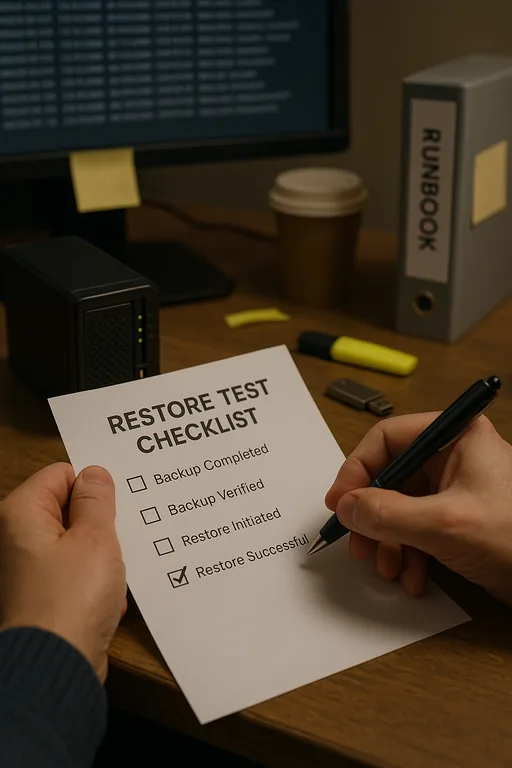
- Backup validation: Test file and system restores on a schedule so recovery decisions are based on evidence, not assumptions.
- MFA hardening: Enforce phishing-resistant MFA where possible and review conditional access policies for remote users and shared admin accounts.
- Vendor responsibility matrix: Document who owns internet, firewall, cloud identity, phones, line-of-business software, and after-hours escalation.
Field Evidence: Multi-Vendor Response Stabilized For A Regional Contractor
We worked through a similar pattern for a contractor operating between Sparks and Reno with a mix of office staff, project managers, and field supervisors. Before remediation, the company had separate vendors for connectivity, phones, Microsoft 365, backup, and endpoint security. Alerts were inconsistent, after-hours contacts were outdated, and nobody could confirm within the first hour whether the issue was a compromised account, a sync failure, or an endpoint event.
After consolidating escalation paths, validating backups, and documenting who had authority to isolate systems, the response process changed materially. The office no longer had to guess which vendor to call first, and leadership had a clearer picture of business impact. We also found that periodic technology advisory and assessment support helped keep vendor sprawl from rebuilding as new jobsites, devices, and software were added across Northern Nevada.
- Result: Initial incident triage time dropped from roughly 2 hours to under 25 minutes, backup verification moved to a scheduled monthly process, and unplanned staff downtime during the next security event was reduced by more than 60 percent.
Operational Controls That Reduce Vendor-Driven Breach Risk
Scott Morris is an experienced IT and cybersecurity professional with 16 years of hands-on experience in managed technology services. He specializes in Security Monitoring And Response and has spent his career building practical recovery, security, and operational continuity processes for businesses across Sparks, Reno, and Northern Nevada and Northern Nevada.


About the Author: Scott Morris
Local Support in Sparks, Reno, and Northern Nevada
We regularly support businesses across Reno and Sparks where vendor coordination problems are often more disruptive than the original technical fault. From our Ryland Street office, the Peckham corridor is a short drive, which helps when an incident needs on-site review, but the larger value comes from having a defined response owner, cleaner escalation, and documented accountability across internet, security, cloud, and application vendors.
Clear Ownership Reduces Breach Damage
A construction firm in Sparks does not need more vendor noise during a breach event. It needs clear ownership, one response path, complete visibility into alerts, and tested recovery steps. When those pieces are missing, even a manageable incident can turn into hours of confusion, delayed billing, and avoidable downtime.
The practical takeaway is straightforward: reduce overlap, define who owns what, and verify that monitoring, escalation, and recovery actually work together. That approach improves response time, limits business interruption, and keeps office staff from acting as informal incident coordinators.