Reno Data Breach
This kind of issue rarely appears all at once. For construction firms in Northern Nevada, it usually builds through phishing clicks, password reuse, and weak account hygiene and then surfaces as a data breach, slower recovery, or higher exposure. A more reliable setup starts with tightening identity controls and building safer day-to-day habits.
This case study reflects real breakdown patterns documented across 300+ regional IT incidents. Names and identifying details have been modified for confidentiality, while technical and financial data remain accurate to the original events.

How Human Error Turns Into a Construction Data Breach
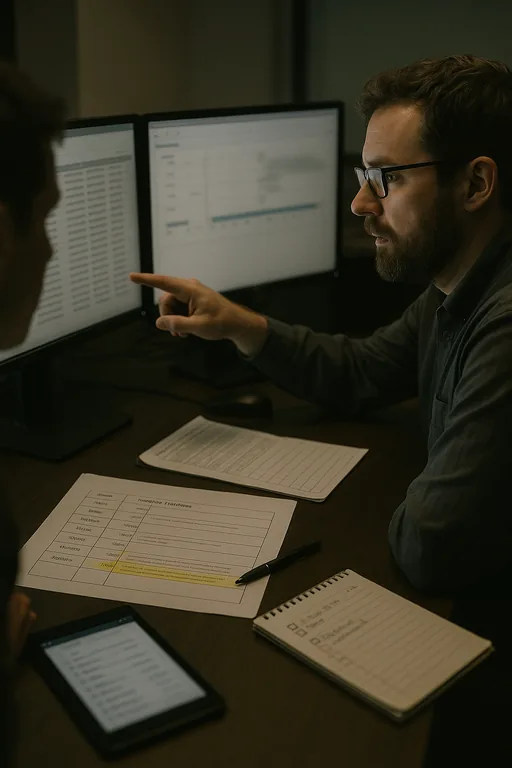
The main failure is usually not a firewall defect or a sophisticated zero-day. It is a routine user action that fits normal business behavior: clicking a reset link, approving a sign-in prompt, or reusing a password that was already exposed elsewhere. In construction environments across Reno, Sparks, Carson City, and the Tahoe corridor, staff move quickly between field coordination, subcontractor communication, payroll questions, and document approvals. That pace creates openings when identity controls are weak.
We typically find that the breach path starts with email. A user receives a message that looks like a shared drawing notice, invoice correction, or account verification request. Once credentials are entered, the attacker often stays quiet at first. They review mailboxes, set forwarding rules, watch payment conversations, and test access to cloud storage. That is why compliance advisory programs in Northern Nevada matter here: they force the business to look at account hygiene, access policy, logging, and user behavior as one operational system instead of isolated tools. In cases like Tiffany’s, the visible problem is the lockout or suspicious email activity, but the deeper issue is that identity risk was allowed to accumulate.
- Phishing-driven credential theft: Fake password reset and document-sharing emails remain one of the fastest ways into Microsoft 365 and similar platforms used by construction firms.
- Password reuse: When one employee uses the same or similar password across business and personal systems, a prior exposure can become a direct path into company email.
- Weak account hygiene: Missing MFA enforcement, stale accounts, poor mailbox rule monitoring, and broad file permissions increase the blast radius after a single click.
- Operational sprawl: Construction teams often rely on mobile devices, shared project folders, and fast vendor communication, which makes access control harder if governance is informal.
Practical Remediation for Identity Risk and Account Exposure
The fix is not just user training. Training helps, but it has to sit on top of stronger technical controls. We start by reviewing sign-in logs, mailbox rules, conditional access policies, MFA status, and privileged account use. Then we reduce the number of ways a bad click can become a breach. For firms with multiple project managers, estimators, and accounting staff, this usually means enforcing phishing-resistant MFA where possible, blocking legacy authentication, tightening file-sharing defaults, and validating backup access separately from production credentials.
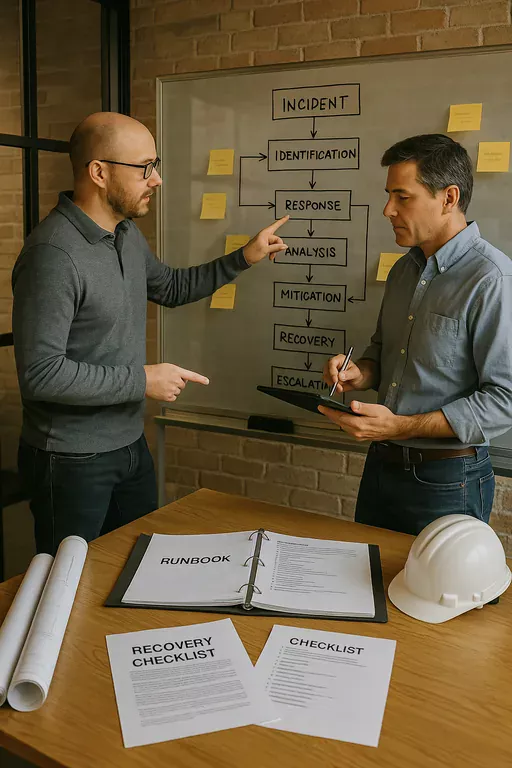
From there, the business needs documented decision-making around risk, exceptions, and recovery. That is where IT consulting in Northern Nevada becomes useful at the leadership level. The goal is to define who can approve access, how incidents are escalated, what evidence is retained, and how compliance obligations are handled if project records or employee data are exposed. The CISA guidance on multi-factor authentication is a practical baseline because it addresses the exact control gap that turns a stolen password into a business incident.
- MFA hardening: Enforce MFA for all cloud accounts, prioritize finance, executive, and admin roles, and remove SMS-only methods where stronger options are available.
- Conditional access: Restrict sign-ins by geography, device state, and risk signals so unusual access attempts are challenged or blocked.
- Mailbox and audit review: Check forwarding rules, delegated access, sign-in anomalies, and impossible travel events after any suspected phishing event.
- Password and identity policy: Eliminate reused credentials, require password manager adoption, and disable dormant accounts tied to former staff or old projects.
- Recovery validation: Test whether backups, shared files, and line-of-business systems can be restored without relying on the same compromised identity path.
Field Evidence: Email Access Incident Across a Multi-Site Project Team
We worked through a similar pattern with a regional business supporting active job sites between Reno and Carson City. Before remediation, the company had inconsistent MFA enrollment, broad access to shared project folders, and no regular review of mailbox forwarding rules. A phishing message reached one employee, and the compromise was not obvious until vendors started questioning unusual reply behavior and internal staff lost confidence in invoice approvals.
After tightening identity controls, reducing unnecessary permissions, and establishing executive review through strategic IT leadership for growing operations , the business moved from reactive cleanup to a more controlled posture. Sign-in anomalies were visible faster, account recovery steps were documented, and project communication no longer depended on informal habits. In Northern Nevada, where teams often split time between office coordination and field activity, that operational discipline matters as much as the security stack itself.
- Result: MFA coverage reached 100 percent for cloud accounts, suspicious mailbox rules were reduced to zero after cleanup, and incident response time dropped from most of a day to under 90 minutes.
Reference Table: Human Element Controls for Construction Firms
Scott Morris is an experienced IT and cybersecurity professional with 16 years of hands-on experience in managed technology services. He specializes in Compliance Advisory Programs and has spent his career building practical recovery, security, and operational continuity processes for businesses across Reno, Sparks, Carson City, Lake Tahoe, and Northern Nevada and Northern Nevada.

About the Author: Scott Morris
Local Support in Northern Nevada
We support businesses throughout Reno and the surrounding region, including organizations that need practical guidance on identity security, account recovery, and compliance exposure. From our Ryland Street office, the route to Redfield Regional Center is typically about 12 minutes, which reflects the kind of local response and on-site familiarity many Northern Nevada firms expect when an access or breach issue starts affecting operations.
What Construction Firms Should Take Away
For construction firms in Northern Nevada, the human element is often the first point of failure and the last issue to get formal attention. A single phishing click or reused password can expose email, project files, vendor communication, and billing workflows long before anyone realizes there is a breach. The operational cost usually comes from downtime, delayed approvals, recovery labor, and compliance follow-up rather than one dramatic technical event.
The practical answer is straightforward: tighten identity controls, reduce unnecessary access, monitor cloud activity, and make user behavior part of routine risk management. When those steps are handled consistently, the business is far less likely to turn an ordinary inbox mistake into a larger security and continuity problem.