Network, Server & Cloud Management in Gardnerville, Nevada
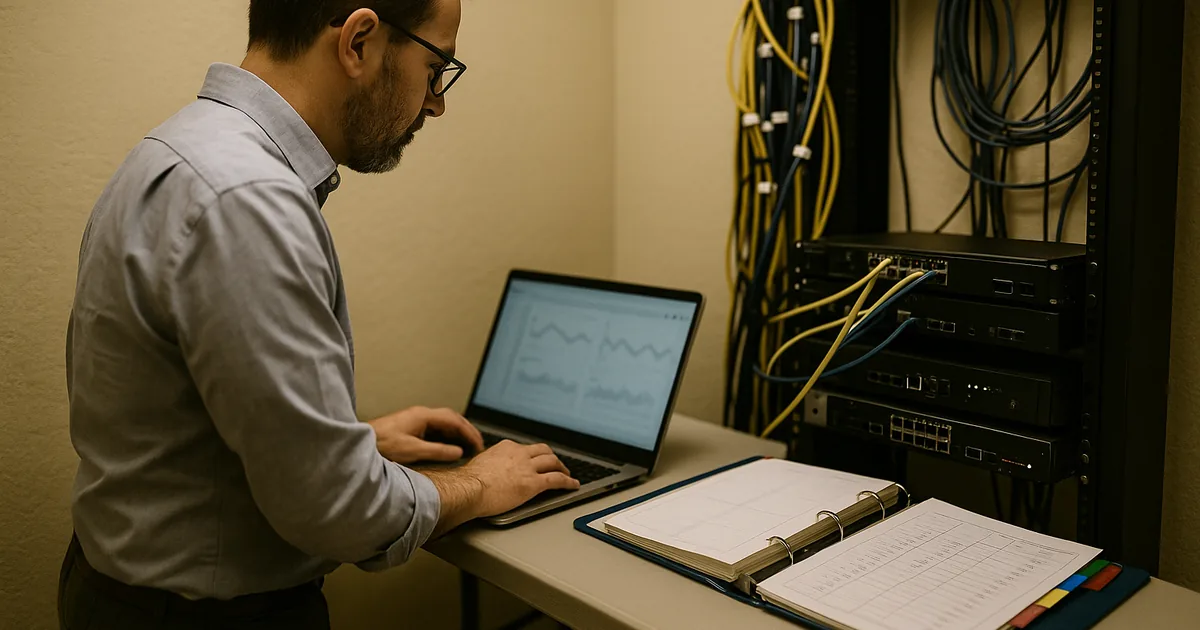
Network, server and cloud management keeps business systems connected, patched, documented and recoverable. For Gardnerville organizations, competent oversight usually means steadier uptime, fewer security surprises, clearer accountability and faster recovery when internet, infrastructure or vendor problems hit.
At 9:07 a.m., Ariana V. watched a Gardnerville office lose access to its cloud scheduling platform after an unmanaged firewall firmware issue broke site-to-cloud routing and exposed an expired server certificate that had gone unmonitored. Dispatch stalled, invoices were delayed, and emergency remediation, overtime, and lost appointments added up to $73,500.
The following scenario is based on a redacted real-world business IT incident pattern. Identifying details have been changed for privacy, but the disruption sequence and cost impact remain realistic.

About the Author: Scott Morris
Scott Morris is an experienced IT and cybersecurity professional with 16 years of hands-on experience in managed technology services. He specializes in Network, Server & Cloud Management in Gardnerville, Nevada and has spent his career building practical recovery, security, and operational continuity processes for businesses across Nevada.
This article explains operational patterns, controls, and evaluation points that business leaders can use when reviewing infrastructure decisions. This is general technical information; specific network environments and compliance obligations change strategy.
In Gardnerville, network, server and cloud management usually means keeping the office firewall, switches, Wi-Fi, internet circuit, on-premises servers, cloud identity, email platform, business applications, and backups working as one controlled system. When businesses review this through the lens of managed IT services in Gardnerville, the real question is not whether each tool exists, but whether someone owns patching, alert response, documentation, vendor coordination, and recovery sequencing across the whole environment.
A common failure point is split ownership: the carrier manages the circuit, a software vendor manages the application, an office manager knows the router password, and nobody tracks local administrator rights, certificate renewals, storage growth, or cloud retention settings. That is how routine issues turn into outages, security gaps, and expensive finger-pointing. For firms handling customer records, payroll data, or regulated information, the same weaknesses also intersect with compliance and risk management because undocumented access and weak retention controls can create both downtime and reportable exposure.
- Network layer: Firewalls, switches, wireless access points, VPNs, DNS, internet failover, segmentation, and remote connectivity.
- Server layer: Physical or virtual hosts, storage, line-of-business applications, operating system patching, performance monitoring, and backup jobs.
- Cloud layer: Microsoft 365 or other SaaS platforms, identity and multifactor policies, email security, file sharing, retention, and administrative access.
What does network, server and cloud management actually include for a Gardnerville business?
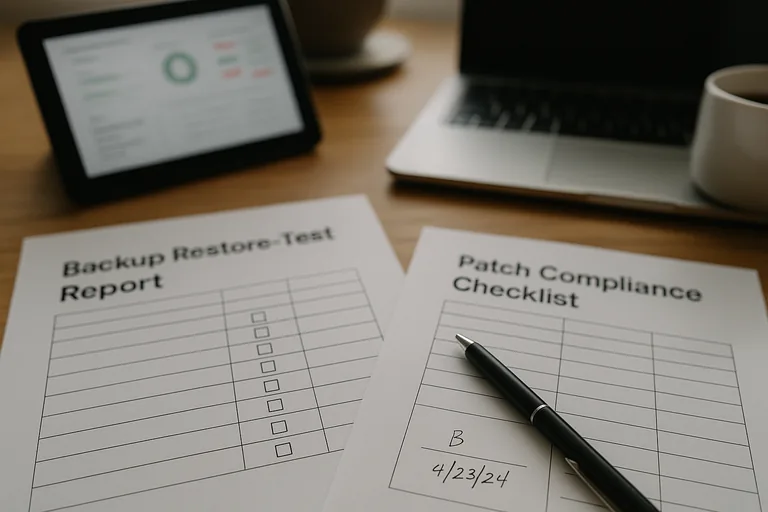
It includes inventorying every managed asset, documenting dependencies, standardizing configurations, controlling administrative access, monitoring performance and security events, coordinating vendor escalations, and planning recovery if a device, service, or connection fails. In mature environments, this work is visible in current diagrams, asset records, license and warranty tracking, alert ownership, and change logs rather than tribal knowledge. Businesses comparing providers should expect this level of structure from any business IT management approach, because a firewall, a virtual server, and a cloud tenant rarely fail in isolation.
Why does coordinated management matter more than treating each system separately?
The operational risk is hidden dependency. A cloud login issue may actually come from DNS problems at the firewall, a local domain controller with replication trouble, or a stale conditional access rule left behind after a migration. What usually separates a stable environment from a fragile one is coordinated ownership across all layers, so one symptom is traced to the real cause instead of being bounced between vendors. That also matters legally: Nevada Revised Statutes NRS 603A requires reasonable security measures for personal information, which in practice means businesses need accountable control over access, configuration, and incident handling rather than assuming a cloud subscription alone covers security obligations.
What risks does competent management reduce before they become outages or security incidents?
A common failure point is identity sprawl: old admin accounts remain active, remote access is enabled for convenience, multifunction devices sit on the same flat network as servers, and firmware or operating system patches are delayed because nobody wants to risk interruption during business hours. Those shortcuts increase the chance of unauthorized access, lateral movement, data exposure, and avoidable downtime. Guidance in NIST SP 800-63B matters here because authentication is not just a password setting; it is a lifecycle process involving stronger sign-in controls, consistent enforcement, and clean removal of access when roles change, which directly reduces the most common path into small and midsize business environments.
How does network, server and cloud management work in practice day to day?
In practice, the issue is rarely the tool alone; it is the process around it. Day-to-day management means reviewing overnight alerts, checking internet latency and device health, validating backup success, applying approved patches in stages, tracking storage and certificate expiration, reviewing privileged access changes, and documenting exceptions before they become emergencies. During one routine review pattern seen in real environments, repeated complaints about slow cloud file access traced back to packet loss on an uplink, and the underlying issue turned out to be a switch port hard-coded years earlier while the replacement firewall expected auto-negotiation; the cloud symptom was only the surface signal. Experienced IT teams correlate network logs, server resource data, and cloud service events before making production changes, because rushed adjustments during live disruption often extend the outage.
How can a business owner verify that management is real rather than assumed?
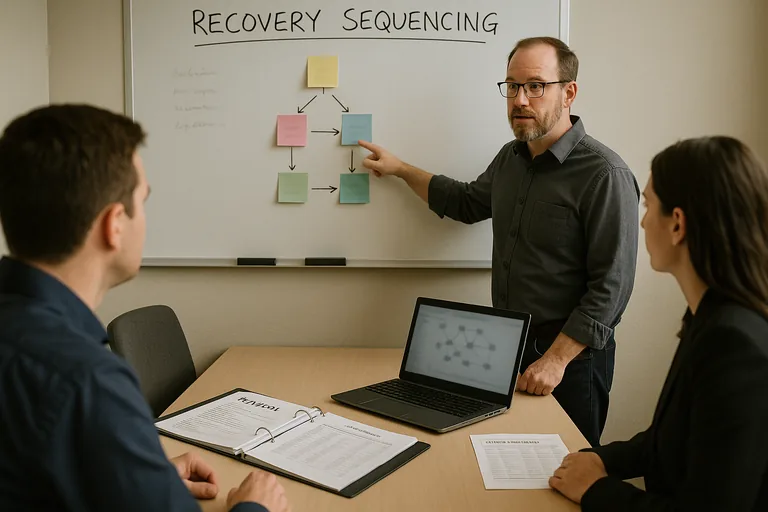
A competent provider should be able to show evidence, not just give reassurance. That evidence usually includes monitoring dashboards, patch compliance reports, asset inventory records, documented escalation workflows, access review logs, change tickets, and backup restore test results with dates and outcomes. Without those records, organizations often assume systems are covered when alerts may be going to an unmonitored inbox or backups may be completing without proven recoverability. Guidance from CISA on data backup and networked storage is useful because it emphasizes that resilience depends on restoration integrity and protected copies, not merely the existence of backup software; for business leaders, that translates into asking for proof of recent test restores and clear recovery sequencing.
What warning signs suggest a weak or fragile implementation?
Warning signs are usually operational, not cosmetic: shared administrator credentials, no current network diagram, no documented owner for cloud tenant changes, recurring internet complaints with no trend reporting, patching described as automatic but unsupported by reports, VPN access left in place for former vendors, and a server room full of aging equipment with no lifecycle plan. This tends to break down when an outage starts after hours and nobody knows which circuit, switch, or virtual host supports the critical application. Another common issue is tool accumulation without response workflow: endpoint protection is installed, but nobody reviews detections; multifactor authentication exists, but exceptions are undocumented; cloud retention is assumed, but legal or business recovery requirements were never mapped to actual policy.
What should happen next if a Gardnerville business wants a more stable environment?
The next step is usually not buying another tool. It is establishing an accurate asset inventory, identifying which systems are operationally critical, reviewing privileged access, validating backups through actual restore testing, checking firewall and segmentation design, confirming who responds to alerts, and documenting recovery order for the applications the business cannot operate without. For decision-makers, that process turns vague concern into measurable risk: which failures would stop revenue, which controls are verified, which exceptions are accepted, and which gaps need attention first.