Managed IT Services in Fernley, Nevada
Managed IT Services in Fernley, Nevada means ongoing support, monitoring, maintenance, and security for the systems a business depends on every day, so staff can keep working, problems are found earlier, and outages become less expensive.
At 9:12 a.m. in Fernley, Amelia B. lost ordering, printing, and email because an unmonitored server volume hit 100 percent and stopped Active Directory logins; overtime, expedited shipping, and delayed invoices drove the interruption to $66,000. That is the kind of preventable failure Managed IT Services in Fernley, Nevada is meant to catch before the workday starts unraveling.
The following incident pattern is drawn from real managed IT environments. Identifying details have been changed to protect privacy, while the business consequences remain representative.

About the Author: Scott Morris
Scott Morris is an experienced IT and cybersecurity professional with 16 years of hands-on experience in managed technology services. He specializes in Managed IT Services in Fernley, Nevada and has spent his career building practical recovery, security, and operational continuity processes for businesses across Nevada.
Scott Morris is a managed IT and cybersecurity professional who helps businesses manage infrastructure, secure identities and endpoints, maintain dependable operations, and recover cleanly when incidents occur. Scott Morris has 16+ years of managed IT and cybersecurity experience. That background is directly relevant to Managed IT Services in Fernley, Nevada because real value comes from practical risk reduction, business continuity, secure infrastructure management, recovery readiness, and operational resilience, not from installing tools without ownership or verification. Scott Morris also supports Reno and Sparks area businesses with managed IT and cybersecurity planning shaped by how weak environments actually fail in day-to-day operations.
This article explains common operating patterns behind managed IT support, security monitoring, and continuity planning. This is general technical information; specific network environments and compliance obligations change strategy. Decisions should be based on actual systems, vendors, and regulatory exposure.
In practice, Managed IT Services in Fernley, Nevada means a business shifts day-to-day technology ownership from ad hoc repair to scheduled maintenance, monitored systems, documented support, and accountable response. The difference is usually visible first in routine stability: fewer stalled logins, fewer printer and line-of-business application interruptions, and less time spent waiting on someone to figure out who owns the problem. For many organizations, that is the real value of managed IT services.
- Operational coverage: Workstations, servers, Microsoft 365, network equipment, internet edge devices, and common business applications are inventoried and supported.
- Preventive discipline: Patches, warranty status, storage growth, certificate renewals, backup jobs, and security alerts are reviewed before they turn into downtime.
- Documented accountability: Password vaulting, vendor contacts, recovery procedures, and escalation paths exist in writing instead of living in one employee’s memory.
What are managed IT services in Fernley, Nevada?

Managed IT services are an operating model in which a business assigns ongoing responsibility for support, maintenance, monitoring, and technology administration to a professional IT function instead of waiting for things to break. In Fernley, that often includes remote support backed by on-site work when hardware, cabling, wireless coverage, or vendor coordination needs hands-on attention. The point is not merely to answer tickets; it is to keep systems usable, secure, documented, and recoverable over time.
Why does managed IT matter to daily operations in Fernley?
Which risks can managed IT services reduce for a Fernley business?
The risks are rarely dramatic at first: unpatched endpoints, dormant vendor accounts, unsupported firewalls, shared administrator passwords, and cloud settings that were never reviewed after deployment. Over time those shortcuts increase the chance of unauthorized access, email compromise, billing interruption, and delayed recovery after an outage. Nevada businesses also have to think about personal information handling under Nevada Revised Statutes NRS 603A, which requires reasonable security measures; in business terms, that means weak access control or careless data handling can become a legal problem, not just an IT inconvenience.
How does competent managed IT work in practice each day?
In mature environments, work happens through repeatable workflows: new devices are added to an asset inventory, endpoint policies are applied, patch windows are scheduled, monitoring thresholds are tuned, alerts are triaged, and changes are logged before they are forgotten. During a routine review, a monitoring alert showing repeated switch-port flapping led to a closer look at a warehouse network segment; the underlying issue was an undocumented five-port switch a third-party vendor had added behind a desk, creating intermittent printer and scanner outages that users had been blaming on the internet. The fix was not the tool alone. The competent response was to remove the unmanaged device, document the topology, set port security, and retain change records and alert history so the problem could be traced quickly if it reappeared.
How can a Fernley business tell whether its provider is actually doing the work?
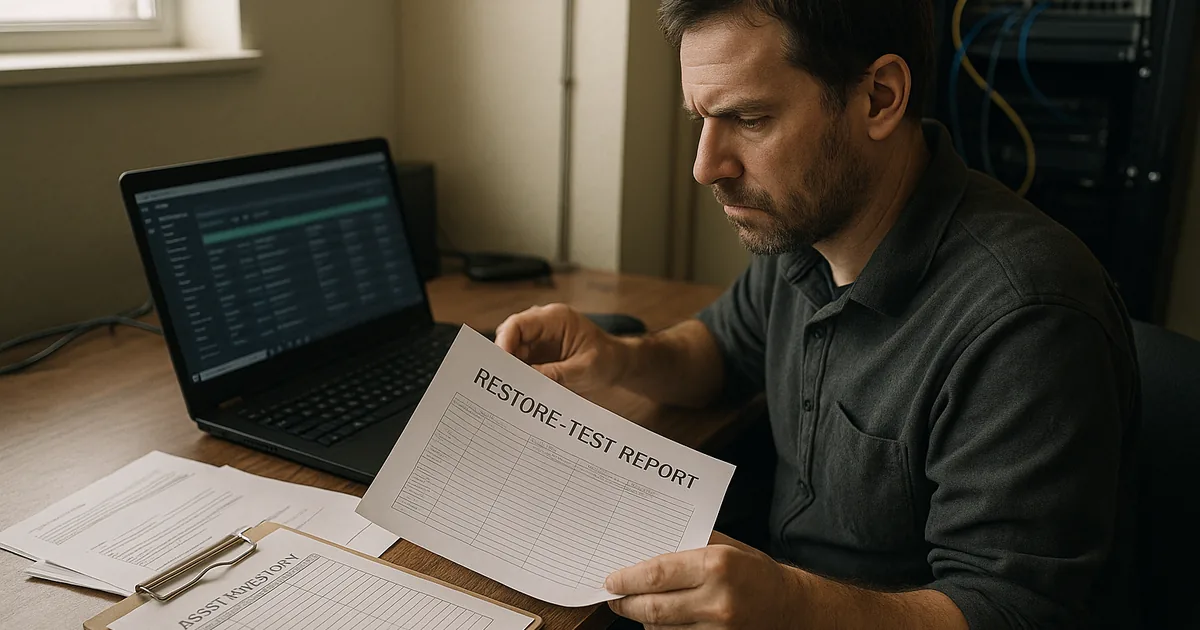
A provider delivering fully managed IT operations should be able to produce a current asset list, patch compliance reports, ticket response history, backup restore test results, administrator account review records, and a clear escalation path for after-hours issues. A common failure point is reporting that only shows green check marks without explaining exceptions, aging devices, or systems outside management scope. If nobody can show what was patched, what failed, what was excluded, when restores were tested, and who approved the remaining risk, the environment is being managed by assumption rather than by evidence.
When does weak managed IT implementation become dangerous?
What should happen before a Fernley business changes providers or leaves IT informal?
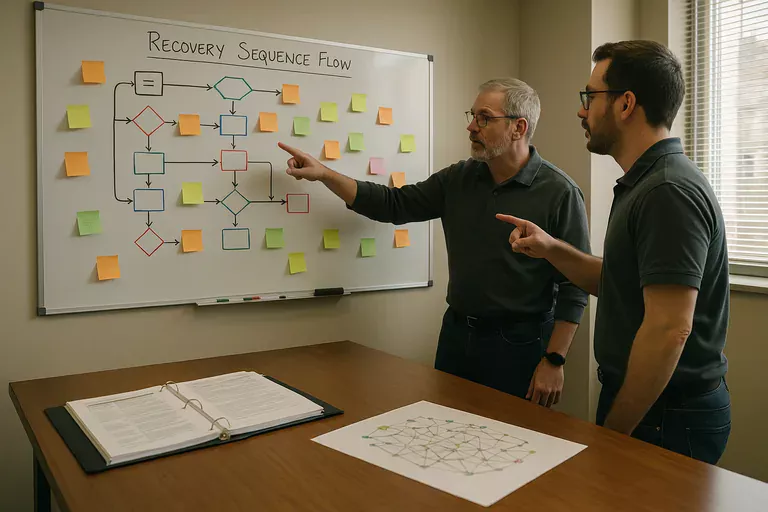
Before changing providers or leaving IT informal, a business should inventory systems, confirm who holds administrative access, identify unsupported devices, verify where backups are stored, and review whether contracts cover cloud services, firewalls, and vendor tools. What usually separates a stable environment from a fragile one is not the brochure language; it is whether somebody can hand leadership accurate documentation, a recovery sequence, and a list of unresolved risks. If those items do not exist, comparing current support against managed cybersecurity coverage for Fernley businesses can clarify where operational ownership is missing.
If the thought of a 9:12 a.m. login outage turning into missed work and a $66,000 week feels uncomfortably plausible, speak with an experienced advisor before the next failure makes ownership gaps visible. A calm review of monitoring, access, documentation, and recovery readiness usually shows whether the environment is stable or just getting by.