
Endpoint & Threat Protection
Endpoint and threat protection reduces the chance that one compromised laptop, phone, or workstation turns into downtime, data loss, or compliance trouble by combining prevention, detection, containment, and response across the devices your staff actually use.
After Abraham W. approved a fake browser update on a sales laptop, the endpoint agent had been left in a broken state and no alert reached anyone. A remote access trojan harvested credentials, order entry was down for most of two days, and containment, reimaging, and lost work added up to $51,000.
This opening scenario is derived from real operational incidents observed in managed IT environments. Names and identifying details have been modified for confidentiality.


About the Author: Scott Morris
Scott Morris is an experienced IT and cybersecurity professional with 16 years of hands-on experience in managed technology services. He specializes in Endpoint & Threat Protection and has spent his career building practical recovery, security, and operational continuity processes for businesses across Nevada.
Scott Morris is a managed IT and cybersecurity professional who helps businesses secure endpoints, maintain stable infrastructure, recover from incidents, and reduce operational risk across day-to-day technology operations. Scott Morris has 16+ years of managed IT and cybersecurity experience. His work is grounded in practical risk reduction, business continuity, secure infrastructure management, recovery readiness, and operational resilience, which is why his perspective on Endpoint & Threat Protection focuses on what competent teams actually monitor, document, enforce, and restore in real business environments, including Reno and Sparks organizations that need stable, secure, and compliance-aware systems.
The examples below are meant to help business leaders evaluate operational exposure and implementation quality, not replace a review of their own environment. This is general technical information; specific network environments and compliance obligations change strategy.
Endpoint and threat protection is the combination of technology and operating discipline that keeps laptops, desktops, mobile devices, and servers from becoming the easiest path into the business. Effective managed cybersecurity services treat each endpoint as a monitored asset with policy enforcement, logging, patching, and response ownership rather than a piece of software installed once and forgotten.
In practice, the failure is often not a missing tool but a missing connection between device security and user identity. A workstation with a valid browser session can bypass a lot of assumptions, which is why endpoint protection has to align with identity, email, and user security, documented onboarding and offboarding, and the access rules around cloud applications. In regulated offices, including medical practices reviewing HIPAA obligations, endpoint controls also support availability, auditability, and protection of locally cached data.
- Prevention: Endpoint agents, patch discipline, application controls, web filtering, and restricted local administrator rights reduce the chance that normal user activity becomes malware execution.
- Detection: Behavioral monitoring and process telemetry surface suspicious activity such as script abuse, unusual child processes, credential theft tools, or software running from temporary folders.
- Response: A mature environment can isolate a device, preserve logs, disable exposed accounts, and document an incident timeline before a small compromise turns into a wider operational disruption.
What does endpoint and threat protection actually include?
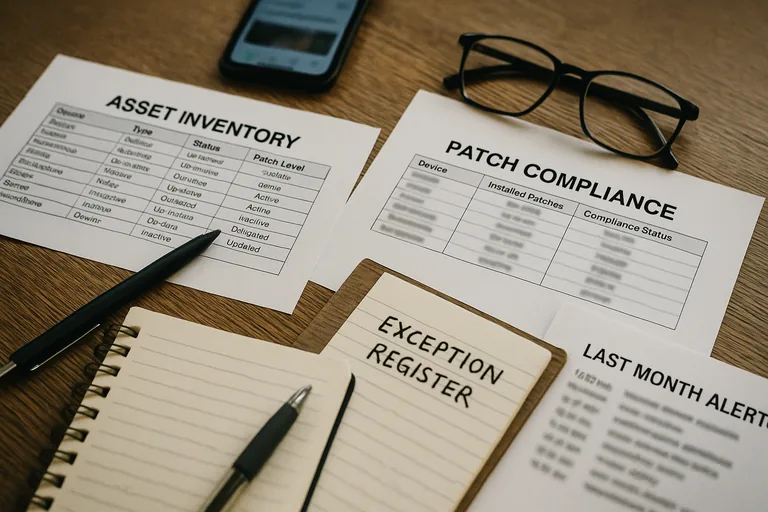
It includes endpoint detection and response, antimalware, exploit and script controls, disk encryption, patch enforcement, local administrator restriction, device isolation, and log collection tied to an accurate asset inventory. What usually separates a stable environment from a fragile one is that every protected device is known, enrolled, policy-mapped, and accountable to an owner; if the inventory is wrong, the security coverage is usually wrong too.
Why does endpoint security matter so much in normal business operations?
Endpoints matter because they hold live user sessions, browser tokens, synced files, and cached credentials. Once a laptop or desktop is compromised, the attacker often gains a practical starting point for email abuse, SaaS access, and lateral movement even if no server was directly touched. Guidance in NIST SP 800-207 Zero Trust Architecture exists for this reason: trust has to be rechecked continuously so a single device problem does not quietly become an organization-wide access problem.
What risks does endpoint and threat protection prevent or reduce?
- Malware execution: It can stop common payloads before they encrypt, steal, or persist on a business device.
- Credential abuse: It helps detect token theft, password misuse, and suspicious device behavior that can lead to account takeover.
- Data exposure: It can limit unauthorized file collection, cloud sync abuse, or removable-media copying that creates legal and contractual exposure.
- Operational disruption: It reduces the chance that one unmanaged workstation stalls billing, scheduling, production, or support while systems are cleaned and access is reset.
How does endpoint and threat protection work in practice day to day?
In practice, the process starts with device enrollment and a baseline: approved security agent, patch policy, local admin policy, logging, web controls, and automated isolation rules. Telemetry then feeds a console where alerts are triaged against severity, device criticality, and user context; if a device shows malicious scripting or credential-dumping behavior, the team isolates it, preserves evidence, resets exposed accounts, and documents containment before reimaging or returning it to service. During a routine review, one alert showed Word launching PowerShell on a finance PC; investigation found macro restrictions were enforced everywhere except a legacy organizational unit, which is a common sign that the tool exists but policy governance has drifted.

What evidence should a business review to verify endpoint protection is really working?
A mature environment should produce visible evidence, not reassurance. That evidence usually includes sensor health dashboards showing which devices are online and protected, patch compliance reports, policy assignment records, high-severity alert tickets with response timestamps, and an exception register explaining why any device is excluded. Preparation guidance from CISA Incident Response Training and Guides matters here because log availability, containment records, and response timelines determine whether a business can confirm scope, meet reporting obligations, and restore cleanly instead of guessing. Without this documentation, businesses often assume coverage is active while remote, rebuilt, or rarely used devices sit unprotected for weeks.
When does weak endpoint protection become dangerous?
Weak implementation becomes dangerous when the security agent is installed but unmanaged, when local administrator rights remain widespread, when remote laptops fall off the patch schedule, or when alerts route to a mailbox nobody checks after hours. In environments that have not been reviewed recently, it is common to find stale allow-list exceptions, duplicated devices in the console, disabled tamper protection, and policies that protect new machines but not older ones. In practice, the issue is rarely the tool alone; it is the missing review cadence, ownership, and escalation workflow that turn a controllable event into downtime, data exposure, and expensive cleanup.